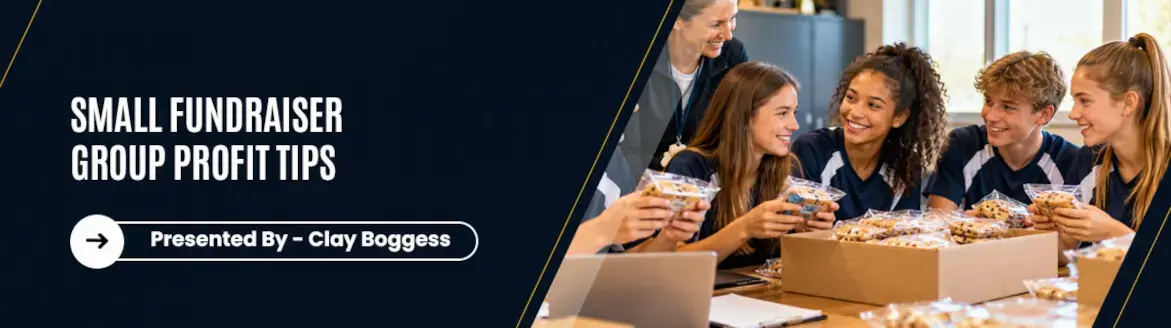
Simple ways to help your small group thrive.
In our experience, small fundraising groups achieve higher participation rates and sell more items per student than larger groups. One big reason is that sponsors can typically influence fewer students more significantly. While large elementary schools may raise more in total revenue, that is purely a function of their larger student bodies.
It can also be said that smaller organizations, often made up of high school students, can have more 'skin in the game'. As a result, they may better understand the importance of commitment and the need to take ownership. Students are often motivated by a desire to support their coach, relieve financial pressure on parents, or offset the cost of items like cheerleader uniforms.
Still, group unity can be significant in small fundraiser groups, and good sponsors will do everything they can to take advantage of it. Here's how.
Why Small Groups Have an Edge
These ideas work for sports teams, cheerleaders, bands, booster clubs, and other high school groups.
Have an Organized Fundraiser Meeting
Too many small-group sponsors skip formal kickoff meetings and miss crucial early momentum.
A fundraiser kickoff lets you set clear expectations and give students a genuine sense of ownership. Confirming that students understand the process is also vital to their success.
For more, see Exciting Fundraiser Kickoff Steps and Small-Group Fundraiser Kickoff Tips.
Periodically Reinforce Your Sales Goal
At kickoff, you explain your selling expectations; however, you'll also need to reinforce your goal throughout the sale. Check in regularly by asking students for sales updates. Turn check-ins into a game by offering small incentives to members who show their order forms and completed envelopes. To be eligible, they have to be willing to show you their order forms and money collection envelopes. You might even consider rewarding the student who's collected the most money by the halfway point.
Learn how to establish your fundraiser goal.
- Reward Progress Too: Along with the top seller, recognize the member who improved the most, so every student has a chance to earn something.
- Keep It Private When Needed: Share the group's total, and discuss individual results one-on-one.
A visible tracker helps. See why every fundraiser needs a thermometer and a sales tracking sheet.
Set a Goal for Each Member
Use this Formula: Divide your goal by the profit per item to get the total items, then divide that total by your number of members to get each member's target. Here is how it looks for the Otis Spunkmeyer cookie dough fundraiser, which lists an average price of about $22 and 40% profit, or $8.80 per item:
Total items = goal ÷ $8.80, rounded up; items per member are also rounded up—Illustration only, before fees.
Direct-sale products can also work well for small groups because the sale is short and sellers collect money on the spot. For example, the $2 gourmet candy bars list a 40% tier, which is $0.80 profit per bar:
From the $2 gourmet bar's lowest tier, 200 bars per case. Profit per bar rises with order size.
Fundraisers That Suit Small Groups
See the Otis Spunkmeyer cookie dough fundraiser, candy bars, popcorn, scratch cards, and online fundraisers. For terms, see No Upfront Cost Fundraisers.
Use Additional Fundraising Incentives
Don't settle for the complimentary prize program offered with the fundraiser. While complimentary prize programs ensure every student earns a reward, relying on them exclusively rarely drives high sales. Unless you reinforce your basic prize program with additional fundraising incentives, many of your students will ignore it.
Big Fundraising Ideas offers sportswear and cash prize programs for sports teams and boosters, as well as traditional prize programs for general groups.
- No-cost Privileges: A free dress day, a first-in-line pass, or lunch with the coach or principal can motivate students at no cost.
- Team Rewards: When the whole group reaches a milestone, everyone earns something, which builds unity.
- Periodic Drawings: See prize drawing ideas, and check your school's rules first.
- Personal Recognition: In a small group, a shout-out from the coach means a great deal.
Keep Group Unity Positive
- Focus on the Team Goal: Celebrate group progress more than individual rankings.
- Respect Every Family: Participation should not depend on what a family can afford. See inclusive fundraising for schools.
- Keep Students Safe: Students should sell with an adult or in groups, and follow school policy. See school fundraising safety tips.
- Involve Parents: Share what the money will pay for, such as uniforms or travel. See how to get parents to support your school fundraiser.
For more on getting every student involved, see How to Improve School Fundraiser Participation.
Leverage What You Already Have
You need to know how to leverage what you already have. A well-organized kickoff, a clear, repeated goal, extra incentives, and positive team spirit give a small group everything it needs to thrive. Start with a per-member goal, choose a fundraiser with a low minimum, and check in regularly.
Frequently Asked Questions About Small Fundraiser Groups
How can a small group raise more money?
Start with an organized kickoff meeting, set a clear goal for each member, check in on sales regularly, and add incentives beyond the basic prize program. Small groups can use their unity, direct access to families, and close relationships with a coach or sponsor to involve nearly every member.
Do small groups really have higher participation than large schools?
In our experience, small groups often have higher participation rates and sell more items per student than larger groups, partly because a sponsor can influence fewer students more closely. Large schoolwide fundraisers usually raise more overall because they involve more students. Track your own participation rate to see where you stand.
How many items does each member need to sell to reach a goal?
Divide your goal by the profit per item to find the total number of items, then divide by the number of members. For the Otis Spunkmeyer cookie dough fundraiser, which lists an average price of about $22 and 40% profit ($8.80 per item), a 20-member group aiming for $3,000 needs about 341 items, or about 18 items each.
What kind of fundraiser is best for a small group?
One with low minimums and a short timeline. The Otis Spunkmeyer fundraiser has no order requirements, and the candy bar and popcorn pages list a one-case minimum. Scratch cards require a minimum of 10 cards, and the online store has no minimum, so small groups can start without a large commitment.
Why hold a kickoff meeting for a small group?
A meeting lets you explain the goal, the process, and the incentives, and it helps students feel ownership. It also confirms that every student understands how to fill out an order form and handle money. Many small group sponsors skip it, and the first week of the sale suffers.
How often should you check in on sales?
Check in at the end of the first few days, at the midpoint, and in the final days. Ask students how much they have sold, and invite them to show their order forms and money collection envelopes so you can reward those who are keeping up.
What additional incentives work for small groups?
No-cost privileges, team rewards, friendly goals between members, and small drawings can all help. Because every student in a small group is visible, personal recognition goes a long way. Keep rewards optional and positive so every member feels included.
How do you keep group unity positive and avoid pressure?
Focus on team goals and personal progress rather than ranking members against each other, and make sure families understand that participation should never depend on cost. Reward improvement and effort so students who sell less still feel valued.
How do you involve parents in a small group fundraiser?
Share the goal and what the money will pay for, such as uniforms or travel, and give parents clear, simple ways to help. Parents in small groups often understand that fundraising can offset their child's costs, which makes them more likely to participate.
Can a small group use an online store?
Yes. An online store lets family and friends order from anywhere without a student selling in person, and it has no minimum. Big Fundraising Ideas reports that on its Otis Spunkmeyer online store, 80% of registered participants sell, averaging about $100 per seller.
Need more info? Reach out today for a FREE consultation with an expert. Contact Big Fundraising Ideas or call (866) 980-9930, Monday through Friday, 8:00 a.m. to 5:00 p.m. CST.
Author Bio
Clay Boggess has been designing fundraising programs for schools and various nonprofit organizations throughout the US since 1999. He’s helped administrators, teachers, and outside support entities such as PTAs and PTOs raise millions of dollars. Clay is an owner and partner at Big Fundraising Ideas.

Categories
Related Articles
How to Fundraise for School:…
Learn how to fundraise for schools: set goals, choose a method, promote it, handle money, track net proceeds, and report your impact.

Chocolate Fundraiser Costs:…
See chocolate fundraiser case costs, profit tiers, one-case minimums, free shipping, payment terms, and profit examples.

Chocolate Fundraiser…
Compare Big Fundraising Ideas, World's Finest Chocolate, Gertrude Hawk, Van Wyk, and See's on price, profit, and terms.