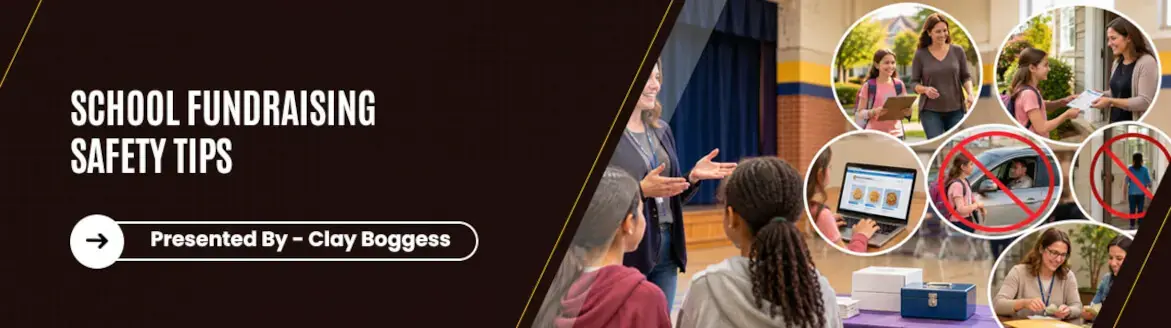
How to make your sale safe for everyone involved.
School fundraising safety is essential to your sales campaign, so it should be emphasized throughout. Once your students experience your kickoff assembly, they'll be eager to start. Excitement will be at a fever pitch because they will have seen the prizes they can win for selling.
How can you blame them for wanting to go out and approach potential customers as soon as they get home? This is the response that you want. After all, you've repeatedly emphasized the importance of making as many sales as possible.
And even though fundraisers are about raising money, keeping your student safe is most important. So how can you stress the importance of safe selling?
Safe Selling at a Glance
Differentiate Safe Customers from Strangers
At your kickoff assembly, your students need to know who they can talk to and who they shouldn't. Many assume that, to make more sales and win bigger prizes, students should try to sell to everyone. Even if that isn't true, they still need to know who to approach. Here are two crucial school fundraising safety tips that will help:
- Students should not sell without parent or guardian supervision, with no exceptions.
- Their best chance to make sales is to talk to people they know. Strangers often won't purchase from them anyway.
Safe customers are people they know, like neighbors, family, and close friends.
Rules for In-Person and Door-to-Door Selling
- A Parent or Guardian Goes Along: Every time, with no exceptions.
- Stay Outside: Sell from the porch or doorstep, and never go inside a home or get into a car.
- Daylight Only: Sell during daytime, in neighborhoods a parent knows.
- Know the Customer: Start with neighbors, family, and close friends.
- Workplaces Need Permission: When a parent shares a brochure at work, follow the employer's policy.
- Follow School Policy: Some schools set extra rules, so check yours.
A student who says no to a stranger, or goes home when it gets dark, is doing exactly what the rules ask. Tell students that so they never feel they are missing a sale by being careful.
Encourage Supervised Online Fundraising
Most school fundraising companies offer online selling as another way to make sales. In programs that include prizes, students who sell online typically still receive credit, and the group profits from each sale. Ensure the online store is secure and uses 'HTTPS' and not just 'HTTP' in front of the website URL. Most website browsers will indicate that a site is secure with an icon beside the address. Online selling should also take place under the supervision of an adult or guardian.
What the Browser Icon Means Now
Some browsers display a padlock beside the address of a secure site. Firefox and Safari still do, but Google retired the padlock in Chrome in September 2023 and replaced it with a tune icon; you can click to see the connection details. HTTPS means the connection to the site is encrypted. It does not prove the site is trustworthy, because phishing sites can use HTTPS too. That is why the best safeguard is simple: use only the link your school or fundraising company gives you, and check that the web address is spelled correctly.
Online sales are paid at checkout, so the group does not collect or count cash. For more, see online fundraisers and online fundraising store sales tips.
Educate Your Parents on Fundraiser Safety
To ensure fundraising safety, it's also essential to educate your parents. If possible, introduce your sale at a parent night before your kickoff date. This is the perfect opportunity to discuss your safety rules and program expectations. The parent letter inside your student packets also discusses the importance of safe selling. Please let parents know to expect the packet on the kickoff date.
See the parent fundraising information letter, exciting fundraiser kickoff steps, and how to get parents to support your school fundraiser.
Handle Money Safely
- Use Envelopes: Every student gets a labeled money collection envelope for orders and cash.
- Avoid Carrying Large Amounts: Students should turn money in on the set date and not carry it around.
- Count with Two Adults: Count and record the money together, and match it to the order forms.
- Plan for Checks: Decide in advance how checks will be handled. See whether school fundraisers should accept checks.
- Turn Money in Promptly: See how to collect fundraising money promptly and the sales tracking sheet.
Product and Food Safety
- Allergens: Share ingredient and allergen details with families before they buy. See peanut-free candy bars for school fundraising and school food fundraiser rules.
- Frozen Product: The Otis Spunkmeyer cookie dough arrives frozen, so plan storage and remind buyers to bake the cookies before eating, since the FDA advises against eating raw dough.
- Chocolate and Heat: Do not leave candy bars in a car, and expect shipments to be held when temperatures reach 76 degrees.
- Delivery Day: Pan sorting and pickup with adult volunteers. See school fundraiser delivery tips.
Watch for Scams and Protect Your Fundraiser's Name
- Use Approved Channels: Send fundraiser messages only through the school's email, newsletter, and approved accounts.
- Say What to Expect: Tell families the official store link and who will contact them.
- Warn About Payment Requests: Remind families never to share payment details by text or social media.
- Report Problems: Give families a contact if something looks wrong.
For related guidance, see school fundraising regulations and inclusive fundraising for schools.
Putting It All Together
If communicated and executed properly, school fundraising safety will also increase sales. Parents are more willing to take part when the rules are clear, students stay confident, and the fundraiser runs smoothly from kickoff to delivery.
For more on getting every student involved, see how to improve school fundraiser participation and student participation in school fundraising. For planning, see our School Fundraising Guidebook and how a school gets paid after a fundraiser.
Frequently Asked Questions About School Fundraising Safety
How do you keep students safe during a school fundraiser?
Set clear rules before the sale starts: students sell with a parent or guardian, sell only to people they know, never enter a home or a car, put money in a labeled envelope, and sell online only under an adult's supervision. Repeat the rules at the kickoff, at a parent night, and in the parent letter.
Should students sell door-to-door?
Not without a parent or guardian. This guide's rule is no exception: students should not go out to sell without a parent or guardian. Selling to neighbors, family, and close friends with an adult nearby is the safest and most effective approach, and an online store can reach relatives who live farther away.
Who are safe customers for a student seller?
People the student knows, such as neighbors, family, and close friends. Strangers often will not buy from a student anyway, and approaching them adds risk, so students should focus on the people they already know.
Is online fundraising safe for students?
It can be, with precautions. Use only the store link your school provides, have an adult supervise, keep students' personal details private, and make sure the store uses HTTPS. HTTPS means the connection is encrypted, but it does not prove a site is trustworthy, so never share a store link through unknown sites or messages.
How do I know an online fundraiser store is secure?
Check that the address begins with HTTPS, and look at the icon beside the address. Firefox and Safari show a padlock, while Chrome now shows a lock icon, so click it to see the connection details. Because phishing sites can also use HTTPS, use only the link your school or fundraising company provides, and check that the web address is spelled correctly.
What should parents know about fundraiser safety?
Parents should know the safety rules, the dates, and what to expect in the student packet. Introduce the sale at a parent night before the kickoff, tell parents to expect the packet on kickoff day, and use the parent letter to explain safe selling. Parents are the first line of supervision.
How do you keep fundraiser money safe?
Give each student a labeled money collection envelope; avoid carrying large amounts of cash; have two adults count and record the money together; and turn it in on the set date. Online sales are paid at checkout, so the group does not collect or count cash.
What about food allergies and food safety?
Share the ingredients and allergen details with families before they buy, and follow your school's food rules. Cookie dough should be stored frozen and baked before eating, since the FDA advises against eating raw dough, and chocolate should not be left in a hot car.
How do I protect families from fundraiser scams?
Send fundraiser information only through your school's approved channels, tell families what real messages will look like, and remind them never to share payment details by text or social media. Supporters should buy only through the official store link and check the web address carefully.
Does fundraiser safety really improve sales?
It can. When parents and students know the rules, parents feel more comfortable letting students participate, and families trust the fundraiser. A clear plan that keeps students safe also keeps the fundraiser running smoothly.
Need more info? Reach out today for a FREE consultation with an expert. Contact Big Fundraising Ideas or call (866) 980-9930, Monday through Friday, 8:00 a.m. to 5:00 p.m. CST.
Author Bio
Clay Boggess has been designing fundraising programs for schools and various nonprofit organizations throughout the US since 1999. He’s helped administrators, teachers, and outside support entities such as PTAs and PTOs raise millions of dollars. Clay is an owner and partner at Big Fundraising Ideas.

Categories
Related Articles

Creative School Fundraiser…
Fundraiser prize ideas that give more students a reason to take part: experiences, grade-level privileges, group rewards, and a tiered plan.

How to Organize a Brochure…
A brochure fundraiser guide for your high school band booster program: roles, goals, kickoff, order forms, money, and delivery.

How to Fundraise for School:…
Learn how to fundraise for schools: set goals, choose a method, promote it, handle money, track net proceeds, and report your impact.