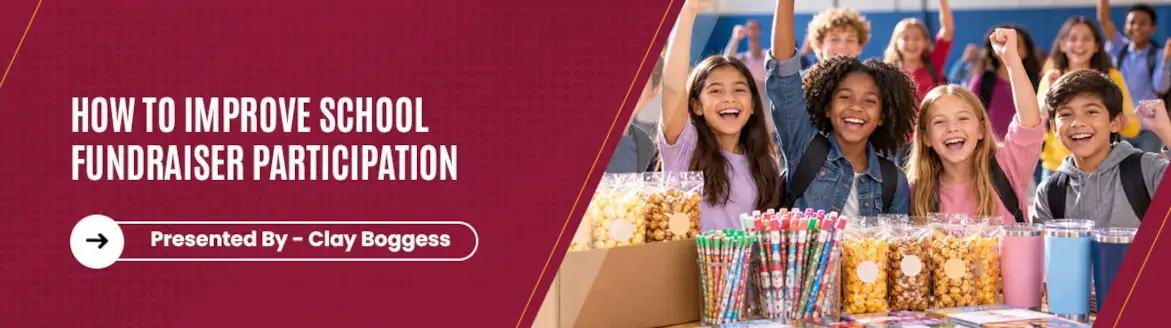
How to Get More Students to Participate and Improve Sales
Increasing student participation is the single fastest way to boost your total sales. While students skip fundraisers for various reasons (busy schedules, lack of interest, or unappealing prizes), focusing on seller involvement yields massive financial returns.
For example, take a smaller high school group with 40 students. Even in a smaller group, if each student sold just ten brochure items, they would profit around $1,600. Sales results from elementary schools could be even more dramatic. If 500 students sold just five items each, they would earn about $10,000 profit. Here are ways to get more students to sell and increase your fundraiser's total.
What Higher Participation Is Worth
The examples above work out to about $4 of profit per item, which fits an item priced around $10 with a 40% profit. A typical item in a larger brochure program costs more. Big Fundraising Ideas' Otis Spunkmeyer cookie dough fundraiser, for example, lists an average price of about $22 and a 40% profit of $8.80 per item.
Formula: students x items each x profit per item. The $4 figure is implied by the examples on this page, and $8.80 is 40% of $22. Illustrations only, and fees are not included.
Now see what the participation rate itself is worth. Suppose a 500-student school expects each seller to sell five items:
An illustration of how raising the share of students who sell changes the total. Real results vary with how many items each seller sells.
For more on how participation relates to profit, see fundraiser participation versus profit percent.
Why Students Choose Not to Sell
For related guidance, see how to get parents to support your school fundraiser, student participation in school fundraising, and inclusive fundraising for schools. For a short sale plan, see the one-week school fundraiser plan.
Offer a Better Prize Program
If your students aren't motivated by your current prize program, consider more creative options. Students and parents respond much better to transparent, appealing incentives tailored to their age group.
Big Fundraising Ideas offers traditional prize programs for general school fundraisers. High school sports teams often prefer sportswear as an incentive, and our sportswear and cash prize programs are designed for them.
- Ask Your Students: A short survey about which prizes work best is the quickest way to learn what motivates them.
- Reward Effort at Several Levels: When everyone who sells earns something, students who sell a little are encouraged to keep going.
- Match the Prize to the Age: Younger students and high school teams respond to different incentives.
- Check Your Rules: Some districts limit prizes or cash prizes. See overcome-district-not-allowing-cash-prizes.
Prize programs are listed with brochure fundraisers such as the Otis Spunkmeyer cookie dough fundraiser. The popcorn, candy bar, and meat stick product pages state that these direct-sale fundraisers offer no prize programs, so plan your own incentives.
Remind Students to Participate
Initial kickoff excitement fades quickly. Without regular reminders, students and parents forget about the sale. Worse, they don't hear about the sale again until it's time to turn in the money. Not scheduling periodic reminders almost guarantees disappointing sales totals.
A suggested schedule. Adjust it to the length of your sale, which is two weeks by default for the Otis Spunkmeyer fundraiser.
See the best time to kick off a school fundraiser and the steps for an exciting fundraiser kickoff. A visible progress tracker helps, too. See why every fundraiser needs a thermometer and the sales tracking sheet.
Offer Additional Fundraising Incentives
Schools that offer additional incentives often achieve higher participation than those that don't. Even with daily reminders, adding creative incentives yields far better results. For instance, you can offer periodic prize drawings and have students turn in coupons. Promote your prizes as often as possible during your sale.
- Group Goals: Reward a whole class or grade when it reaches a target, so every seller helps the team.
- Friendly Competition: Compare classes or grades by progress, and keep the tone playful.
- Recognition: Shout-outs at assemblies or in the newsletter cost little and mean a lot.
- Drawings: Hold them at regular points in the sale, and check your school or district rules on drawings first.
For more ideas, see school fundraiser engagement ideas and how to make every student a top seller. Keep incentives optional and low-pressure so every student feels welcome.
Set a Realistic Participation Goal
The best way to improve sales is to increase seller participation.
- Count Your Sellers: Divide the number of students who have turned in at least one order by the number invited.
- Check at the Midpoint: Follow up with students who have not started, instead of only celebrating the top sellers.
- Add an Online Option: Big Fundraising Ideas reports that on its Otis Spunkmeyer online store, about 46% of participants register on the first day and 80% of registered participants sell, for an average of about $100 per seller. See online fundraisers.
- Set Clear Goals: See how to set realistic fundraiser goals and the school fundraiser participation rate.
Put It Into Practice
You have limited time to raise money, so make participation the center of your plan. Choose a prize plan that fits your group, schedule your reminders before the sale begins, and add a few simple incentives. Then track your participation rate and follow up halfway through.
Whether you run a high school group, an elementary school, or a team, the same principles apply. See high school fundraising ideas, elementary school fundraisers, and sports team fundraisers.
Frequently Asked Questions About Fundraiser Participation
How do you get more students to participate in a school fundraiser?
Offer a prize or incentive plan that motivates students and parents, remind sellers regularly throughout the sale (not just at kickoff), and add extra incentives like periodic prize drawings. Make participation easy with a short sale, clear roles, and an online option for families who prefer it.
Why don't students participate in fundraisers?
Common reasons include being too busy, parents who don't want them to sell, prizes that don't appeal to them, forgetting after the kickoff, and discomfort with asking people for money. Each of these has a practical fix, from shorter sales to online stores to roles other than selling.
How much can a school raise by increasing participation?
It adds up quickly. At about $4 profit per item, a 40-student group where each student sells ten items earns about $1,600, and a 500-student school where each student sells five items earns about $10,000. With a typical brochure item at about $22 and a 40% profit of $8.80 per item, the same sellers earn more. Use participants times items per participant times profit per item to estimate your own total.
How often should you remind students to sell?
Remind them at the kickoff, a few days in, at the midpoint, and again as the final days approach. Each reminder works best when it adds something new, like a progress update or a new drawing, so students don't hear the same message repeatedly.
What prize programs does Big Fundraising Ideas offer?
Big Fundraising Ideas offers traditional prize programs for general school fundraisers, as well as sportswear and cash prize programs for high school sports teams and boosters. Prize programs are listed with brochure fundraisers such as the Otis Spunkmeyer cookie dough fundraiser. Still, the popcorn, candy bar, and meat stick product pages state that no prize programs are offered with those direct-sale fundraisers.
Do prize drawings help fundraiser participation?
They can add excitement, especially when students earn entries by turning in orders or coupons, and drawings are held at regular points during the sale. Check your school or district rules on drawings and prizes before you run one, and keep participation optional.
What incentives work besides prizes?
Group goals that reward a whole class or grade, friendly competition between classes, public progress trackers, and simple recognition such as shout-outs or certificates can all motivate sellers. Keep incentives positive and low-pressure so students who sell less do not feel excluded.
How do you handle parents who do not want their child to sell?
Listen to their concerns, which are often about safety or time, and offer alternatives. An online store lets relatives order without door-to-door selling, a donation page lets families give directly, and roles other than selling, such as making posters, still let the student take part.
How do you measure fundraiser participation?
Divide the number of students who sell at least one item by the number of students invited to sell. Check at the midpoint of the sale so you can follow up with students who haven't started. Big Fundraising Ideas reports that on its Otis Spunkmeyer online store, 80% of registered participants sell.
Is higher participation worth more than a higher profit percentage?
Often, yes, because participation multiplies every other number. A program with a slightly lower percentage and many sellers can raise more than one with a higher percentage and fewer sellers. Compare the two using your realistic number of sellers.
Need more info? Reach out today for a FREE consultation with an expert. Contact Big Fundraising Ideas or call (866) 980-9930, Monday through Friday, 8:00 a.m. to 5:00 p.m. CST.
Author Bio
Clay Boggess has been designing fundraising programs for schools and various nonprofit organizations throughout the US since 1999. He’s helped administrators, teachers, and outside support entities such as PTAs and PTOs raise millions of dollars. Clay is an owner and partner at Big Fundraising Ideas.

Categories
Related Articles
World's Finest Chocolate…
Compare the World's Finest Chocolate fundraiser to other competitors, including price per bar, bars per unit, profit tiers, and terms.
What Is the Minimum Order for…
Compare direct-sale, brochure, and online minimums to see how order size will affect your school's fundraising profit.

Global Cocoa Supply Crisis:…
What is the global cocoa supply crisis, why does chocolate cost more, where does supply stand, and what should schools do about it?