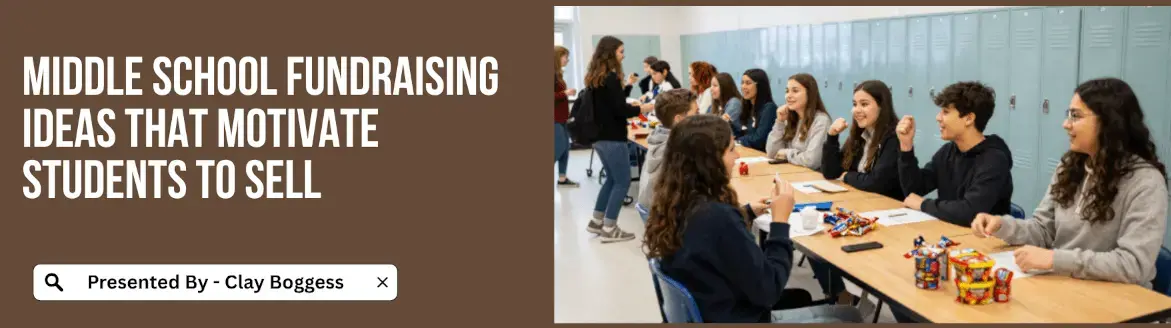
Middle school students are managing more competing demands than their younger counterparts. More extracurricular commitments, heavier academic loads, more complex social dynamics, and the normal developmental pressures of early adolescence all reduce the time and mental energy they are willing to allocate to a fundraiser. This doesn't mean they cannot be effective sellers—it means the approach must meet them where they are rather than where they were in fifth grade.
Big Fundraising Ideas has supported middle school fundraising programs since 1999. This guide covers the product choices, prize programs, and in-game incentives that consistently motivate middle school students to participate and sell.
Why Middle School Fundraising Is Different
- Peer social awareness: middle school students are acutely aware of how they appear to peers -- selling approaches that feel embarrassing or childish get set aside
- Prize maturity: toy catalogs and small prizes that motivated elementary sellers feel irrelevant to students shopping the school's spirit store and watching sports
- Time competition: sports, clubs, homework, and social activities all compete for the time and energy that younger students more readily give to fundraising
- Skepticism: middle school students ask 'what's in it for me?' more consciously than younger students -- the answer needs to be genuinely compelling to get engagement
Strategy 1: Choose the Right Product
Lower-priced direct-sale products work well at the middle school level because the buying decision is instant. A student who offers a classmate a $1 lollipop at lunch closes the sale in seconds. The same is true for candy bars at $1 to $2—the price is low enough that peer buyers say yes without deliberation. Peanut-free and 100 percent kosher candy bar options are available for groups in diverse school communities.
For groups who want to differentiate from local elementary school campaigns selling large brochures, a popcorn brochure offers variety that buyers haven't already been approached with. Gourmet popcorn in a range of flavors is a product that middle school students can honestly recommend to family members and community contacts because it's genuinely different from the chocolate and candy products most surrounding campaigns are running.
Involving students in the product selection process is one of the most effective engagement strategies available for middle school groups. A choir that chose a peanut-free candy bar because the members wanted something their peers could eat without allergen concerns will sell that product with more ownership than a group that was handed a brochure without input.
Strategy 2: Use Age-Appropriate Prize Programs
Both programs available through bigfundraisingideas.com. Middle school-specific prize programs designed for this age group's motivations.
Strategy 3: Layer Additional In-Game Incentives
Top Seller Recognition
Announce the top seller after Day 1 of the campaign. Early recognition creates immediate competitive motivation—students who are not yet on the board know exactly who they are competing against from Day 2 forward. A weekly or daily top-seller announcement at morning assembly or homeroom keeps the competition active throughout the two-week window.
Prize Drawing Coupons
Issue prize drawing coupons connected to in-school privileges -- free dress day, no homework pass, front of the lunch line. Students who sell a set number of items receive a coupon for the drawing. The privilege-based prize is effective because middle school students value social currency and peer-visible recognition at least as much as they value physical prizes.
Money Game, Jump for George, and Mystery Person
Big Fundraising Ideas offers three structured in-game incentives designed specifically for school fundraising campaigns. The Money Game lets students who reach a selling milestone play for a chance to win additional prizes—adding an element of chance that makes every selling interaction feel potentially significant. The Jump for George creates an in-class or in-school event rewarding sellers who hit specific targets. The Mystery Person designates a small number of secret community members—any student who happens to ask them to make a purchase receives a special reward, motivating broader community outreach because any interaction might be the winning one.
Involving Students in the Process
- Product selection input: show students two or three options and let the group vote -- the winning product generates selling enthusiasm that assigned products rarely match
- Goal-setting input: ask the group what they are fundraising for and let them name a specific item or experience -- students who chose the goal sell for it
- Peer accountability: have students report their own progress at the start of each class meeting rather than receiving updates from the sponsor -- peer reporting creates social accountability that adult reporting does not
Frequently Asked Questions About Middle School Fundraising
What are the best middle school fundraising ideas?
Candy bars and lollipops for peer-direct selling, popcorn brochure for differentiation from elementary campaigns, Cash Prizes and Sportswear Prizes for age-appropriate motivation, all through bigfundraisingideas.com.
How is middle school fundraising different from elementary?
Elementary students sell because prizes feel exciting and selling is novel. Middle school students need age-appropriate prizes, differentiated products, and in-game incentives. The same approach that works for fifth graders does not work for seventh graders. See bigfundraisingideas.com/middle-school-fundraisers for middle school-specific programs.
How do you motivate middle school students to sell?
Cash Prize Programs and Sportswear Prize Programs for age-appropriate prizes—day 1 top-seller announcement for immediate competition. Money Game, Jump for George, and Mystery Person for in-game incentives. Peer involvement in product selection.
What products do middle school students sell best?
Lollipops ($1, fast peer sell), candy bars ($1-$2, peanut-free and kosher options available, peer and community sell), popcorn brochure (differentiated from elementary candy campaigns).
What prize programs work for middle school fundraisers?
Cash Prize Programs—real cash that students can spend on anything they want. Sportswear Prize Programs—branded school spirit wear that fits middle schoolers' developing social identity, available through bigfundraisingideas.com.
What is the Money Game?
A Big Fundraising Ideas in-game incentive where students who hit a selling milestone play for a chance to win additional prizes. Adds an element of chance and fun. Available at bigfundraisingideas.com/resources/money-fundraiser-incentive-game.
What is the Mystery Person incentive?
A Big Fundraising Ideas in-game incentive where secret community members are designated -- any student who asks them to make a purchase receives a special reward. Motivates students to approach more community contacts. Available at bigfundraisingideas.com/resources/mystery-person-fundraiser-incentive-game.
Why do middle school students resist fundraising?
Three reasons: toy prizes feel childish, selling feels socially awkward at an age when peer perception matters, and competing activities reduce available time. The solution is age-appropriate prizes (cash, sportswear), peer-to-peer selling, and in-game incentives that make the campaign feel engaging.
Should middle school students choose their own product?
Yes. Students who helped select the product feel ownership and sell more enthusiastically. Show two or three options and let the group vote. The winning product generates selling enthusiasm that assigned products rarely match.
What is Jump for George?
A Big Fundraising Ideas in-game incentive that creates an in-class or in-school activity rewarding students who reach specific selling milestones. Adds social engagement and competitive fun to the campaign. Available at bigfundraisingideas.com/resources/jump-george-fundraiser-incentive-game.
Author Bio
Clay Boggess has been designing fundraising programs for schools and various nonprofit organizations throughout the US since 1999. He’s helped administrators, teachers, and outside support entities such as PTAs and PTOs raise millions of dollars. Clay is an owner and partner at Big Fundraising Ideas.

Related Articles
World's Finest Chocolate…
Compare the World's Finest Chocolate fundraiser, including shipping, minimum order requirements, profit tiers, payment terms, and returns.
One-Week School Fundraiser: A…
Plan a one-week school fundraiser day by day, from product arrival and kickoff to the final push, collection, and the invoice due date.
How Does a School Get Paid…
How does a school get paid after a fundraiser? See how direct-sale, brochure, and online fundraisers settle invoices or send profit payments.