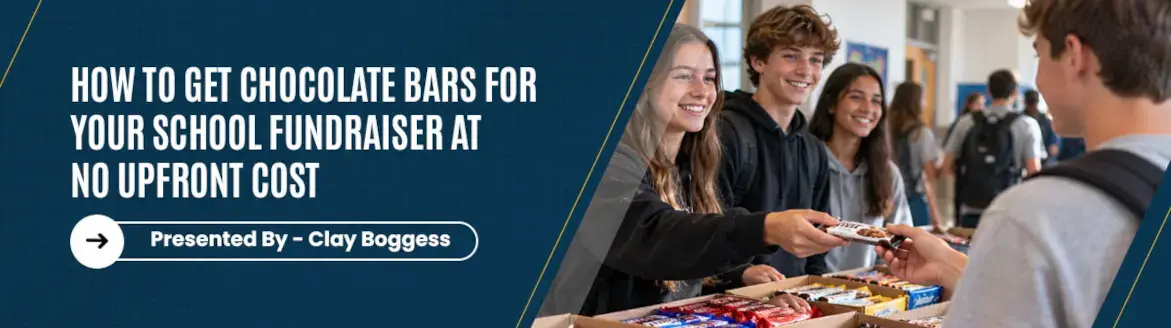
School fundraising plays an essential role in supporting clubs, sports teams, and extracurricular programs, and chocolate bars remain one of the most consistently popular ways to raise that money. The product sells itself to a broad audience, the transaction is simple, and the no-upfront-cost structure removes the obstacle that stops many groups before they start: paying for inventory before knowing whether it will sell.
Big Fundraising Ideas has supported candy bar fundraisers for schools, churches, and youth organizations since 1999. This guide explains how the no-upfront-cost model works, how to get started, and how to run a campaign that avoids the most common pitfalls.
Why Chocolate Bar Fundraisers Remain Popular
- Universal Appeal: Chocolate has remained popular for decades. Even buyers who are usually mindful of sugar intake will often make an exception to support a school-connected cause.
- High Profit Potential: Buyers are generally willing to pay a fair price for a treat when they know part of the purchase supports a local cause, which keeps the transaction simple and low-friction.
- Immediate Convenience: Chocolate bars are portable and can be sold anywhere: a sports event, after school, door to door. Buyers receive the product the moment they pay, which drives impulse purchases that order-form fundraisers don't generate.
- Motivating for Students: Selling something simple and appealing, rather than a large catalog or a product that needs explaining, tends to produce higher participation, particularly from younger sellers.
Understanding What "No Upfront Cost" Actually Means
- Deferred Payment: You receive the candy bars first. You pay only after you sell them and collect the funds.
- Reduced Financial Risk: Without an obligation to pay a large sum in advance, you limit the downside if sales come in lower than expected.
- Greater Access for Every Group: Clubs, booster organizations, and programs of any size or financial standing can run a full campaign without worrying about a significant initial expense.
How Big Fundraising Ideas Structures the No-Upfront-Cost Program
- Free Shipping: Included in the standard arrangement, so there is no added cost to receive the product.
- No Hidden Terms: The payment structure is stated clearly upfront, so you know exactly what is owed and when before you place an order.
- Easy Reordering: If you sell out faster than expected, reordering is straightforward, letting you capitalize on strong demand rather than losing momentum.
- Flexible Payment Timeline: You are given a set window to collect funds and remit payment, giving your group room to run the sale properly rather than rushing to settle up.
Steps to Get Started
- Contact Big Fundraising Ideas: Reach out through the website or by phone, say that you're interested in the no-upfront-cost option, and share your group size, timeline, and fundraising goal.
- Choose Your Chocolate Bars: Select from the available candy bar options, weighing your audience's preferences, the selling price, and the profit margin. Recognizable brand names generally convert faster because buyers already trust them.
- Agree on Terms: Confirm your order quantity and shipping details. Order conservatively if you're uncertain about demand, since reordering is straightforward once you have a better read on sales.
- Prepare Your Selling Strategy: Brief your team or student body before the bars arrive, covering selling techniques, good locations, and safety guidelines, particularly for younger students selling outside their immediate circle.
- Receive the Product: The chocolate bars ship directly to you at no charge. Confirm the shipping timeframe in advance so you can plan your campaign start date around a realistic delivery window. See school fundraiser delivery for what to expect when a shipment arrives.
- Collect Funds and Remit Payment: You can start selling immediately since no upfront payment is due. Within the agreed window, often about a week, you collect the funds and submit payment for the product. Everything beyond that payment is your group's to keep.
- Evaluate and Restock if Needed: Selling out faster than expected is a good sign your pricing and demand assessment were right—Reorder rather than treating a fast sellout as a problem.
- Wrap Up and Share the Results: Calculate net proceeds and share the outcome with participants, administrators, and the community. Recognizing everyone's effort builds support for the next campaign, and reviewing what worked helps you plan the next one more effectively.
Tips for a Successful Chocolate Bar Fundraiser
- Set a Clear Objective: A specific target, new instruments, or travel costs for a specific trip gives students, parents, and donors a concrete reason to stay engaged.
- Involve Students in Planning: Letting students weigh in on selling locations and timing increases their investment in the outcome and often surfaces ideas a planning committee alone would miss.
- Promote Proactively: Chocolate bars sell easily on their own, but pairing the sale with school newsletters, social media, and a scheduled event still meaningfully increases reach.
- Offer Incentives: A reward for top sellers doesn't need to be expensive. Extra recess, a casual dress day, or a special lunch period motivates without adding real cost.
- Communicate Consistently: Keep parents, staff, and volunteers updated on progress throughout the sale to sustain energy through the full campaign window.
- Manage Inventory Carefully: Track which volunteer has which boxes, what has sold, and what money has come in, using a simple sign-out sheet or spreadsheet.
- Respect Local and School Policies: Confirm whether your district restricts candy sales during school hours or near the cafeteria before the campaign starts, not after.
- Express Appreciation: Thank every participant and donor, in writing or in person, to build the goodwill that makes future campaigns easier.
Common Concerns and How to Address Them
Worry About Taking on Debt
Receiving product without paying upfront can feel like financial exposure to a coordinator who hasn't run this kind of campaign before. In practice, even smaller organizations regularly cover the product cost with funds their own campaign generates once they spread the word effectively, which is the point of the deferred structure.
Getting Stuck with Extra Bars
Ordering a moderate initial quantity and reordering once demand is confirmed, rather than guessing high on the first order, is the most reliable way to avoid leftover product. Good record-keeping and a structured sales schedule further reduce the risk.
Educating Sellers, Especially Younger Ones
Chocolate bars practically sell themselves, but younger volunteers still benefit from a short kickoff meeting covering how to approach a potential buyer respectfully, basic selling etiquette, and safety expectations.
Competing with Other Fundraisers Running at the Same Time
If multiple teams or clubs are fundraising at the same time, coordinate with school administrators to stagger campaigns so each has room to perform. Chocolate bars also have a natural advantage here as an immediate-delivery product, which tends to convert impulse buyers that a longer order-form fundraiser would lose.
Logistical Challenges: Tracking Product and Money
A simple system, a spreadsheet or sign-out sheet where each volunteer records how many bars they took, how many sold, and how much cash came in, resolves most of the confusion that otherwise makes distribution and remittance harder than it needs to be.
Why No Upfront Cost Matters Most for Smaller Organizations
Small clubs, music ensembles, drama programs, and service clubs sometimes avoid fundraising entirely because they worry about covering an upfront expense they can't recoup if sales fall short. Receiving product with no initial payment removes that barrier and lets these groups test the market with limited downside. If a campaign underperforms, the group can adjust or discontinue with relatively little harm, though a recognizable product and a supportive community typically lead to success.
Additional Ways to Maximize Your Campaign
- Create Genuine Urgency: A clearly communicated end date encourages supporters to buy now rather than putting it off indefinitely.
- Combine With an Existing Event: A table at a school concert or sports tournament puts your sale in front of a steady stream of people already inclined to spend on something they care about.
- Use Social Media to Extend Reach: Alumni and out-of-town relatives who can't buy in person may still donate or help spread the word through their own networks.
- Highlight Student Involvement: Sharing photos or short stories about students practicing communication or teamwork through the fundraiser resonates with families and community members.
- Follow Up Politely: A supporter who bought one bar may buy more if you ask again, especially if they enjoyed the first one.
- Monitor Progress and Adjust: A mid-campaign lull is common. A small contest or a reminder email is often enough to restart momentum.
Frequently Asked Questions
How can a school get chocolate bars for a fundraiser for free?
No fundraising company gives away product for free. Instead, Big Fundraising Ideas offers a no-upfront-cost model: the school receives chocolate bars first, sells them, and only then pays for the product from the funds collected. The school never spends money out of pocket before the sale happens.
How does the no-upfront-cost payment model work?
The school places an order, receives the chocolate bars with free shipping, and has no payment due at that time. Students sell the bars, and within an agreed period, often about a week, the school remits payment for the product from the funds already collected. Whatever remains after that payment is the school's profit.
What happens if a school does not sell all of its chocolate bars?
Starting with a conservative order and reordering once demand is confirmed is the most reliable way to avoid leftover inventory. Chocolate bars have a longer shelf life than many other fundraising products, giving a school more flexibility to sell remaining stock at a follow-up event rather than being forced to discount or discard it.
Is a no-upfront-cost fundraiser good for a small school group?
Yes. Removing the requirement to pay before the sale is particularly valuable for smaller clubs, music ensembles, drama programs, and service clubs that might otherwise avoid fundraising for fear of covering an upfront expense if sales fall short.
How long does it take to receive chocolate bars after ordering?
Shipping timeframes vary by order size and location. Confirm the specific delivery window with Big Fundraising Ideas when you order so you can plan the selling campaign around a confirmed arrival date, not a rough estimate. See school fundraiser delivery for what a typical delivery process looks like.
Author Bio
Clay Boggess has been designing fundraising programs for schools and various nonprofit organizations throughout the US since 1999. He’s helped administrators, teachers, and outside support entities such as PTAs and PTOs raise millions of dollars. Clay is an owner and partner at Big Fundraising Ideas.

Categories
Related Articles
Chocolate Bar Fundraiser for…
How are chocolate price swings affecting school fundraisers? See what changed in 2026, the profit per bar, and how to choose a price point.
World's Finest Chocolate…
Compare the World's Finest Chocolate fundraiser, including shipping, minimum order requirements, profit tiers, payment terms, and returns.
One-Week School Fundraiser: A…
Plan a one-week school fundraiser day by day, from product arrival and kickoff to the final push, collection, and the invoice due date.