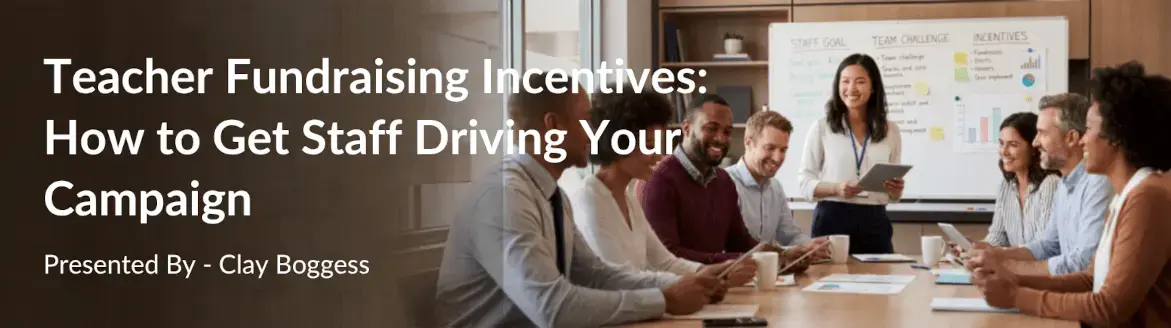
The mechanism is straightforward. Students respond to the adults they see daily. A campaign that lives only in the kickoff assembly and a flyer sent home fades by day three. A campaign that a homeroom teacher mentions every morning stays alive for the full two weeks. The difference between those two campaigns, measured in participation, is substantial — and the only variable is whether teachers are invested.
Some teachers understand what fundraising means for their school and will encourage their students regardless of whether anything is offered to them. Others need a reason. Building a small teacher incentive into the campaign costs very little and converts the second group into active participants.
Big Fundraising Ideas has supported school fundraising incentive programs since 1999. This guide covers teacher incentive ideas that cost little or nothing, the classroom metrics that determine who earns them, and how to structure a staff incentive that drives participation rather than just rewarding teachers who were already engaged.
Why Teacher Buy-In Moves Participation
- Daily reminders: a teacher who mentions the fundraiser each morning creates ten touchpoints over a two-week campaign that the kickoff assembly alone cannot generate
- Form recovery: teachers know which students have not turned in materials and can follow up individually in a way that a school-wide announcement never reaches
- Classroom social proof: when a teacher celebrates the students who have participated, the students who have not feel the gap and act on it
- Credibility with parents: a note from the classroom teacher carries more weight with families than a generic school communication
Teacher Incentive Ideas That Cost Nothing
- Relief from playground or lunch duty: an administrator or volunteer covers the duty period for the winning teacher — the single most requested reward in most buildings.
- Classroom coverage: a principal or assistant principal covers the class for a planning period, giving the teacher an unscheduled hour
- Preferred parking space: a reserved spot near the entrance for the duration of the following month
- Jeans or casual dress day: in buildings with a staff dress code, this costs nothing and is genuinely valued
- Late arrival or early release pass: subject to administrative approval, a single flexible morning or afternoon
- Principal-delivered coffee: the principal brings the teacher their coffee order for a week — small, personal, and memorable
Partner With Local Businesses
- Salon services: a manicure, pedicure, or haircut donated by a local salon that wants staff and parent visibility
- Catered staff lunch: a local restaurant provides lunch for the winning grade level or department team
- Coffee shop gift cards: small-denomination cards are easy asks and easy yeses for local shops near the school
- Spa or wellness treatment: a higher-value donation appropriate for a grand-prize teacher incentive
The approach that works is a short, specific ask that names exactly what is wanted and what the business receives in return. For a fuller treatment of the outreach process, see our guide to engaging local businesses in school fundraisers and securing sponsorships for your school fundraisers.
Which Metrics to Use
Four classroom metrics work for teacher incentives, and they reward meaningfully different behaviors. Participation rate is the strongest default because every teacher can influence it regardless of their roster. Running two metrics at once — one participation-based and one volume-based — lets a school recognize both the teacher who got everyone involved and the classroom that produced exceptional results.
Prize drawing coupons work particularly well as a teacher metric because they create a paper trail that the teacher can control. See fundraiser prize drawing coupons to understand how the coupon system operates within a campaign.
How to Structure the Teacher Incentive
- Announce at the staff meeting before kickoff: teachers who know the incentive exists before the campaign starts can plan their classroom approach rather than reacting mid-campaign
- Post standings in the staff room: a simple sheet showing participation rate by classroom, updated every few days, keeps the incentive present without additional communication
- Recognize more than one winner: a single grand prize creates one winner and a building full of teachers who stopped trying. Award by grade level or department so multiple teachers have a live target.
- Award promptly and publicly: deliver the incentive within days of the campaign close, announced at a staff meeting. A reward that arrives three weeks later teaches staff not to take the next one seriously.
Don't Overlook Parents
For a full guide to parent-facing incentive structures, see our companion piece on parent fundraiser incentive tips. For the broader question of how student, teacher, and parent incentives fit together in a single campaign, see fundraiser prizes: student versus parent-based. For a comprehensive list of incentives to boost sales for school fundraisers, see additional fundraising incentive ideas.
Frequently Asked Questions About Teacher Fundraising Incentives
Why should schools offer fundraising incentives to teachers?
Teachers control the daily touchpoints that keep a campaign visible. A teacher who mentions the fundraiser each morning creates roughly ten reminders over a two-week campaign, follows up individually with students who have not returned forms, and lends classroom credibility that school-wide announcements cannot. Teacher incentives cost far less than student incentives and often cost nothing at all.
What are good teacher incentives for a school fundraiser?
Time-based rewards are the most valued and cost nothing: relief from playground or lunch duty, classroom coverage for a planning period, a reserved parking space, a casual dress day, or a late arrival pass. Local business partnerships can provide salon services, catered staff lunches, and gift cards in exchange for visibility within the school community.
What metric should decide the teacher incentive?
Highest classroom participation rate — the percentage of students who sold at least one item. This is the only common metric every teacher can genuinely influence, which keeps the whole staff engaged. Dollars raised reward whichever classroom happens to contain a few exceptional sellers, and every other teacher disengages once they conclude they cannot win. Secondary metrics can include the number of prize coupons turned in and the average number of items per seller.
How much should a school spend on teacher incentives?
Often nothing. The highest-valued teacher incentives are time-based — duty relief, classroom coverage, a parking space — which cost only coordination. Material rewards can usually be sourced through local business donations in exchange for staff and family visibility. Teacher incentives should not require a meaningful budget line.
How do you get local businesses to donate teacher incentives?
Make a short, specific ask that names exactly what is wanted and what the business receives. A salon that donates one service gains visibility among the entire staff and the families connected to the school. Businesses already sponsoring school activities are the warmest leads. See engaging local businesses in school fundraisers.
When should the teacher incentive be announced?
At the staff meeting the week before kickoff. Teachers who know the incentive exists before the campaign opens can plan how they will approach their classroom, rather than discovering it mid-campaign when the participation window has already narrowed.
Should only one teacher win the incentive?
No. A single grand prize produces one winner and a building full of teachers who stopped trying by day four. Award by grade level, department, or team so multiple teachers have a realistic target throughout the campaign. Multiple smaller rewards outperform a single large reward in driving building-wide behavior.
How do teacher incentives affect overall fundraiser results?
Teacher engagement raises the classroom participation rate, and participation rate is the variable most directly tied to campaign revenue. A school where every teacher actively encourages their classroom will substantially outperform an identical school running an identical product where teachers are passive. See higher profit school fundraisers for how participation drives revenue outcomes.
Do parents need separate incentives from teachers?
Yes. Parents and teachers influence campaigns through different mechanisms and respond to different rewards. Parents often do substantial selling through workplace and social networks, which calls for a different incentive structure. See parent fundraiser incentive tips for the parent-facing guide.
What if teachers are resistant to fundraising altogether?
Start by reducing the ask rather than raising the reward. Teachers resist fundraising when it adds work — collecting money, tracking forms, storing product. Choosing formats that minimize classroom burden addresses the objection at its source, and a small time-based incentive on top converts most remaining holdouts.
Author Bio
Clay Boggess has been designing fundraising programs for schools and various nonprofit organizations throughout the US since 1999. He’s helped administrators, teachers, and outside support entities such as PTAs and PTOs raise millions of dollars. Clay is an owner and partner at Big Fundraising Ideas.

Categories
Related Articles

Cupcake Decorating Fundraiser…
How to run a cupcake-decorating contest fundraiser: entry fees, fair judging, allergen labeling, and three ways to raise money at one event.

Holiday Beef Stick Fundraiser…
How to run a holiday beef stick fundraiser: cover ordering and delivery timing, the 15-day invoice rule, and tips to avoid leftovers.

How Much Can a School Make…
Learn how much you can make from an Otis Spunkmeyer fundraiser; see the profit formula, a worked example, and what affects your total.