
Social media has fundamentally changed how schools and community groups raise money — and if your organization isn't actively using it as part of your fundraising strategy, you're likely leaving real money on the table.
The good news: using social media to boost fundraising doesn't require a big budget, a dedicated marketing team, or technical expertise. What it requires is a clear strategy, the right platforms, and content that authentically connects with your community.
This guide covers exactly that — what social media fundraising is, which platforms deliver the best results for schools and booster clubs, what content actually drives donations, how to create a social media fundraising campaign from scratch, and how new AI tools are making the whole process faster and easier than ever.
What Is Social Media Fundraising?
Social media fundraising is the practice of using social platforms such as Facebook, Instagram, TikTok, YouTube, X (Twitter), and LinkedIn to promote fundraising campaigns, reach donors and supporters, share compelling stories, and drive contributions to a cause.
For schools, booster clubs, and youth organizations, social media fundraising works alongside your main fundraiser — your brochure sale, online store, or direct sale campaign — amplifying its reach far beyond your immediate school community to grandparents, alumni, local businesses, and supporters nationwide.
In short: your product fundraiser is the engine. Social media is the fuel that drives more people to it.
How Can Social Media Help in Fundraising?
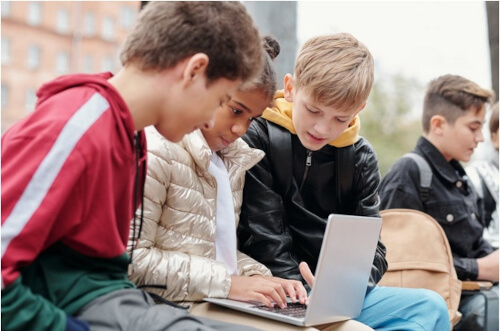
Social media supports fundraising campaigns in five distinct ways that traditional methods simply cannot match:
1. It Expands Your Reach Exponentially
A phone call or flyer reaches one person at a time. A compelling social media post can reach hundreds or thousands within hours — including people outside your immediate community who care about your cause. When parents share your fundraiser with their networks, every share multiplies your potential donor pool.
2. It Builds Relationships With Your Community
Social media isn't just a broadcast channel — it's a two-way conversation tool. When you post updates, thank donors publicly, share student achievements, and respond to comments, you build the kind of ongoing relationship that makes people want to support your school year after year. Donors who feel connected to your cause give more and give again.
3. It Creates Social Proof
When a parent sees their neighbor commenting on your fundraising post or sharing your school's online store link, that social proof is more persuasive than any advertisement. People trust people they know. Every share, comment, and like serves as an implicit endorsement, making others more likely to donate.
4. It Reaches Donors Other Channels Miss
Grandparents in other states. Alumni who moved away. Family friends who don't have a child in your school but still care about your community. Social media is the most efficient way to activate these extended networks and turn them into donors — especially when your online fundraiser makes it easy for them to order and have products shipped directly to their homes.
5. It Provides Real-Time Visibility Into Campaign Performance
Every major social platform provides analytics showing how many people saw your post, clicked your link, and engaged with your content. This data lets you see what's working — which posts drive the most traffic to your online fundraiser, which platforms generate the most engagement — so you can double down on what's effective and stop wasting time on what isn't.
Best Social Media Platforms for School Fundraising — Compared
Not all platforms are equal when it comes to fundraising for schools. Here's a clear breakdown of where to focus your energy:
Facebook — Your Highest-Priority Platform
Facebook remains the most powerful social platform for school fundraising, and it isn't close. Why? Because Facebook is where parents, grandparents, community members, and local business owners actually are — the exact audience most likely to donate to your cause. Key features for fundraising include:
- Fundraisers — Built-in donation tools that let supporters donate directly through Facebook, with no separate payment processing needed
- Events — Create a fundraiser event page to build awareness, invite community members, and drive traffic to your online store
- Groups — Your school's parent group is a highly engaged, targeted audience for fundraising posts.
- Live — Host a live kickoff event, student performance, or Q&A to generate real-time excitement.
- Ads — Even a small paid promotion budget ($20–$50) can significantly expand reach beyond your existing followers.
Instagram — Visual Storytelling That Drives Donations
Instagram is particularly effective for reaching younger parents and for telling your fundraiser's story visually. The platform rewards high-quality images and short videos, making it ideal for showing — not just telling — what your fundraiser will fund.
- Instagram Stories — 24-hour posts with donation sticker links create urgency. Use countdown stickers to build excitement as your campaign deadline approaches.
- Instagram Reels — short videos (15–90 seconds) get dramatically more reach than static posts. A 30-second video of students kicking off your fundraiser can reach thousands.
- Instagram Carousels — Multi-image posts work well for showing your progress toward your goal, featuring top sellers, or explaining how your fundraiser works.
- Link in Bio — Always update your bio link to point directly to your online fundraiser store during an active campaign.
TikTok — The Viral Wildcard
TikTok is increasingly important for school fundraising, especially for involving students and reaching younger families. TikTok's algorithm is uniquely powerful. A well-made 30-second video can reach thousands of people who have never heard of your school. Effective TikTok fundraising content includes student challenges, behind-the-scenes campaign videos, and creative countdowns to your fundraising deadline.
YouTube — Impact Stories That Build Long-Term Support
YouTube is less useful for short-term campaign promotion but very effective for building lasting community engagement. A well-produced 5-minute video showing what previous fundraisers funded — new band instruments, upgraded sports equipment, a school garden — can be shared for years and serves as powerful evidence that donating makes a real difference.
Old Approach vs. What Actually Works Now
Social media has changed dramatically in the last few years. Strategies that worked five years ago are now underperforming. Here's a clear comparison of outdated tactics versus what drives real results today:
How to Create a Social Media Fundraising Campaign — Step by Step

A successful social media fundraising campaign doesn't happen by accident. It follows a repeatable structure that you can apply to every fundraiser your school runs. Here's how to build one:
Step 1: Set Your Goal and Tell the Story Behind It
Before you post anything, define a specific, compelling goal. Not simply 'we're fundraising for the band' — but 'we need $6,000 to replace 12 instruments before our regional competition in April.' A concrete goal with a clear deadline and a real story behind it is what motivates people to act.
Step 2: Choose Your Platforms and Create Your Profiles
Based on the platform table above, prioritize Facebook and Instagram for most school fundraising campaigns. Set up or update your school's, team's, or booster club's profile on each platform. Make sure your bio or 'About' section clearly states who you are, what you're raising money for, and includes a link to your online fundraiser.
Step 3: Build a Simple Content Calendar
Plan your posts before the campaign launches. A two-week fundraiser needs approximately 12–15 social media posts across your platforms. Structure them in three phases:
- Pre-launch (Days 1–2) — Tease the upcoming fundraiser. 'Something big is coming...' posts build curiosity and prime your audience.
- Active campaign (Days 3–12) — Daily or every-other-day posts featuring student stories, goal progress updates, countdown timers, top sellers, and product highlights.
- Final push (Days 13–14) — Create urgency. 'Last 48 hours!' posts consistently produce a spike in last-minute donations and orders.
Step 4: Create Platform-Specific Content
The same content doesn't perform equally on every platform. Repurpose and adapt:
- Facebook — Longer posts with full story context. Share your online store link directly in the post body.
- Instagram — Visually strong photos and short Reels. Use donation stickers in Stories. Link in bio.
- TikTok — Fun, energy-driven short videos featuring students. Challenges and countdowns work well.
- YouTube — Save this for a longer campaign wrap-up video or an impact story from a previous year.
Step 5: Activate Your Biggest Amplifiers — Parents
Your social media reach is only as large as your follower count — until parents share your content with their networks. Make it easy for them by sending a message (text or email) with the exact text or image they can share, plus a direct link to your online fundraiser. Pre-written share text removes the friction that stops people from posting.
Step 6: Use AI Tools to Create Content Faster
One of the biggest changes in social media fundraising over the last two years is the availability of AI writing and content tools that dramatically speed up content creation. Instead of spending an hour writing five fundraising posts, you can draft them in minutes using AI tools such as ChatGPT or Claude. Effective uses include:
- Drafting social media captions — Describe your fundraiser goal and ask AI to write five different caption options in your school's voice
- Writing parent outreach emails — AI can draft a compelling fundraiser kickoff email in seconds
- Creating hashtag lists — Ask AI to generate a list of relevant hashtags for your school fundraiser posts
- Repurposing content — Give AI a Facebook post and ask it to rewrite it as a TikTok script or Instagram caption
AI tools don't replace the authentic stories and student voices that make fundraising content compelling — but they eliminate the blank-page problem and make content production fast enough that any school can maintain an active social media presence during a campaign.
Step 7: Measure and Adjust
Check your platform analytics every 2–3 days during the campaign. Which posts are getting the most reach? Which ones are driving people to your online fundraiser? Invest more energy (or a small ad budget) in the formats and platforms that are working, and don't repeat what isn't working.
What Types of Content Work Best for Fundraising on Social Media?
Across all platforms, these content types consistently outperform generic fundraising announcements:
- Student stories — 20–30-second videos of students explaining what the fundraiser will fund — are the single most effective type of fundraising content: real faces, real voices, real impact.
- Progress updates — 'We've raised $2,400 of our $6,000 goal — thank you!' posts build momentum and motivate fence-sitters to contribute before time runs out.
- Behind-the-scenes content — Photos and videos of your team preparing for the campaign, students unboxing fundraising products, or your group practicing for the event they're fundraising for.
- Thank-you posts — publicly thanking donors and top sellers by name (with permission), motivate others, and make supporters feel seen and appreciated.
- Countdown content — '3 days left!', '24 hours remaining!', 'Last chance!' posts reliably produce a late-campaign surge in orders and donations.
- Product highlights — If you're running a product fundraiser, short posts highlighting specific items (especially popular ones like cookie dough or Smencils) can drive direct purchases.
- Shareable graphics — Simple, visually clear graphics showing your goal, progress, and deadline are highly shareable and perform well on Facebook and Instagram.
Frequently Asked Questions About Social Media Fundraising
Structured to capture Google People Also Ask results, Featured Snippets, and AI search engine answers.
What is social media fundraising?
Social media fundraising is the use of social platforms — Facebook, Instagram, TikTok, YouTube, X, and others — to promote fundraising campaigns, share compelling stories, engage supporters, and drive donations or product orders. For schools and booster clubs, social media complements a main fundraiser (such as an online store or brochure sale) by expanding its reach to parents, grandparents, community members, and supporters nationwide.
How can social media help in fundraising?
Social media helps fundraising by expanding your reach beyond your immediate community, building authentic relationships with donors, creating social proof through shares and comments, activating networks that traditional outreach can't reach (such as out-of-town grandparents or alumni), and providing real-time data on which content drives engagement and donations. Schools that actively use social media during fundraising campaigns consistently raise more than those that don't.
Which social media platforms yield the highest donations for schools?
Facebook typically delivers the highest donation potential for school fundraising because it's where parents, grandparents, and community members are most active, and because it has built-in fundraising tools (Facebook Fundraisers and donation buttons). Instagram is a strong second for visual storytelling and reaching younger parents. TikTok is increasingly effective for viral reach and student engagement. For most school campaigns, a Facebook + Instagram combination delivers the best results.
How do you create a social media fundraising campaign?
To create a social media fundraising campaign: (1) Set a specific, story-driven fundraising goal. (2) Choose your platforms — Facebook and Instagram for most schools. (3) Build a content calendar covering pre-launch, active campaign, and final push phases. (4) Create platform-specific content — Reels for Instagram, longer posts for Facebook, short videos for TikTok. (5) Activate parents as amplifiers with pre-written shareable content. (6) Post consistently with progress updates and countdowns. (7) Use analytics to see what's working and adjust.
How does social media differ from traditional fundraising?
Traditional fundraising relies on face-to-face selling, flyers, and phone calls — methods limited by physical reach and time. Social media fundraising can reach unlimited people instantly, across geographic boundaries, at no cost. It also enables two-way engagement (comments, shares, direct messages), provides measurable analytics, and creates social proof through public donor activity. The two approaches work best together — social media amplifies traditional product fundraisers by driving more people to participate.
Can social media be effective for small school fundraising events?
Absolutely. Social media is especially valuable for small groups because it dramatically extends their reach without requiring a large budget or team. A small booster club with 50 followers can reach thousands through parent shares. Even one compelling student video posted on Facebook can attract donations from community members who have never set foot in the school. Big Fundraising Ideas' online fundraiser platform makes it easy for any group to pair a social media push with a no-cost online store.
What types of content work best for fundraising on social media?
The content types that consistently drive the most engagement and donations are: student story videos (authentic, short, 20–30 seconds), goal progress updates, countdown posts in the final 48–72 hours of a campaign, thank-you posts recognizing donors by name, behind-the-scenes content showing campaign preparation, and product highlight posts for product-based fundraisers. Video content across all platforms outperforms static images by a significant margin.
How can AI tools help with social media fundraising?
AI tools like ChatGPT and Claude can dramatically speed up the creation of social media fundraising content. They can draft multiple caption options for each post, write parent outreach emails, generate relevant hashtag lists, repurpose a Facebook post as a TikTok script or Instagram caption, and help plan your content calendar. AI doesn't replace authentic student voices and real stories — but it eliminates the blank-page problem and makes it realistic for any school volunteer to maintain an active social media presence throughout a fundraising campaign.
Pair Social Media With a Fundraiser That Converts
Social media can amplify any fundraiser — but it's most powerful when paired with a fundraising program that makes it easy for supporters to take action the moment they see your post. Big Fundraising Ideas' online fundraisers are designed specifically for this purpose: supporters click your shared link, browse products, order, and pay — with products shipped directly to their homes: no face-to-face selling, no order forms, no money to collect.
We've helped schools raise over $27 million since 1999. With the right social media strategy behind your campaign, your next fundraiser can be your biggest one yet.
Author Bio
Clay Boggess has been designing fundraising programs for schools and various nonprofit organizations throughout the US since 1999. He’s helped administrators, teachers, and outside support entities such as PTAs and PTOs raise millions of dollars. Clay is an owner and partner at Big Fundraising Ideas.

Categories
Related Articles

Cupcake Decorating Fundraiser…
How to run a cupcake-decorating contest fundraiser: entry fees, fair judging, allergen labeling, and three ways to raise money at one event.

Holiday Beef Stick Fundraiser…
How to run a holiday beef stick fundraiser: cover ordering and delivery timing, the 15-day invoice rule, and tips to avoid leftovers.

How Much Can a School Make…
Learn how much you can make from an Otis Spunkmeyer fundraiser; see the profit formula, a worked example, and what affects your total.