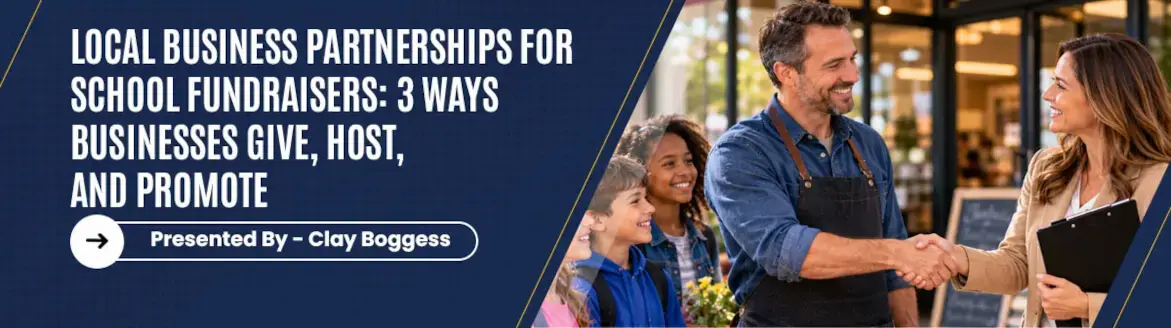
Engaging local businesses is a mutually beneficial strategy. Schools gain resources, a wider audience, and lasting relationships that outlive a single event. Businesses gain visibility, a community presence, and goodwill among potential customers. It also strengthens the bond between a school and its surrounding community.
Big Fundraising Ideas has supported school fundraising programs since 1999. This guide covers the three ways businesses help, what each side gains, and how to find, approach, and keep the right partners. If you are looking to secure a sponsor, see how to secure sponsorships for your school fundraisers.
The 3 Ways Local Businesses Help
1. Give: Sponsorships, Donations, and In-Kind Support
- Money, Products, or Services: A business can sponsor an event or donate goods and services. A local bakery might donate baked goods for a sale, and a printing company might offer free promotional materials. This lowers costs and adds value.
- Volunteer Time and Expertise: Business owners and employees can help with planning, logistics, and running the event. Their skills and extra hands often make a large difference.
- Items for Auctions and Raffles: Donated goods and experiences add appealing prizes. See auction fundraiser ideas and getting business donations for school events.
2. Host: Venues and Restaurant Nights
Some businesses offer their space for a fundraiser, saving the school rental costs and providing a memorable setting. A local restaurant or cafe can host a dinner night with a share of proceeds going to the school. See restaurant fundraising ideas and the guide to restaurant discount card fundraisers.
3. Promote: Marketing and Customer Offers
- Marketing and Promotion: Businesses can share the fundraiser through social media, email newsletters, and in-store signs to extend its reach beyond the school community.
- Special Offers for Supporters: A business can reward fundraiser supporters. For example, a local gym might offer a free class to anyone who donates a set amount.
What Each Side Gains
Spreading Awareness
When a business promotes your fundraiser through its established channels, the event reaches people who otherwise wouldn't hear about it. An endorsement from a trusted local business also adds credibility. If a popular local cafe recommends your fundraiser, its loyal customers are more likely to notice and participate.
Building Community Relationships
Partnerships create a sense of shared purpose between a school and local businesses. Companies that take part in school events build a reputation as community-minded organizations. For example, a local bookstore that hosts a reading night can become a community hub that draws families and encourages a love of reading.
Getting Quality Items at a Reasonable Cost
Local businesses can provide appealing items without stretching a school's budget, whether through an auction donation, a discount on a bulk purchase, or a discounted rate on baked goods for a sale. Sourcing locally also lets a school check the quality of what it offers. A local artisan might donate handcrafted items for a raffle, adding unique prizes.
What the Business Gets
- Visibility: Its name in front of local families through flyers, signage, newsletters, and social posts.
- Goodwill: A reputation as a company that supports local students.
- Customers: Foot traffic and new customers, particularly with a restaurant night or a customer offer.
How to Find, Approach, and Keep the Right Partners
- Find Potential Partners: Start with businesses with a strong community presence and a positive reputation that share your school's values or have supported local causes. Ask parents, teachers, and community members for recommendations, and get involved by attending local events, joining community groups, and connecting with the chamber of commerce, business associations, and service clubs.
- Match the Business to Your Theme: Research each business's products, services, and customers to find natural fits. A local sports store is a natural partner for a sports-themed event. Understanding a business's customers helps you show how the partnership benefits them.
- Make Strategic First Contact: Send a short, professional introduction by email or letter that names your goal, the specific ask, and the benefit to the business. Follow with a phone call, and personalize each message so it is clear you did your homework.
- Agree on Terms that Work for Both Sides: State what you are asking for (a donation, sponsorship, or promotional help), and what you will provide in return: recognition in event materials, social media shout-outs, and signage. Use terms that give the business a tangible benefit, such as increased foot traffic or brand exposure, and confirm everything in writing.
- Market the Event Locally: Use social media, local newspapers, community bulletin boards, and school newsletters, and ask each partner to share through its own channels. Feature the partnership in your materials to show community support.
- Maintain the Relationship: Say thank you with notes, newsletter recognition, and public acknowledgment at events. Share the results, so businesses see what their support accomplished. Trust and goodwill make them more likely to help again.
A Simple Way to Recognize Partners
Fundraisers That Build Business Partnerships
A discount card fundraiser puts local businesses' offers on a card families keep and use all year, so the business gets ongoing visibility while the school keeps most of each card sale. It is a good way to bring local businesses into your fundraising without asking each one for a donation.
For a fast, donation-based campaign a business can promote to its own customers, consider a scratch card fundraiser. If you plan to serve or sell food, check school food fundraiser rules and share food safety rules for fundraiser volunteers with any partner preparing food.
Wrapping Up
Engaging local businesses is a win-win strategy. It builds community spirit, spreads awareness, and brings quality, affordable items to your events. Identify good partners, match them to your theme, agree on terms that work for both sides, market the event locally, and keep the relationship warm. For corporate programs that match employee giving, see corporate matching gifts for schools. When you are ready to plan your next fundraiser, Big Fundraising Ideas can help you choose programs that fit your school and your community.
Frequently Asked Questions
How can local businesses help a school fundraiser?
Local businesses can give (sponsorships, donations, in-kind items, volunteer time), host (a venue or a restaurant night), and promote (marketing to their customers and customer discounts). Most partnerships combine two or three of these.
What do local businesses get out of supporting a school fundraiser?
Visibility with local families, goodwill as a community-minded company, and often new customers. A partnership works best when the business receives a specific, visible benefit rather than just a thank-you.
How do you approach a local business for a fundraiser?
Start with a short email or letter that names the fundraiser, the specific ask, and what the business gets in return, then follow up with a call. Personalize it to show you know the business. Asking for one specific thing usually works better than a general request for help.
What should you offer a business in return for its support?
Offer recognition that it can see: its name on event materials and signage, a mention in the newsletter and on social media, and a thank-you note. For larger contributions, offer more prominent placement or a table at the event.
How do you choose which local businesses to ask?
Start with businesses that have a community presence, share your school's values, and have supported local causes before. Ask parents, teachers, and community members for recommendations, and match the business to your event, such as a sports store for a sports-themed fundraiser.
Is there a fundraiser that already builds in local business partnerships?
Yes. A discount card fundraiser puts local businesses' offers on a card that families keep and use all year, so businesses get ongoing visibility and the school keeps most of each card sale.
Author Bio
Clay Boggess has been designing fundraising programs for schools and various nonprofit organizations throughout the US since 1999. He’s helped administrators, teachers, and outside support entities such as PTAs and PTOs raise millions of dollars. Clay is an owner and partner at Big Fundraising Ideas.

Categories
Related Articles
One-Week School Fundraiser: A…
Plan a one-week school fundraiser day by day, from product arrival and kickoff to the final push, collection, and the invoice due date.

How Does a School Get Paid…
How does a school get paid after a fundraiser? See how direct-sale, brochure, and online fundraisers settle invoices or send profit payments.

How Much Can a School Make…
Learn how much a school can make from a popcorn fundraiser using the profit table, worked examples by group size, and what affects your total.