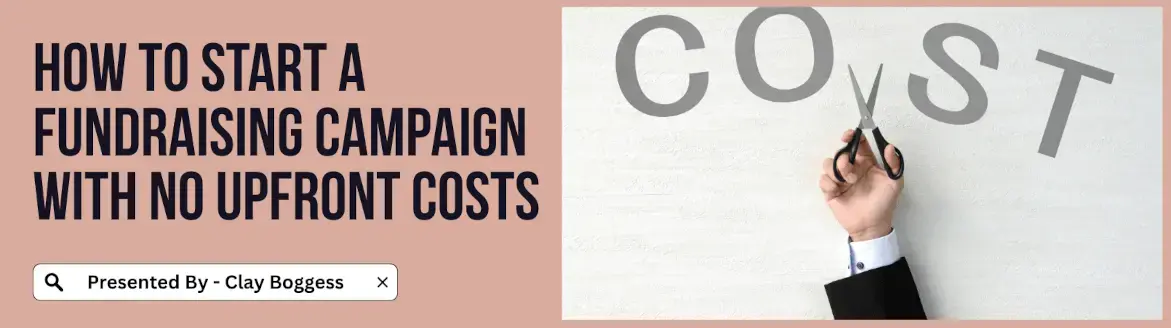
The current landscape of school and organizational fundraising has shifted decisively: zero-upfront-cost fundraising campaigns are no longer the exception — they are the industry standard for high-performing groups nationwide. Whether you lead a PTA, coach a sports team, or coordinate a nonprofit drive, the barrier of initial capital is gone. This guide provides the precise framework for launching a school fundraising campaign with no upfront costs, maximizing profit margins, and building a repeatable fundraising engine that works year after year.
Across every model — from online fundraisers to food fundraising programs, to candy fundraisers — today's most effective platforms eliminate financial risk. The data confirms it: groups that run structured, zero-prepayment campaigns consistently outperform those operating under traditional upfront-cost models. Here is exactly how it works and how to execute it.
What Does 'No Upfront Costs' Actually Mean in Fundraising?
No upfront costs in fundraising means your organization pays nothing to start, stock, or supply a campaign. You collect orders or donations first, then pay only from the revenue generated — keeping the profit. There are no purchase minimums to fund in advance, no inventory risk, and no out-of-pocket expenses for materials, shipping, or setup.
This model is fundamentally different from traditional retail or direct-sale fundraising, where groups must purchase product inventory before selling it. With a zero-initial-investment structure, the fundraising company supplies all catalogs, order forms, and promotional materials at no charge. Your group takes orders from supporters, submits them collectively, and receives the product. The profit margin, ranging from 40% to 90% depending on program type, is already built in.
Understanding what no-upfront-cost fundraising actually means is critical for school administrators and group leaders evaluating options. It is not a donation-only model. It is not a crowdfunding model that charges platform fees. It is a structured product- or service-sales program backed by an experienced fundraising partner — such as Big Fundraising Ideas, which has operated under this model since 1999 — in which your group's financial exposure is exactly zero from day one.
The Difference Between Free-to-Start and Truly Zero-Risk
Not every program that advertises 'free to start' is genuinely risk-free. The distinction matters enormously for school fundraising coordinators. A legitimately zero-upfront-cost fundraising program includes all of the following at no charge:
- Catalog brochures and order forms are printed and delivered to your group
- Promotional materials, parent letters, and seller instruction packets
- Online storefront setup for virtual order collection
- Customer support from a dedicated fundraising specialist
- Product fulfillment, packing, and delivery logistics
- Prize programs for top sellers (where offered)
How Does No Upfront Cost School Fundraising Work? Step-by-Step
No upfront cost, school fundraising operates in a straightforward cycle: a partner provides all materials free of charge; your group sells products or collects donations; orders are submitted in bulk; the fundraising company handles delivery; and your group receives its profit net of the wholesale product cost. No money changes hands until after the campaign closes and revenue is collected.
Step 1: Choose Your Program Type
The first decision is selecting the right program for your group size, audience, and timeline. Options range from traditional brochure-based catalog sales to fully online fundraising storefronts to direct-sale candy and food fundraisers. Each operates on a zero-upfront cost basis, but profit margins and logistics differ.
Step 2: Request Your Free Fundraiser Supply Kit
Once your program is selected, your fundraising partner ships a complete supply kit that includes brochures, order envelopes, parent information letters, prize program details (if applicable), and online setup instructions. This kit arrives before your campaign launch at zero cost.
Step 3: Set Your Goal and Timeline
Data consistently confirms that two-week campaigns outperform longer ones in total revenue and seller engagement. Define a specific monetary goal before launching — groups with stated, communicated goals raise significantly more than those running open-ended campaigns.
Step 4: Launch with Momentum
Registration drives success. Online fundraising research shows that 46% of sellers register on the very first day of a campaign, and 80% of those who register will make at least one sale, averaging $100 per registered seller. A strong launch-day kickoff, whether in person or via Zoom, is the single highest-leverage action a coordinator can take.
Step 5: Submit Orders and Receive Profit
At campaign close, all orders are submitted collectively. The fundraising company processes, packs, and ships products — often with each seller's order sorted separately to simplify distribution. Your profit is calculated and paid on the net margin. No reconciliation complexity. No surprise invoices.
No Upfront Cost vs. Traditional Fundraising Models
Best No Upfront Cost Fundraising Options for Schools
The highest-performing no-upfront-cost fundraising options for schools include online product storefronts, catalog brochure sales, direct-sale food and candy programs, and custom merchandise campaigns. Each option offers 40% to 90% profit margins with zero initial fees, free materials, and dedicated support. The right choice depends on group size, audience demographics, and campaign duration.
1. Online Fundraising Storefronts
Fully virtual campaigns are the fastest-growing category in school fundraising. Sellers receive a personalized storefront link that can be shared via text, email, and social media — expanding the buyer pool far beyond local community boundaries. Programs like the Goodies & Gifts Online Sale deliver 40% profit with zero upfront costs, no inventory handling, and direct-to-buyer shipping that eliminates all distribution work.
2. Brochure / Catalog Sales
The most proven format in school fundraising. Brochures are delivered free, students take orders from family and community supporters, and products ship in presorted seller boxes. Food fundraisers and candy fundraisers in brochure format consistently achieve profit margins of 40% to 60%, with some specialty items reaching up to 85%.
3. Direct-Sale Candy and Snack Programs
For groups that prefer immediate cash collection, direct-sale candy fundraisers offer a zero-advance-payment structure in which the product is shipped first, and payment is collected as items sell. Pecan caramel clusters, chocolate bars, and premium snack assortments yield up to 58% profit. Explore the full candy fundraiser catalog to identify the highest-margin options for your group.
4. Custom Merchandise (Tumblers & Spirit Wear)
Custom-branded merchandise — particularly personalized school tumblers — generates strong sales precisely because buyers value the product independent of the fundraising context. These specialty fundraisers require no upfront investment; the group takes pre-orders, and products are manufactured and shipped after the campaign.
Profit Margin Comparison by Fundraising Program Type
Maximizing Results: Proven Strategies for Zero-Cost Campaigns
Groups that implement three core tactics — immediate registration drives on day one, regular urgency communications throughout the campaign, and incentive programs tied to specific milestones — consistently outperform passive fundraisers by 40% to 300% in total revenue, regardless of group size or geographic market.
Launching a school fundraising campaign that is free to start removes the financial barrier, but the quality of execution determines the outcome. The following strategies are drawn from the performance data of schools across the country that have achieved record-breaking results on zero-cost programs.
- Registration first: 80% of registered participants sell. Make day-one registration the singular priority — set a class goal, offer a low-cost incentive (extra recess, principal challenge), and communicate urgency immediately.
- Two-week window: Campaigns longer than 14 days experience a sharp decline in seller momentum after the first week. A defined end date creates urgency that a rolling campaign cannot replicate.
- Multi-channel promotion: Text, email, and social media sharing by registered participants dramatically expands the effective buyer pool. One seller reaching 10 online contacts generates the same impact as 10 sellers working a single neighborhood.
- Subgroup competition: Class-vs-class or team-vs-team competition structures boost total sales significantly. Online dashboards that display real-time subgroup rankings are available through most no-upfront-cost platforms at zero additional cost.
- Prize programs: Both traditional prize catalogs and big event prize programs (such as inflatable parties or educational shows) improve results. Big event programs, exclusive to some platforms, can improve sales by up to 300% by giving every participant a shared reward goal rather than individual prizes.
Who Qualifies for No-Upfront-Cost Fundraising Programs?
No-upfront-cost fundraising programs are available to any organized school group, sports team, nonprofit, church, or community organization. There are no credit requirements, minimum group size thresholds, or prior fundraising experience required. Programs are designed to be accessible to first-time coordinators and veteran fundraising chairs alike.
The inclusive design of cost-effective school fundraising programs is a deliberate choice. Big Fundraising Ideas serves elementary schools, middle schools, high schools, sports leagues, dance organizations, and church groups — any group with a need and a community of supporters qualifies. Individual fundraising approaches also exist for solo participants without organizational backing.
Qualifying groups include:
- Public and private elementary, middle, and high schools
- PTAs, PTOs, and parent booster clubs
- School sports teams, marching bands, and academic clubs
- Dance studios, scout troops, and youth leagues
- Church groups and faith-based community organizations
- Non-school nonprofits and community service organizations
Common Misconceptions About Zero-Initial-Investment Fundraising
The most persistent misconceptions about no-upfront-cost fundraising are that low-quality products offset the zero-cost advantage, that profit margins are hidden in fine print, and that program support is minimal. None of these is accurate when working with a reputable fundraising partner. Transparent pricing, name-brand products, and dedicated coordinator support are standard features of legitimate programs.
Misconception 1: 'Free to Start' Means Low-Quality Products
Name-brand quality is a defining feature of reputable no-initial-investment programs. Food fundraisers feature brands like Otis Spunkmeyer, Reese's, and M&M — products that sell on brand recognition alone, with no persuasion required from student sellers.
Misconception 2: Hidden Fees Appear After the Campaign
Legitimate zero-upfront cost fundraising for schools includes all fees — materials, shipping, and support — within the program structure. Your profit is your revenue minus the product's wholesale cost. No additional invoices, platform fees, or administrative charges should appear post-campaign. Always request a written profit breakdown before committing to any program.
Misconception 3: Online Fundraisers Are Complicated to Run
Purpose-built school platforms have systematically eliminated the administrative complexity of online fundraising. A coordinator sets up a store in minutes; participants register and receive their personal link automatically; buyers purchase and pay online; products ship directly to buyers. Explore the complete online fundraising guide for a full breakdown of how simple the process has become.

How to Choose the Right No Upfront Cost Fundraising Company
Evaluating a no-upfront cost fundraising company requires examining five factors: transparency of the profit structure, breadth of program options, quality and recognizability of products, availability of dedicated specialist support, and track record with comparable organizations. A company active before 2000, with verifiable school testimonials, represents lower execution risk than newer entrants.
The fundraising solutions for educational institutions market includes dozens of competitors, but meaningful differentiation exists. Apply this evaluation framework before committing:
- Profit transparency: The company should provide a written profit calculation tool or worksheet before you begin. If the profit structure is unclear pre-commitment, that is a warning sign.
- Program breadth: A single-product company cannot serve your group across multiple campaigns or changing needs. Look for partners that offer brochure sales, online stores, direct sales, and specialty merchandise on a single platform.
- Incentive program options: Prize programs and big event programs dramatically improve seller participation. Confirm that these are included at no additional cost.
- Support model: A dedicated fundraising specialist — not a general customer service queue — is the difference between a smoothly run campaign and a chaotic one.
- Verified testimonials: Third-party reviews and school-specific testimonials provide evidence of consistent execution. Volume and recency of reviews matter more than ratings alone.
The full fundraising ideas resource center provides additional context on matching organizational needs to program types, which is useful when evaluating first-time or multi-campaign strategies.
The Bottom Line: Zero Cost to Start, Maximum Return on Effort
The evidence is unambiguous. No-upfront-cost school fundraising campaigns eliminate the single largest barrier to organizational fundraising — financial risk — while preserving and, in most cases, improving per-campaign profit outcomes. The model works equally well for first-time PTA chairs running a 30-student elementary campaign and for experienced coordinators managing a 500-student high school program.
The variables that drive outcomes are execution quality, not initial investment. A clear monetary goal, a structured two-week window, a strong registration drive on day one, and a reputable partner that provides materials, support, and transparent profit structures are all that is required. Big Fundraising Ideas has provided exactly this combination since 1999 — with zero upfront costs, free shipping, tiered pricing, and a 100% product satisfaction guarantee that transfers all performance risk away from your organization.
The current landscape dictates one clear action: if your group needs to raise money and has not yet explored no-advance-payment school fundraising, the only cost is the time spent not starting.
Frequently Asked Questions
1. What does 'no upfront costs' mean in school fundraising?
No upfront costs means your organization pays nothing to launch the campaign — no product inventory to purchase, no materials to print, and no setup fees. You only pay the wholesale cost of products after your campaign closes and revenue has been collected, keeping the difference as profit.
2. How does a school fundraising campaign with no upfront costs actually work?
A fundraising partner supplies all brochures, order forms, and promotional materials at no charge. Your group collects orders from supporters during a defined campaign window, submits the orders in bulk, and receives the product already sorted by seller. Your profit — typically 40% to 90% — is the difference between what supporters paid and the wholesale cost.
3. What types of fundraising have no upfront fees?
Brochure catalog sales, online product storefronts, direct-sale candy and food programs, and custom merchandise campaigns can all operate with zero upfront costs. Each program type differs in logistics and profit margin, but none require your group to purchase inventory or pay for materials before selling.
4. Are there risks with no upfront cost school fundraising?
Financial risk is effectively zero with reputable programs because your group never holds unpaid inventory. The primary execution risk is low seller participation, which is mitigated through strong launch-day registration drives and incentive programs. Working with a company that provides dedicated specialist support significantly reduces that risk.
5. Which companies offer no upfront costs for school fundraising?
Big Fundraising Ideas has offered zero-upfront-cost programs since 1999, covering catalog sales, online fundraisers, food programs, candy fundraisers, and custom merchandise. Any reputable fundraising company should offer this model; verify by requesting a written profit structure and confirming that materials, shipping, and support are all included at no charge.
6. How much profit can a school make with a no-upfront cost fundraiser?
Profit margins range from 40% to 85%, depending on the program type. Online storefronts typically yield 40% to 50%; food and candy brochure sales range from 40% to 60%; and some specialty frozen food or direct-sale programs reach up to 90%. The total amount raised depends on group size, seller participation rate, and campaign execution quality.
7. Can school fundraising work without upfront fees for small groups?
Yes. No-upfront-cost fundraising is particularly advantageous for small groups because no minimum investment is required. A group of 10 sellers can run the same program structure as a group of 500 with identical financial terms. Low order minimums and free shipping thresholds across most programs make small-group campaigns fully viable.
8. How do I organize a no-upfront cost school fundraising event?
Select a program type and contact a fundraising partner to request your free supply kit. Set a specific monetary goal and a two-week campaign window. Launch with a group kickoff focused on day-one registration. Communicate daily progress and maintain urgency. Close the campaign, submit orders collectively, and distribute the product upon arrival, presorted by seller.
9. Is no-upfront-cost fundraising legitimate?
Yes, when offered by an established fundraising company with a verifiable track record. The model works because the fundraising company earns a margin on the wholesale-to-retail price difference while your group earns its profit from the same spread. Verify legitimacy by reviewing school testimonials, confirming in writing transparent profit structures, and checking how long the company has been operating.
10. What are the benefits of no-upfront cost school fundraising compared to other methods?
The primary benefits are zero financial risk, no inventory management burden, free materials and support, and access to name-brand products that sell on their own recognition. Compared to donation-only models, product-based no-upfront-cost fundraisers generate higher per-participant revenue because supporters receive tangible value in exchange for their contribution.
Author Bio
Clay Boggess has been designing fundraising programs for schools and various nonprofit organizations throughout the US since 1999. He’s helped administrators, teachers, and outside support entities such as PTAs and PTOs raise millions of dollars. Clay is an owner and partner at Big Fundraising Ideas.

Related Articles

Cupcake Decorating Fundraiser…
How to run a cupcake-decorating contest fundraiser: entry fees, fair judging, allergen labeling, and three ways to raise money at one event.
Holiday Beef Stick Fundraiser…
How to run a holiday beef stick fundraiser: cover ordering and delivery timing, the 15-day invoice rule, and tips to avoid leftovers.
How Much Can a School Make…
Learn how much you can make from an Otis Spunkmeyer fundraiser; see the profit formula, a worked example, and what affects your total.