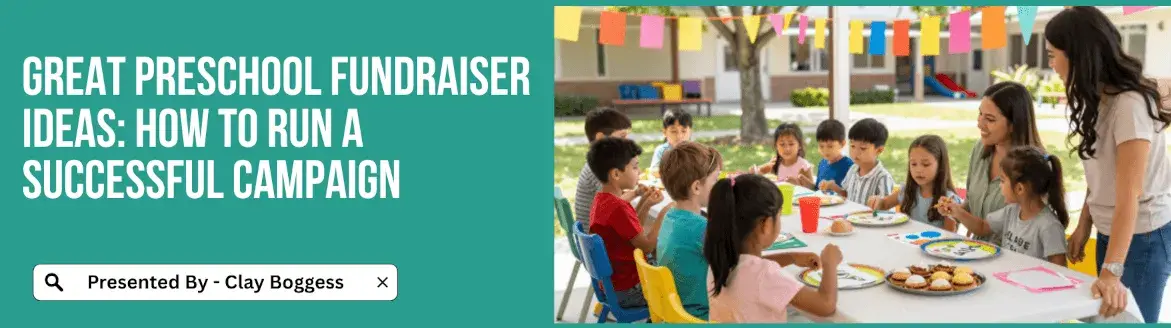
Preschool and daycare centers fundraise to cover expenses that tuition does not fully fund—classroom supplies, educational materials, playground equipment, field trips, and enrichment activities. Group sizes range from small in-home childcare programs with a handful of families to large pre-kindergarten programs with several hundred students and an equally large parent community to mobilize.
Big Fundraising Ideas has supported preschool and daycare fundraising programs since 1999. This guide covers the structure of an effective preschool fundraiser, the products that work best for a parent-driven program, and the communication practices that make the difference between a campaign that reaches its goal and one that falls flat.
What Preschools Fundraise For
- Classroom supplies: consumable educational materials that need regular replenishment -- art supplies, books, manipulatives, and sensory play materials
- Playground and outdoor equipment: play structures, riding toys, sand and water tables, and safety surfacing that require significant capital investment
- Enrichment programs: visiting performers, educational programs, and special events that enhance the curriculum but are not covered by standard operating budgets
- Tuition assistance: many programs use fundraising revenue to help offset tuition costs for families who demonstrate need, building goodwill and community loyalty
- Technology and learning tools: tablets, educational software subscriptions, and technology-assisted learning tools that require periodic replacement.
Step 1: Establish a Fundraising Policy
The policy does not need to be elaborate. A brief paragraph in the enrollment packet explaining that the program runs one or two fundraising campaigns per year, what the funds typically support, and what the parent commitment looks like is sufficient. Families who agree to this commitment at enrollment rarely push back on the campaigns themselves. Families who encounter fundraising for the first time mid-year are the ones most likely to disengage or resist.
- Include it in enrollment paperwork: a brief paragraph in the handbook or welcome packet, not a separate document that gets overlooked
- State the frequency: 'we run one campaign in fall and one in spring' sets a predictable, manageable expectation.
- Name what the funds support: 'proceeds fund classroom materials and enrichment activities' gives parents a reason to participate beyond obligation.
Step 2: Hold a Parent Kickoff Meeting
An effective preschool parent kickoff communicates four things: what the specific fundraising goal is and what it will fund, how much each parent needs to sell individually, when the money is due and how to turn it in, and what the top-seller incentive is. Any parent who leaves the kickoff knowing these four things is prepared to participate. Any parent who leaves confused or uncertain is likely to put the brochure in a bag and forget about it.
Kickoff Best Practices
- Provide advance notice: announce the date and time at least one week before—parents with childcare and work schedules need planning time.
- Keep it under 20 minutes: parents have already picked up their children and are managing the transition out of school—long meetings lose attention quickly.
- State the individual selling goal: 'each family is asked to sell 10 items by [date]' is more actionable than 'please try to sell as much as you can'
- Distribute materials at the kickoff: parents who leave with their brochure and order envelope in hand start the next day; parents who wait to receive materials start late or not at all.
Products That Work for Preschool Fundraising
All products available through bigfundraisingideas.com. No upfront cost. Free shipping.
Step 3: Offer a Meaningful Incentive
Weaker alternatives like gift cards or small merchandise may not create the competitive motivation needed to push participation above the baseline. The incentive should be proportional to what the campaign asks of parents. If parents are expected to sell 10 items over two weeks, the top-seller prize should feel worth winning. Connect the incentive to additional incentive resources for more ideas about layering motivation throughout the campaign.
Step 4: Check In and Run Prize Drawings
Prize drawings are particularly effective in preschool settings because they create a visible, classroom-based reward that connects parent selling to the child's immediate experience. For example, when a parent sells five items, they receive a prize drawing coupon that enters their child in a classroom drawing for a special privilege—a sticker, a small toy, or a special activity. The child sees the connection between the parent's effort and a tangible reward in their own classroom environment.
Frequently Asked Questions About Preschool Fundraisers
What are the best preschool fundraiser ideas?
Brochure programs, scratch card fundraisers, Smencils, and lollipops through Big Fundraising Ideas. All parent-friendly, low logistics, strong for workplace adult networks—no upfront cost.
How is preschool fundraising different from elementary?
Preschool children cannot sell. The entire fundraising burden falls on parents who sell through their own adult networks. Preschool fundraising success depends on parent communication, kickoff quality, and meaningful incentives—not student motivation.
How do you run a successful preschool fundraiser?
Set a fundraising policy at enrollment. Hold a parent kickoff meeting that states the specific goal, individual selling target, and close date. Offer a meaningful top-seller prize. Send a midpoint update. Recognize top performers publicly. See bigfundraisingideas.com/preschool-fundraisers for program options.
What products work best for preschool fundraisers?
Scratch cards (no product to carry, parents' adult network is the channel), brochure programs (parent takes catalog to workplace), Smencils (non-food, compact, easy sell), lollipops ($1, fast transaction).
How do you motivate preschool parents to fundraise?
Communicate exactly what the funds accomplish. Offer a meaningful top-seller prize (free tuition month is the most effective). Send midpoint check-ins with current standings. Run prize drawings where the child earns a classroom reward when the parent sells a set number of items.
Do preschool children participate?
Not in selling. Preschool children cannot approach buyers with a pitch or understand prize programs. They can receive classroom rewards when their parent sells a threshold number of items, creating a visible connection between parent effort and child experience.
How much can a preschool raise?
It depends on family count and parent participation rate. A program of 50 families with strong engagement from a well-run kickoff meeting can generate significant revenue. Large programs with 200+ families and high workplace selling rates raise substantially more.
Should a preschool have a fundraising policy?
Yes. A policy communicated at enrollment sets the expectation that campaigns are part of the program. Parents who agree at enrollment are cooperative partners. Parents who encounter fundraising as a surprise mid-year are far more likely to disengage. Download our fundraising tips resource for policy templates.
What is the best timing for a preschool fundraiser?
September or October for the fall campaign—families are settled into the school year, but the holiday season hasn't created competing demands. February or March for the spring campaign. Avoid summer, when many families travel or attendance drops.
How long should a preschool fundraiser run?
Two weeks. Enough time for parents to reach their workplace and community contacts, with the urgency of a firm close date. Longer campaigns lose momentum. Shorter ones don't give parents enough time to cover their full network.
Author Bio
Clay Boggess has been designing fundraising programs for schools and various nonprofit organizations throughout the US since 1999. He’s helped administrators, teachers, and outside support entities such as PTAs and PTOs raise millions of dollars. Clay is an owner and partner at Big Fundraising Ideas.

Categories
Related Articles
Is It Time to Switch…
Signs it may be time to switch fundraising companies, what changes when you do, and the questions to ask before committing to a new one.
Direct Donation Drive vs…
Direct donation drive vs. product fundraiser: which schools each format suits, why the ask reaches a different audience, and how to decide.

Grade-Level vs School-Wide:…
Grade-level vs school-wide fundraiser structures compared: coordinator workload, family fatigue, goal clarity, and how to decide which type works.