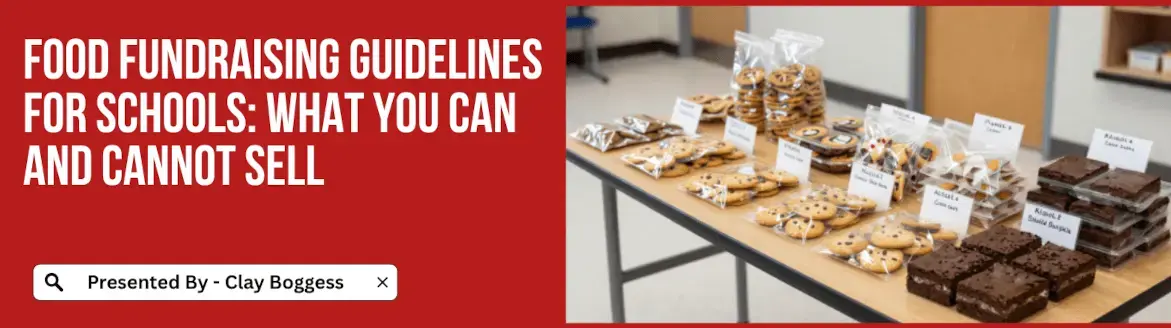
The old days of running candy sales on campus during school hours are long gone. For many fundraising coordinators, that change first felt like a loss. In practice, once people take the time to review and understand the rules, they realize there are more opportunities to sell food than they might have thought. The guidelines do not ban food fundraising. They simply shape when and how certain products can be sold.
Big Fundraising Ideas has helped schools, PTAs, and PTOs run successful food fundraisers since 1999. This guide explains the USDA Smart Snacks standards in plain terms, shows exactly what you can and cannot sell during school hours, and identifies which products keep your fundraiser fully compliant.
What Are the USDA Smart Snacks Standards?
In 2010, Congress passed the Healthy Hunger-Free Kids Act, which directed the United States Department of Agriculture to establish nutrition standards for all foods and beverages sold to students during the school day, including those sold through fundraisers. The result was the Smart Snacks in School framework. The goal was to balance two needs: giving students access to healthier options during school hours and preserving schools' ability to raise funds for programs that depend on them.
To qualify as a Smart Snack, a food item must meet one of the following requirements: be a whole grain-rich product; have a fruit, vegetable, dairy product, or protein food as the first ingredient; or contain a meaningful amount of fruit or vegetable. The item must also meet limits on calories, sodium, fats, and sugars. Beverages face their own separate limits.
- Whole grain-rich first: the product lists a whole grain as the primary ingredient
- Fruit, vegetable, dairy, or protein first: one of these is the first listed ingredient
- Nutrient limits: the item stays within set calorie, sodium, total fat, saturated fat, trans fat, and sugar thresholds
- Beverage rules: water, milk, and certain juices qualify, while full-sugar sodas do not
What You Can and Cannot Sell During School Hours
The single most useful distinction to understand is the difference between food intended for immediate on-campus consumption and food ordered for later. Smart Snacks restrictions target the former. A candy bar handed to a student for lunch is regulated. A candy bar ordered through a brochure for delivery weeks later is not, because it is not intended for immediate on-campus consumption.
Food Fundraising During School Hours: Allowed vs Restricted
Students can no longer conduct a candy bar fundraiser during school hours by selling bars for on-campus consumption. They can, however, sell those same bars before and after school. And candy displayed in a sales brochure can be sold at any time because it is not intended for immediate consumption. That single point opens up far more options than most coordinators assume.
Which Food Products Meet Federal Fundraising Guidelines
Not every product is restricted. Several items in a standard fundraising lineup either meet the federal nutrition standards outright or fall outside them entirely as non-food products. Knowing which is which lets a coordinator run a direct, in-school campaign without breaking any rules.
Product Compliance for In-School Direct Sales
Profit figures verified from bigfundraisingideas.com product pages. Free shipping on all orders.
Our original beef jerky meets all federal nutrition requirements, so it qualifies as a direct-sale item that students can sell on campus during school hours. If you are wondering whether a popcorn fundraiser meets the Smart Snacks standards, consider how it is packaged. If butter is added to the popcorn, the nutritional information for that addition also needs to be considered. Packaging and ingredients determine the answer.
Exempt Fundraisers and State Rules
The federal standards are not the whole picture. The USDA recognizes the importance of fundraisers in helping schools maintain key programs, so states are authorized to set a specific number of exempt fundraisers each year. During an exempt fundraiser, a group may sell foods that do not meet the Smart Snacks standards.
This part is where it gets local. According to USDA research, more than half of all schools in the country do not allow fundraisers that sell sweet or salty foods, and over 39 states have state-issued competitive food nutrition standards in place. Some states allow several exempt fundraiser days per year. Others allow none at all. Because the rules differ so much from one state to the next, checking with your local school district for specific policy requirements is an essential first step.
- State authority: Each state sets the number and frequency of exempt fundraiser days, not the USDA
- Wide variation: some states permit multiple exempt days per year, while others permit zero
- District wellness policy: Your local district may add rules beyond state and federal standards
Bake Sales and Concession Stands
There has been a lot of confusion about bake sales, much of it from early media reports that misrepresented the rules. The reality is straightforward. The USDA is not imposing federal restrictions on bake sales. States are free to allow bake sales and fundraisers featuring foods that do not meet the standards during the school day, and to decide how often they may occur.
Groups can still have bake sales on an infrequent basis, as long as the food items are not prohibited by district or state rules and do not violate local school wellness policies. And anything can be sold out of a concession stand, as long as it is not during school hours. Evening games, weekend events, and after-school activities all fall outside the Smart Snacks window, which is why concession stands at a Friday night game face no federal nutrition limits.
How to Run a Compliant Food Fundraiser
- Check state and district policy first: over 39 states have their own standards, and some are stricter than federal rules. Start by working with your school administration to confirm what is allowed.
- Choose the right format: for popular foods that do not meet Smart Snacks standards, run a brochure or online program. Because products are delivered later and not eaten on campus during the school day, these formats are not restricted.
- Time direct sales correctly: sell candy bars and similar items before school, after school, or at events outside the school day. The Smart Snacks window runs from midnight before the school day to 30 minutes after the school day ends.
- Select compliant products for in-school sales: for direct sales to students during school hours, choose compliant items such as People's Choice Beef Jerky, or non-food items like Smencils, scratch cards, and discount cards.
- Use exempt fundraiser days strategically: if your state permits exempt days, reserve them for your highest-revenue non-compliant food sales, and track your usage to stay within the state allowance.
- Document and confirm: keep records of what you sell and when, and confirm with administration that your plan meets the local wellness policy, Smart Snacks standards, and state rules before launch.
Frequently Asked Questions About Food Fundraising Guidelines
What are the food fundraising guidelines for schools?
Food fundraising guidelines are set by the USDA Smart Snacks in School standards under the Healthy Hunger-Free Kids Act of 2010. They apply to food sold to students on campus during the school day. Compliant foods and non-food items can be sold anytime, while non-compliant foods generally cannot be sold during school hours unless your state permits an exempt fundraiser.
Can schools still sell candy bars for fundraisers?
Yes, but not to students on campus during school hours unless the product is compliant. Candy bars can be sold before and after school, at events outside the school day, and through a brochure at any time because brochure orders are not for immediate consumption.
Are brochure fundraisers affected by USDA guidelines?
Generally no. Brochure orders are placed for later delivery, not for immediate on-campus consumption during the school day, so they are not restricted. As long as groups follow district guidelines, there should be no restrictions on taking brochure orders at school, which makes catalog programs one of the most flexible and compliant options.
What food products meet federal fundraising nutrition standards?
People's Choice Beef Jerky meets federal nutrition requirements and qualifies as a compliant direct-sale item. Whether a popcorn fundraiser qualifies depends on its packaging and added ingredients such as butter. Non-food items such as Smencils, scratch cards, and discount cards are not subject to nutrition restrictions.
What is the USDA Smart Snacks standard?
It is a set of science-based nutrition guidelines for all foods and beverages sold to students during the school day, required by the Healthy Hunger-Free Kids Act of 2010. To qualify, a food must be whole-grain-rich or have a fruit, vegetable, dairy, or protein as the first ingredient, and meet limits on calories, sodium, fat, and sugar.
Can schools have bake sales under the new rules?
Yes. The USDA does not ban bake sales. States have full authority to set policies, including allowing exempt fundraiser days featuring non-compliant foods. Bake sales held outside school hours, such as at evening or weekend events, are not subject to the standards at all.
What are exempt fundraisers?
Exempt fundraisers are food fundraisers that a state permits to sell items that do not meet Smart Snacks standards for a limited number of days per year. The USDA gives each state authority to set the number. Some states allow several exempt days annually, while others, such as Minnesota, allow zero.
Do food fundraising guidelines apply after school hours?
No. Smart Snacks applies only during the school day, from midnight before the start until 30 minutes after the official school day ends. Foods sold at evening sporting events, weekend activities, or community events are not subject to the federal nutrition standards.
Can a concession stand sell any food?
Yes, as long as the sale is outside the defined school day. Concession stands at evening games, weekend events, or after-school activities fall outside the Smart Snacks window. Schools should still check local district wellness policies, which may set additional rules.
How do schools run a compliant food fundraiser?
Check state and district policies first; use a brochure or online format for non-compliant foods; sell candy before or after school; and choose compliant or non-food products for in-school sales. Working with the administration before launch ensures full compliance.
Author Bio
Clay Boggess has been designing fundraising programs for schools and various nonprofit organizations throughout the US since 1999. He’s helped administrators, teachers, and outside support entities such as PTAs and PTOs raise millions of dollars. Clay is an owner and partner at Big Fundraising Ideas.

Categories
Related Articles
How Does a School Get Paid…
How does a school get paid after a fundraiser? See how direct-sale, brochure, and online fundraisers settle invoices or send profit payments.
How Much Can a School Make…
Learn how much a school can make from a popcorn fundraiser using the profit table, worked examples by group size, and what affects your total.

Cupcake Decorating Fundraiser…
How to run a cupcake-decorating contest fundraiser: entry fees, fair judging, allergen labeling, and three ways to raise money at one event.