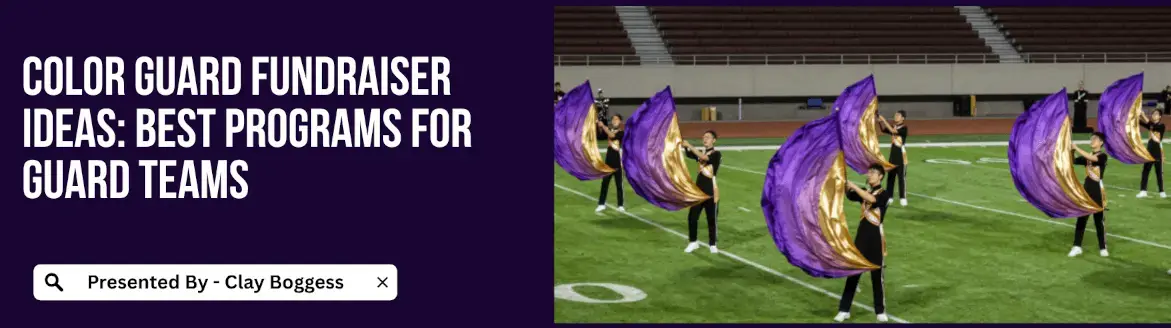
Color guard programs also have something most school fundraising groups don't: two competitive seasons. The fall marching season and the winter guard season each create a natural fundraising window and a dedicated community of supporters who follow the team through both schedules. Two seasons mean two annual opportunities to run a product campaign with full team energy and a motivated community audience behind it.
Big Fundraising Ideas has supported school marching band and performing arts fundraising programs since 1999. The same product programs that work for marching band fundraising apply directly to color guard—the programs share a competitive season, a parent community, and the same school supporter base.
What Color Guard Teams Fundraise For
- Flags and equipment: show-specific flags, practice flags, rifles, sabers, and silk replacements -- the most frequently replaced items in any guard inventory
- Performance costumes: show-designed unitards, skirts, gloves, and accessories that change with every new competitive program
- Competition entry fees: regional and state competition registration costs, adjudicator fees, and facility rental charges
- Travel and transportation: bus rental, hotel rooms, and meal costs for overnight competition travel -- especially significant for programs that compete at state or national levels
- Choreography clinicians: guest choreographers and clinicians who develop and refine the team's movement and equipment vocabulary for each competitive show
- Floor tarps: the large performance floor coverings used in winter guard indoor season -- significant one-time investments that require periodic replacement
The Two-Season Fundraising Advantage
The fall campaign connects fundraising directly to the marching show—the flags, costumes, and equipment the community will see the team perform with at competitions and halftime shows. The winter campaign connects to the indoor guard show—a different performance environment with different equipment and costume needs. Community supporters who follow the team through both seasons understand both campaigns and give to both.
Scratch Card Fundraiser
The scratch card fundraiser is particularly effective at the start of each competitive season, when the upcoming schedule and community supporters energize team members as they anticipate performances. Guard members approach family members, neighbors, and community contacts—the same people who come to halftime shows and competitions. Parents who take the card to their workplace activate a concentrated adult professional network that student-only selling cannot reach independently.
Each season is a separate campaign with separate expenses. Running both maximizes annual revenue without donor fatigue. bigfundraisingideas.com/scratch-card-fundraiser.
Discount Cards
The discount card fundraiser is a strong complement to the scratch card campaign because it reaches different buyers through a different mechanism. The neighbor who scratches a dot on a guard member's card is not the same person as the colleague who buys a discount card from a parent at work. Running both programs simultaneously from the same two-week window captures the full community reach without overlap.
Candy Bars and Smencils
Candy bars work best at the events where color guard is most visible: marching competitions, halftime shows, and the indoor guard competitions where the team performs for a captive audience of families and fellow competitors. Peanut-free and 100 percent kosher options are available. Smencils add a non-food option for the school setting—color guard members can sell them to classmates and teachers during school hours, creating a selling window that candy bars cannot access during instructional time.
Program Comparison for Color Guard Fundraisers
All products available through bigfundraisingideas.com. No upfront cost. Free shipping.
Using Competitions as Fundraising Events
Competition selling requires minimal setup: a small table with candy bars and Smencils, a sign noting the guard program the products support, and one or two booster parents to staff it. Team members can direct family members to the table between performances. The combination of competitive energy and family goodwill creates a selling context that school hallway selling cannot replicate.
Frequently Asked Questions About Color Guard Fundraising
What are the best fundraiser ideas for a color guard team?
Scratch cards (donation-based, $100 per completed card), discount cards ($20 for booster adult networks), candy bars ($1-$2 for competitions and events), and Smencils (non-food, in-school selling) are all available through bigfundraisingideas.com.
What do color guard teams use fundraising money for?
Show-specific flags, rifles, sabers, and equipment; performance costumes that change every competitive season; competition entry fees; travel; choreography clinicians; floor tarps for winter guard; and prop construction.
How is color guard fundraising different from band fundraising?
Color guard has completely separate program expenses—flags, costumes, choreography, floor tarps—and a second independent season (winter guard) that the band does not share. Color guard programs that fundraise independently from the band, through dedicated campaigns and their own booster networks, generate more revenue than those pooling funds with the band program.
When should a color guard team run its fundraiser?
Two windows: late summer or early fall (August/September) before marching season, and January/February before winter guard season. Each campaign connects fundraising to the season-specific expenses the community can picture—the flags and costumes they will see the team perform with.
How do color guard members sell fundraising products?
Personal network selling (family, neighbors, community contacts), parent workplace distribution for scratch cards and discount cards, direct sales at competitions and performances, and an online store for extended family.
Can a color guard team sell products at competitions?
Yes. A table with candy bars and Smencils near the team's seating section at a competition reaches family members in a high-energy, supportive environment. Competition selling is one of the highest-conversion settings for color guard direct-sale products.
How can a small color guard team raise meaningful money?
Scratch cards scale to any team size. A team of 12 members with one card each collects $100 per completed card from community supporters: minimum 10 cards, no upfront cost.
Should color guard fundraise separately from the band?
Yes. Independent color guard campaigns communicate specific guard expenses to the community, prevent guard fundraising energy from being diluted by the larger band program, and generate more dedicated community support. See our marching band fundraiser guide for the band's separate campaign strategy.
What makes color guard fundraising unique?
Two competitive seasons (marching fall and winter guard) create two annual fundraising windows. Show-specific expenses change every year, creating a reliable annual need. The competitive audience at both seasons creates built-in fundraising moments that most one-season programs don't have.
How do booster clubs help color guard fundraising?
Color guard booster parents distribute discount cards through their workplace networks and scratch cards through community contacts, significantly expanding the team's fundraising reach beyond student-only selling.
Author Bio
Clay Boggess has been designing fundraising programs for schools and various nonprofit organizations throughout the US since 1999. He’s helped administrators, teachers, and outside support entities such as PTAs and PTOs raise millions of dollars. Clay is an owner and partner at Big Fundraising Ideas.

Related Articles

Cupcake Decorating Fundraiser…
How to run a cupcake-decorating contest fundraiser: entry fees, fair judging, allergen labeling, and three ways to raise money at one event.

Holiday Beef Stick Fundraiser…
How to run a holiday beef stick fundraiser: cover ordering and delivery timing, the 15-day invoice rule, and tips to avoid leftovers.

How Much Can a School Make…
Learn how much you can make from an Otis Spunkmeyer fundraiser; see the profit formula, a worked example, and what affects your total.