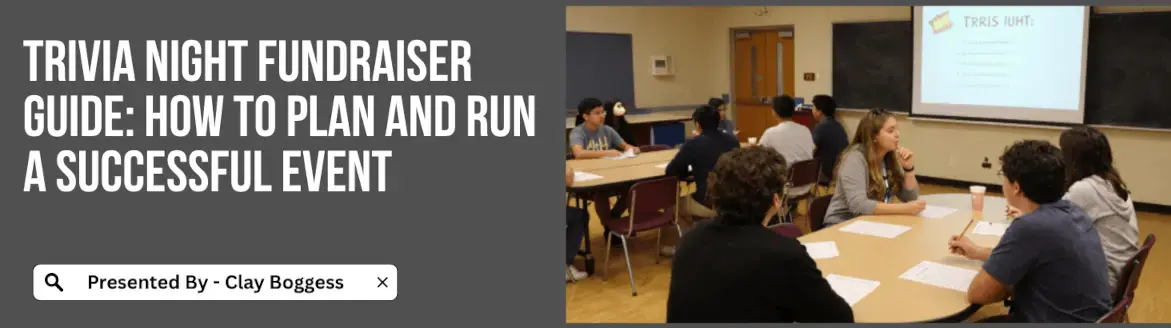
Trivia night works as a fundraiser for the same reason pub quiz has been a staple of community fundraising for decades: it gives adults a reason to gather, compete, and spend money while having a genuinely good time. The format is inherently social. Teams talk, laugh, disagree, and bond over questions. By the end of the evening, attendees feel like they had a real experience in addition to donating to a cause. That feeling brings them back the following year.
Big Fundraising Ideas has supported school fundraising programs since 1999. This guide covers the full planning process for a trivia night fundraiser, how to price team entry, which add-on revenue programs deliver the most per-hour return, and how to pair the event with a product program that generates parallel community revenue from a completely different donor pool.
How a Trivia Night Fundraiser Works
The economics are simple, and the overhead is low. A free school gymnasium, donated raffle prizes, questions written by volunteers, and a host who is already part of the school community result in an event with near-zero operating costs. Net revenue equals entry fees plus add-on revenue minus any food or decoration budget. Schools that keep the event lean (water and soda, no catered dinner) net the highest percentage of gross revenue.
- Entry fee: $80 to $120 per team of four to six (the core revenue stream, collected at registration)
- Heads-or-tails: Between-round game, $5 to $10 per player, one winner takes a small donated prize
- 50/50 raffle: $5 to $10 per ticket, winner takes half the pot, school keeps half
- Dessert auction: Donated cakes and pies were auctioned table-by-table during the final scoring break
- Product sales at the door: Discount cards at $20, up to 75 percent profit (sold at the registration table as teams arrive)
Setting the Right Team Entry Fee
Advance team registration is the single most important conversion decision. Events that accept only registered teams with prepayment before the night guarantee a revenue floor regardless of weather, competing events, or last-minute cancellations. Treat door registrations as bonus revenue (never depend on them to reach your revenue goal).
Entry Fee Revenue at Different Attendance Levels
Entry revenue alone. Add-on programs add $1,000 to $2,500 to the total depending on attendance and execution.
Writing Great Trivia Questions
Category Mix That Drives Team Registration
- General knowledge: Facts every educated adult has encountered, like geography, science, literature, and current events from the past year.
- Popular music: Decade-specific rounds (80s, 90s, 2000s) appeal to different age groups at each table. Start with the decade of your primary audience.
- Sports: National and local team history, including at least one question specifically about your school's teams or local sports heroes to create a home-crowd reaction.
- Movies and television: Classic and contemporary. You can mix eras so that younger and older team members both have strong rounds.
- Picture round: Show an image on screen while teams identify the person, place, or object, which breaks up the verbal format and appeals to visual learners.
- School/local round: Questions specific to the school, community history, or local landmarks, which will be the round that generates the most laughter and team discussion.
Revenue Add-Ons That Outperform Entry Fees Per Hour
Heads or Tails
Sell wristbands at $5 to $10 per player as teams arrive. Between rounds two and three, run a coin flip game where players put their hands on their heads for heads or their rear for tails. Wrong guessers sit down each round until one player remains. A room of 100 players at $10 each generates $1,000 in revenue from a five-minute segment, with a donated prize worth $25 to $50. The ROI for this add-on is the highest among trivia night revenue segments.
50/50 Raffle
Sell tickets at $5 to $10 each throughout the event. Draw the event to a close when all attendees are present. The winner takes half of the collected pool; the school keeps the other half. A room of 100 attendees, each buying an average of 2 tickets at $5 per ticket, generates $1,000 in gross ($500 to the winner and $500 to the school). The self-funding prize requires no advance procurement.
Discount Cards at the Door
The discount card fundraiser through Big Fundraising Ideas generates up to 75 percent profit at $20 per card (verified from bigfundraisingideas.com/discount-card-fundraiser). Selling discount cards at the registration table as teams check in reaches adults already in a social-spending mindset. A buyer who just paid $100 for a team entry and is excited about the evening ahead is receptive to a $20 card that pays for itself on their first or second visit to a local restaurant. Selling 50 cards at the registration table generates $325 in net revenue during a 30-minute check-in window.
Pairing a Scratch Card Program With the Trivia Night
The scratch card fundraiser requires no event logistics. Students receive a personalized card and approach supporters individually over the selling window. The neighbor who scratches a dot and donates $3 is not the adult buying a trivia night team registration. Neither program draws from the other's donor pool. Running both simultaneously within the same 2-3 week window captures community-wide revenue alongside event-specific revenue from a single coordinated campaign effort.
- Cost per card: $15 at the 25-99 card tier (verified from bigfundraisingideas.com/scratch-card-fundraiser)
- Gross per card: $100 when all 50 dots are scratched
- Net per card: $85 at an 85 percent profit margin
- Minimum order: 10 cards
- No conflict with trivia night: Community donors and trivia night attendees are different people. There is zero overlap or donor fatigue between the programs.
How to Run a Trivia Night Fundraiser: Step by Step
- Secure Venue 30-45 Days Out: School cafeteria or gymnasium, church hall, or community center. Tables must seat teams of four to six with space between teams. Confirm microphone access and screen capability for picture rounds.
- Open Team Registration: $80-$120 per team. Send a parent email with a registration link 30 days out—target 80 percent of your capacity registered before event night. Include the category list in registration materials to drive team formation.
- Write and Verify Your Questions: Six to eight categories, eight to ten questions each. Verify every answer. Test the question set with two or three people from outside your planning committee. Questions that stump even the test audience are too hard.
- Recruit Host and Scoring Team: The host sets the tone for the entire event. Recruit someone energetic who can handle the microphone confidently. Three scoring volunteers handle collection and tallying. Practice the process before the event.
- Set Up Add-ons: Sell discount cards and raffle tickets at the registration table. Run heads-or-tails between rounds two and three. Run the raffle drawing and dessert auction during the final scoring break.
- Close on Time: Announce the trivia winner, heads-or-tails winner, and raffle winner publicly. Send a follow-up communication within 48 hours with the total raised and what it will fund.
Frequently Asked Questions About Trivia Night Fundraisers
How do you run a trivia night fundraiser?
Sell team registrations for $80 to $120 per team of 4 to 6 players. Host six to eight rounds of questions with an energetic caller. Add revenue between rounds with heads-or-tails and a raffle. Sell discount cards at registration and run a scratch card program throughout the community in the weeks leading up to it.
How much can a trivia night fundraiser make?
20 teams at $100 = $2,000 entry revenue. Add heads-or-tails ($500-$1,000), 50/50 raffle ($200-$500), and discount card sales at the door (up to 75% profit on $10/card). Total event revenue reaches $3,500 to $5,000 for an 80- to 120-person event.
What is the best team size?
Four to six players. Teams of four give everyone meaningful participation. Teams of six allow broader social groups without any member dominating. Avoid teams larger than eight as engagement drops sharply.
How much should you charge per team?
$80 to $120 per team of four to six ($15 to $25 per person). Schools in higher-income communities that offer dinner can cost $150 to $200. Advance registration with payment secures the revenue floor regardless of night-of conditions.
What categories make the best trivia questions?
General knowledge, popular music (by decade), sports, movies and television, history, science, a picture round, and a local or school-specific round. The local round generates the most laughter and audience connection.
What is heads or tails?
A between-round game where players pay $5 to $10 for a wristband. On each coin flip, players predict heads or tails with a hand gesture. Wrong guessers sit down. The last player standing wins a donated prize. 100 players at $10 each = $1,000 from a 5-minute segment.
How do you add revenue beyond entry fees?
Heads-or-tails ($5-$10/player), 50/50 raffle ($5-$10/ticket), dessert auction on donated items, and discount cards at the door at up to 75% profit on $10/card (verified from bigfundraisingideas.com). Run a scratch card program through the community (85% profit at 25-99 cards) in the weeks leading up to it to generate parallel revenue from a separate donor pool.
Can you run a trivia night alongside a product fundraiser?
Scratch cards at 85% profit (25-99 cards, $15/card, $85 net) run in parallel with zero overlap. Students distribute cards to community supporters who are not attending the trivia night: two programs, two donor pools, one coordinated two-week window.
What venue works best?
School cafeteria or gymnasium (free, equipped, accessible), church fellowship hall (often free with kitchen access), or community center. Tables must seat teams of four to six, with four to five feet between tables to prevent answer sharing.
How many rounds should you have?
Six to eight rounds with eight to ten questions each. Six rounds run about 90 minutes, including scoring breaks. Eight runs two to two and a half hours with add-on games. Events longer than two and a half hours show a measurable drop in energy in the final rounds.
Author Bio
Clay Boggess has been designing fundraising programs for schools and various nonprofit organizations throughout the US since 1999. He’s helped administrators, teachers, and outside support entities such as PTAs and PTOs raise millions of dollars. Clay is an owner and partner at Big Fundraising Ideas.

Related Articles
Holiday Beef Stick Fundraiser…
How to run a holiday beef stick fundraiser: cover ordering and delivery timing, the 15-day invoice rule, and tips to avoid leftovers.

How Much Can a School Make…
Learn how much you can make from an Otis Spunkmeyer fundraiser; see the profit formula, a worked example, and what affects your total.

Mother's Day and Father…
Mother's Day and Father's Day fundraiser ideas for schools: what to sell, how to price gifts kids can afford, and when to start.