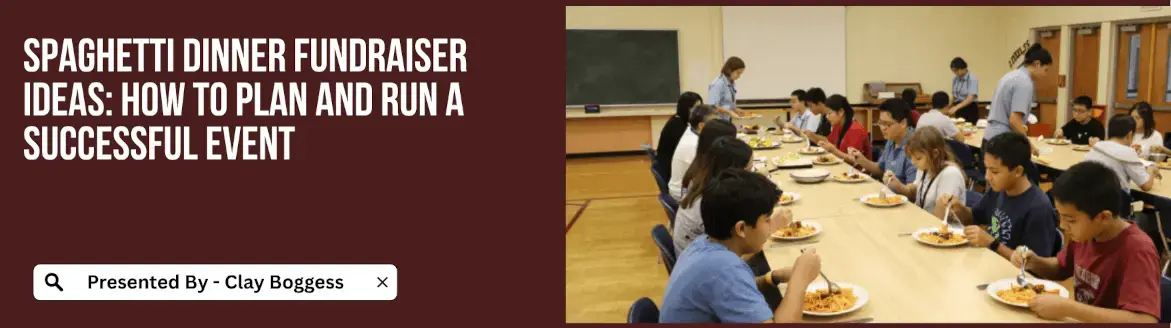
The spaghetti dinner fundraiser has worked for schools, sports teams, churches, and community organizations for decades because its economics are simple and its logistics are manageable. The meal cost is low, the community appeal is broad, and the format creates a social environment that makes people feel good about participating. Unlike a product fundraiser where buyers need to want what is being sold, a spaghetti dinner sells an evening with the community. It is something families genuinely look forward to.
Big Fundraising Ideas has supported school fundraising programs since 1999. This guide covers the full planning process for a spaghetti dinner fundraiser, how to price tickets for maximum attendance and margin, how to keep food costs low, which revenue add-ons perform best at a dinner event, and how to pair the dinner with a product program to build two revenue streams from the same two-week window.
How a Spaghetti Dinner Fundraiser Works
The simplicity is what makes this format repeatable. Once a school or community organization successfully runs a spaghetti dinner, the volunteer team knows the process, ingredient sources are established, and the community knows to expect it. Annual spaghetti dinners become calendar fixtures that require less promotion each year because attendance builds on prior goodwill.
- Ticket Revenue: $12-$20 per adult, $7-$10 per child (family-friendly pricing drives attendance)
- Food Cost Target: $3-$5 per person with donated or discounted ingredients (lower with strong local donor outreach)
- Net per Ticket: $10-$12 per adult at mid-range pricing with managed food costs
- Add-on Revenue: Dessert auction, raffle, and product sales at the door each generate $300 to $1,500 beyond ticket revenue)
- Volunteer Requirement: 15-20 volunteers for a 150-200 person dinner will be manageable for any active PTA or booster club
Planning the Event: Venue, Date, and Menu
Best Venue Options
- School Cafeteria or Gym: Typically free for school use, equipped with tables and chairs, and familiar to the community. The strongest venue choice for school organizations
- Church Fellowship Hall: Often available at no cost for community organizations, equipped kitchen, ample seating
- Community or Recreation Center: Modest rental fee and professional setup that’s appropriate when a larger capacity is needed
- Fire Station Meeting Room: Available in many communities at low or no cost, generates goodwill with local first responders
Date and Timing
Friday and Saturday evenings generate the highest attendance for family events. Weeknight dinners work for organizations with a captive community (e.g., a sports team where families attend events regularly) but draw lower turnout from the broader community. Avoid major holidays, local sports playoffs, and school exam weeks. The ideal window is 45 to 60 days after you commit to the event, so ticket sales have enough time to reach the full community.
Menu Planning
The standard spaghetti dinner menu covers four components: spaghetti with meat sauce, a simple salad, garlic bread, and a dessert. Keeping the menu narrow and consistent reduces food costs, simplifies kitchen logistics, and speeds up volunteer training. A breadstick or dinner roll is interchangeable with garlic bread at a lower cost. A beverage station with water, lemonade, and iced tea adds minimal cost and eliminates the per-person drink logistics of a served beverage program.
Ticket Pricing and Sales Strategy
Advance ticket sales are the most important operational decision in the entire event. Events that plan for advance sales and treat door sales as bonus revenue consistently outperform events that rely on walk-in attendance. Distribute paper tickets to students two to three weeks before the event, open an online ticket link from a parent email, and post the ticket link on social media. A visible countdown to the close of advance sales drives last-week urgency.
Ticket Pricing and Profit at Different Attendance Levels
Calculations based on adult-only pricing for simplicity. Family ticket mixes reduce average per-ticket revenue by 10-20 percent. All figures exclude add-on revenue.
How to Keep Food Costs Low
- Grocery Store Outreach: Request a donation letter from the school to the store manager. A one-page explanation of the event and a tax receipt offer close most donation asks for a bulk food purchase.
- Restaurant Supply Bulk Pricing: Commercial quantities of pasta, sauce, and bread purchased at restaurant supply pricing rather than retail typically cost 30 to 50 percent less per pound.
- Parent-owned Business Donations: Parents who own grocery stores, bakeries, or food distribution companies are the highest-converting donation targets for ingredient requests
- Dessert Donations from Parents: Asking parents to donate a homemade cake or pie for the dessert auction eliminates dessert cost while generating the highest-energy revenue moment of the evening
Revenue Add-Ons at the Dinner
Dessert Auction
Recruit 8 to 12 parent volunteers to donate a homemade or high-quality bakery dessert. Number each dessert, display them on a visible table, and auction them off table by table during the dinner service. The table-by-table format keeps every attendee engaged rather than creating a crowd at a single bidding station. A skilled caller or emcee who works the room commands the highest prices.
Raffle
A single donated prize (a restaurant gift basket, a weekend getaway, and a large gift card bundle) with $5 raffle tickets sold at the door and at the product table generates $300 to $800 from a 150-person dinner. Announce the drawing publicly at the event's close for maximum ticket urgency in the final 30 minutes.
Discount Cards at the Door
The discount card fundraiser through Big Fundraising Ideas converts well at dinner events because attendees are already in a community-supporting mindset. A $20 card with local restaurant and business savings sells itself to adults attending a community event who have just eaten a meal. At up to 75 percent profit on a $20 sell price, selling 50 cards at the door generates $325 net from a table staffed by two volunteers at the entrance.
Product data verified from bigfundraisingideas.com/discount-card-fundraiser: $20 per card, up to 75 percent profit, personalized with school name, valid one year at local and national businesses.
Pairing the Dinner With a Scratch Card Program
The scratch card fundraiser from Big Fundraising Ideas requires no product delivery, no order forms, and no logistics complexity. Each student receives a personalized card customized with the school name and photo. Supporters scratch a dot to reveal a donation amount between $1 and $5 and contribute that amount. When all 50 dots are scratched, the card has collected $100. The donor receives a coupon sheet as a token of appreciation.
- Cost per card: $15 at the 25-99 card tier (verified from bigfundraisingideas.com/scratch-card-fundraiser)
- Gross per card: $100 when all 50 dots are scratched
- Net per card: $85 at 85 percent profit margin
- Minimum order: 10 cards (accessible to any group size)
- No conflict with dinner: the neighbor scratching a dot and the family buying a dinner ticket are different people in entirely different interactions
Frequently Asked Questions About Spaghetti Dinner Fundraisers
How do you run a spaghetti dinner fundraiser?
Secure a free venue 45 to 60 days out, plan a simple four-item menu (pasta, salad, bread, dessert), recruit 15 to 20 volunteers, sell tickets in advance for $12 to $20 per adult, and add revenue beyond ticket sales with a dessert auction, raffle, and product sales at the door.
How much does a spaghetti dinner fundraiser make?
200 tickets at $15 each (at $4 food cost) = $2,200 net ticket revenue. Add a dessert auction ($500-$1,500), raffle ($300-$800), and discount card sales at the door (up to 75% profit on $20/card). Total event revenue reaches $4,000 to $6,000 for a well-organized 200-person dinner.
What is the best ticket price for a spaghetti dinner fundraiser?
$15 per adult and $8 per child under 12, with a family cap of $40-$45. This structure attracts families, covers food costs with a margin, and does not create a price barrier that suppresses attendance.
How do you keep food costs low?
Seek ingredient donations from local grocery stores, restaurant supply companies, and parent-owned food businesses. Ask parents to donate desserts for the dessert auction. Every donated ingredient reduces per-person food costs and increases net profit per ticket sold.
How many volunteers do you need?
15 to 20 for a 150 to 200-person dinner. Kitchen team (4-6), service and tables (6-8), door and ticket collection (2), product and raffle table (2), and cleanup (2). Assign specific roles before the event and brief volunteers 30 minutes before doors open.
What extras can you add to a spaghetti dinner fundraiser?
Dessert auction (highest-energy add-on), raffle, heads-and-tails game, discount card sales at the door at up to 75 percent profit on $20/card (verified from bigfundraisingideas.com), and a bake sale table of donated goods. Each add-on generates revenue from attendees who are already in a social, giving mindset.
How do you sell tickets for a spaghetti dinner fundraiser?
Paper tickets were distributed to students, an online ticket link was sent to parents' email addresses, and a school website event page was created. Advance ticket sales should cover 80 percent of your target attendance before the event day. Door sales are bonus revenue, not the plan.
Can you run a spaghetti dinner alongside a product fundraiser?
Scratch card fundraisers run in parallel with no overlap. Students distribute cards to the community in the weeks leading up to the dinner. $15/card at the 25-99 card tier, $100 gross, $85 net at 85 percent profit (verified from bigfundraisingideas.com/scratch-card-fundraiser). Dinner ticket buyers and scratch card donors are entirely different groups.
What is the best venue?
A school cafeteria or gymnasium at no cost is the strongest choice (free, equipped, and familiar to the community). Church fellowship halls and community centers are strong alternatives. Venue cost directly reduces net profit, so a free space adds hundreds or thousands of dollars to the bottom line.
How far in advance should you plan?
45 to 60 days minimum, which allows time to secure the venue, recruit volunteers, open ticket sales with a 3-4 week window, solicit ingredient and dessert donations, and promote through parent email and social media. Events planned in less than 30 days consistently underperform on ticket sales.
Author Bio
Clay Boggess has been designing fundraising programs for schools and various nonprofit organizations throughout the US since 1999. He’s helped administrators, teachers, and outside support entities such as PTAs and PTOs raise millions of dollars. Clay is an owner and partner at Big Fundraising Ideas.

Related Articles

Chocolate Bar Fundraiser for…
How are chocolate price swings affecting school fundraisers? See what changed in 2026, the profit per bar, and how to choose a price point.

World's Finest Chocolate…
Compare the World's Finest Chocolate fundraiser, including shipping, minimum order requirements, profit tiers, payment terms, and returns.
One-Week School Fundraiser: A…
Plan a one-week school fundraiser day by day, from product arrival and kickoff to the final push, collection, and the invoice due date.