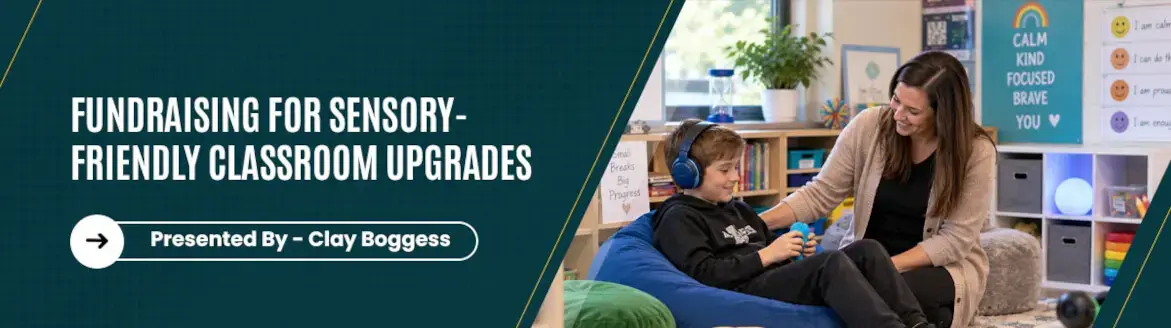
A sensory space can be as simple as a classroom corner with a few pieces of equipment, or as involved as a dedicated room shared across a grade or a school. Either version starts the same way: name exactly what you need, price it, and build a campaign around that specific list rather than a general request for classroom support.
Big Fundraising Ideas has supported school fundraising programs since 1999. This guide covers what a sensory-friendly space typically includes, how to price and scope the project, and which fundraiser formats fit a targeted campaign like this one.
What a Sensory-Friendly Space Typically Includes
- Seating and Enclosure: A bean bag, a small tent or pod, or a soft chair that creates a defined, enclosed spot.
- Weighted Items: Weighted lap pads or blankets that provide calming pressure.
- Fidget and Tactile Tools: A set of hand fidgets, textured items, or a tactile panel mounted on a wall.
- Lighting: A soft lamp or color-changing light to replace harsh overhead lighting in the space.
- Sound: Noise-canceling headphones, or a small speaker for calming sound, depending on what the space is meant to support.
- Visual Timers and Schedules: Simple tools that help a student understand how long they have in the space and when to return to class.
Pricing and Scoping the Project
- Start With the Person Who Will Run the Space: A counselor or teacher who has seen students use similar tools elsewhere will have a clearer list than a general committee guesses.
- Scope to a Single Room or Corner First: A defined, achievable goal for one space is more fundable than an ambitious plan for several rooms.
- Price Every Item on the List: A specific total, built from real prices, is more credible to supporters than a round estimate.
- Treat It as a Starting Point: Many schools add to a sensory space over a few years rather than funding everything in one campaign.
Fundraiser Formats That Fit
A scratch card fundraiser fits most sensory space budgets well. Each card collects approximately $100 gross from one seller's community network with no product to carry or deliver, which suits a defined, moderate goal without requiring the machinery of a full brochure campaign. Discount cards at $20 each work well when the campaign targets the parent community, since the card is an easy, low-friction purchase for adults who want to support the goal directly.
For a larger version of the project, such as outfitting a full dedicated room rather than a single corner, a brochure program or an online store running alongside a smaller in-person campaign can raise the larger total a full room requires.
All products through bigfundraisingideas.com. No upfront cost. Free shipping.
Sharing the Result
For the broader reasoning behind naming a specific, visible target for any classroom or school need, see what your school fundraiser should pay for, and for a similarly scoped single-classroom campaign, see classroom wish list fundraising.
Frequently Asked Questions
What does a sensory-friendly classroom space usually include?
Common items include a bean bag or small enclosed seating area, weighted lap pads, fidget and tactile tools, soft or color-changing lighting, noise-canceling headphones, and a visual timer. Most schools start with a single corner rather than a fully dedicated room and add to it over time.
How much does a sensory space cost to set up?
It varies with scope. A single corner with a few core items is a modest, achievable goal well suited to a smaller fundraiser. A full dedicated room with multiple stations is a larger project, usually built up over more than one campaign rather than funded all at once.
What fundraiser works best for this kind of project?
A scratch card fundraiser fits most sensory space budgets, collecting about $100 gross per completed card with no product logistics. Discount cards work well when the campaign targets the parent community.
Who should help build the wish list for a sensory space?
Whoever will actually manage and use the space- typically a counselor, special education teacher, or classroom teacher. They will have a more accurate, practical list than a general planning committee guessing what is needed.
How do we explain this fundraiser to the school community?
Briefly explain the function alongside the item list: the space gives an overwhelmed student somewhere to go for a few minutes so they can return to class ready to learn. Keep the explanation general and functional rather than describing any individual student's situation.
Can a sensory space be built in stages?
Yes, and many schools do exactly this. Starting with core items in one corner and adding equipment in later campaigns is a common, practical approach, rather than trying to fund a fully dedicated room in a single fundraiser.
Is this different from a general classroom wish list fundraiser?
It uses the same naming-the-need approach but for a specific category of equipment with a defined function. See classroom wish list fundraising for the general version of this model applied to any classroom need.
Should we name a specific student when asking for this fundraiser?
No. The case for a sensory space stands on its own as a general classroom resource that benefits any student who needs it in the moment. Keep the appeal focused on the space and its function, not on any individual child's situation.
How do we know if our school already has enough sensory support?
Ask the staff members most likely to use the space directly, typically counselors and special education teachers. They will know whether existing resources are adequate or whether specific gaps remain, which is a more reliable read than assuming based on what other schools have.
Author Bio
Clay Boggess has been designing fundraising programs for schools and various nonprofit organizations throughout the US since 1999. He’s helped administrators, teachers, and outside support entities such as PTAs and PTOs raise millions of dollars. Clay is an owner and partner at Big Fundraising Ideas.

Categories
Related Articles

Chocolate Bar Fundraiser for…
How are chocolate price swings affecting school fundraisers? See what changed in 2026, the profit per bar, and how to choose a price point.

World's Finest Chocolate…
Compare the World's Finest Chocolate fundraiser, including shipping, minimum order requirements, profit tiers, payment terms, and returns.

One-Week School Fundraiser: A…
Plan a one-week school fundraiser day by day, from product arrival and kickoff to the final push, collection, and the invoice due date.