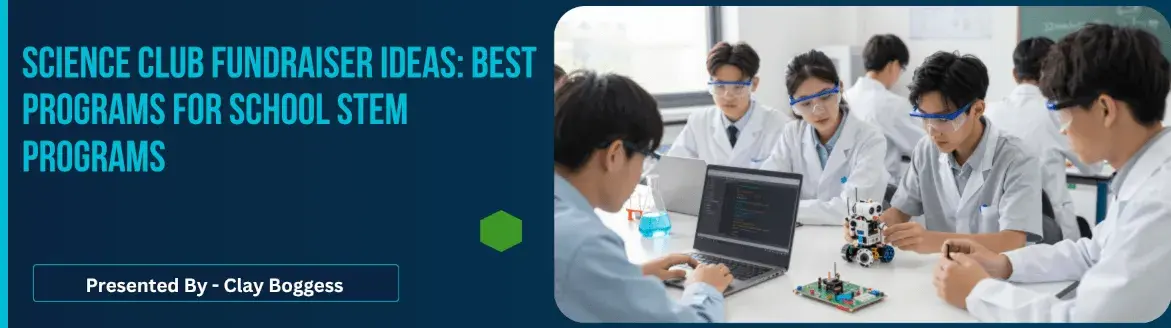
Science clubs, whether focused on general laboratory science, environmental science, chemistry, biology, or competitive science programs like Science Olympiad and Science Bowl, consistently face the same funding challenge: the experiments, equipment, competitions, and field trips that make the program meaningful cost more than school budgets allocate. Lab consumables are expensive and recurring. Competition registration fees are mandatory and non-negotiable. Field trips to research facilities and science museums require transportation and admission costs that no school budget line item reliably covers.
Big Fundraising Ideas has supported school extracurricular fundraising programs since 1999. This guide covers what science clubs fund, which product programs work best for this STEM audience, and how to use the club's scientific identity to motivate community donor conversion.
What Science Clubs Fundraise For
- Lab Equipment and Supplies: Microscopes, measurement tools, safety equipment, and the consumable chemicals, specimens, and materials that support regular experimentation.
- Competition Fees: Science Olympiad, Science Bowl, regional and state science fairs, and subject-specific academic competitions. Registration fees that must be paid before the competition season begins
- Field Trips: Science museums, university research facilities, planetariums, environmental field sites, and laboratory visits that connect classroom learning to real-world science.
- Guest Speakers: Visiting scientists, university researchers, and working professionals who bring the science community into the classroom as a direct learning experience.
- Technology and Software: Specialized science software, data collection tools, programming environments, and equipment maintenance that technology-dependent clubs require.
Smencils: The STEM-Aligned Product
The Smencils fundraiser is available in multiple themed varieties. For science clubs, the Original and seasonal varieties work well throughout the year. The product story (100 percent recycled newspaper, scented with non-toxic fragrances) gives science club sellers a conversation opener that positions the fundraiser as consistent with the club's scientific and environmental identity. A science club member selling a candy bar is just another student with a fundraiser. A science club member selling Smencils has a product whose origin story supports the narrative of who they are as a club.
- Non-food: No Smart Snacks restrictions, and they can be sold during school hours, in classrooms, and to teachers.
- Eco-aligned: 100% recycled newspaper, which resonates with environmental and scientific values the club represents.
- Fast Transaction: $1-$2 per unit, so buyers decide immediately. No consideration period required.
- Available in Varieties: Original, Holiday, Halloween, Spring, and more. Choose the variety matching the campaign season.
Scratch Card Fundraiser: Highest-Yield Community Campaign
The scratch card fundraiser from Big Fundraising Ideas is personalized with the club's school name and photo. For science clubs, the card can be distributed alongside a brief explanation of the competition or equipment the campaign funds. Science club members' parent and family networks often include professionals in STEM fields (engineers, researchers, doctors, technologists) whose colleagues are personally motivated by science education fundraising and convert at above-average rates when the campaign's purpose is clearly communicated.
All products available through bigfundraisingideas.com. No upfront cost. Free shipping.
Timing and Activation
- Fall Launch (September-October): Ideal for clubs with fall or winter competition seasons. Members are fresh, energized, and motivated by the approaching competitive calendar.
- January-February Launch: Ideal for clubs competing in spring science fairs and regional tournaments. The revenue raised closes before spring registration deadlines.
- Activate the STEM Professional Network: Parents who work in science, technology, engineering, or medicine are the highest-converting adult buyer segment for science club campaigns. Ask them to share the scratch card or Smencils at their workplace.
Frequently Asked Questions About Science Club Fundraising
What are the best fundraiser ideas for a school science club?
Smencils (100% recycled newspaper, eco-aligned, non-food, in-school selling), scratch cards (donation-based, $100 per completed card, STEM professional networks), candy bars (after-school fast transaction), discount cards ($20 adult network).
What do science clubs use fundraising money for?
Lab equipment and consumables, competition fees (Science Olympiad, Science Bowl, science fairs), field trips to research facilities and museums, guest speakers, and technology/software. Lab consumables and competition fees are the most pressing annual expenses.
Why are Smencils a good fundraiser for science clubs?
Smencils are made from 100% recycled newspaper, so this product’s environmental mission aligns with science club values. Non-food, school-hour compliant, $1-$2/unit. The product story creates genuine conversation at the point of sale that candy fundraisers cannot.
How do science clubs raise money for competition fees?
Scratch card fundraisers tied to the specific competition name and cost convert community donors at above-average rates. Parent STEM professional networks are the highest-converting adult buyer segment, close before the registration deadline.
When should a science club run its fundraiser?
Preseason: 4-6 weeks before competition registration deadlines. Fall programs: September-October. Spring competition programs: January-February. Club members are most motivated before the competition season begins.
Can science club members sell products during school hours?
Smencils (non-food) can be sold during school hours with no Smart Snacks restrictions. Candy bars must be sold before/after school or at after-school events.
How is science club fundraising different from sports fundraising?
Science club members are typically high-achieving students with strong academic credibility. Their fundraising ask carries additional authority with teachers and administrators. Smencils give science clubs a product identity advantage that sports teams don't have. STEM professional parent networks are a unique high-converting buyer segment.
What is the best product for science club members to sell?
Smencils, since they are eco-friendly, recycled newspaper pencils whose mission aligns with the club's scientific values. The product story creates conversations that reinforce the club's identity. Scratch cards for maximum community outreach with no product logistics.
How much can a science club raise?
With scratch cards, each completed card collects $100 gross. 20 members x 1 card = $2,000 gross in one week. STEM professional parent networks typically produce above-average completion rates.
Can a small science club fundraise effectively?
Scratch cards scale to any club size: minimum 10 cards. Small science clubs of 10-15 members can run meaningful campaigns. Parent STEM networks compensate for smaller student seller pools.
Author Bio
Clay Boggess has been designing fundraising programs for schools and various nonprofit organizations throughout the US since 1999. He’s helped administrators, teachers, and outside support entities such as PTAs and PTOs raise millions of dollars. Clay is an owner and partner at Big Fundraising Ideas.

Categories
Related Articles
Holiday Beef Stick Fundraiser…
How to run a holiday beef stick fundraiser: cover ordering and delivery timing, the 15-day invoice rule, and tips to avoid leftovers.

How Much Can a School Make…
Learn how much you can make from an Otis Spunkmeyer fundraiser; see the profit formula, a worked example, and what affects your total.

Mother's Day and Father…
Mother's Day and Father's Day fundraiser ideas for schools: what to sell, how to price gifts kids can afford, and when to start.