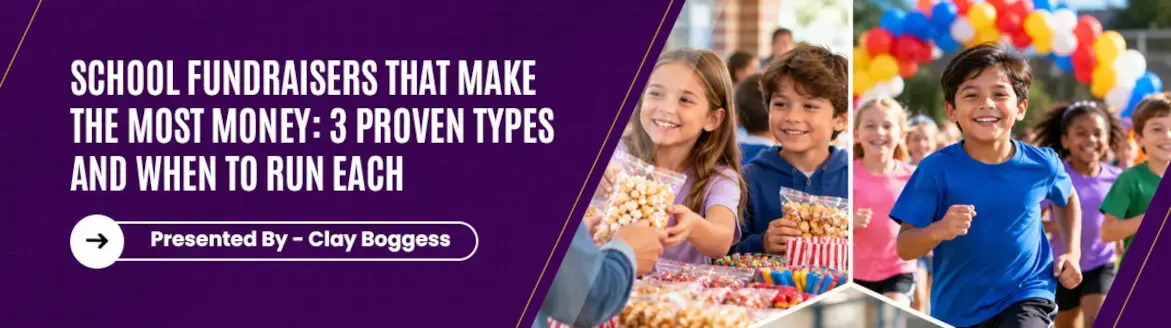
Fundraising can feel like a maze. You need ideas that produce solid revenue while keeping families and volunteers willing to help again next time. The practical answer is a mix: choose fundraisers families enjoy and can join repeatedly, combine product sales with experiences and events, use competition and seasonal timing to drive participation, keep volunteer tasks short and clear, and watch the results as they come in so you can change course quickly.
Big Fundraising Ideas has supported school fundraising programs since 1999. This guide covers the three types worth building a year around, a month-by-month calendar, and the habits that keep a fundraiser profitable. For a product-by-product view of profit, see higher profit school fundraisers and most profitable school fundraisers.
The 3 Types of Fundraisers That Make the Most Money
1. Product Sales
Product sales tend to raise the largest totals per campaign because every participant sells to a personal network, and buyers receive something tangible. Families already know and trust familiar products, which makes ordering easy.
- Cookie Dough: Ready-to-bake dough, preportioned or in tubs, gives families a familiar treat and leads to steady orders.
- Popcorn and Chocolate: Popcorn and candy bars sell themselves and can be shared in person or through an online store.
- Candles: Especially in fall and the holidays. See Harvest Sunset Candles and Heartland Candles for options.
- Branded Apparel: Shirts and hoodies with the school logo give long-lasting value and repeat sales. See the custom apparel fundraiser guide and the online custom apparel store.
You can combine several of these in one catalog or online store, showing families a range of familiar, quality products and building trust.
2. Pledge and Event Fundraisers
Pledge and event fundraisers carry a low product cost, so most of what comes in is profit. They also create community energy that a product sale does not.
- Read-a-thons and Walk-a-thons: Pledges per reading hour or per mile connect fundraising to academics or wellness. See the walk-a-thon planning guide.
- Color Runs: fun, photogenic, and easy to promote, with sponsorships and entry fees. See the color run guide.
- Trivia Nights, Tournaments, and Dance-a-thons: Entry or team fees with moderate to high returns. See trivia night fundraisers.
- Movie Nights and Carnivals: Admission plus snack sales, with low setup cost and strong community buzz.
- Silent Auctions and Themed Gift Baskets: Unique experiences, community donations, and branded bundles outperform a plain auction. See auction fundraiser ideas.
3. Everyday Programs and Community Partnerships
These add income with little work, making them a good background layer under a main campaign.
- Everyday-purchase Rewards Programs: Grocery loyalty and receipt-scanning programs turn regular shopping into small, passive contributions. Program details change, so confirm the current rules before promoting one.
- Restaurant Nights: Share a portion of group dining proceeds for an evening when families already wanted an easy meal. See restaurant fundraising ideas.
- Recycling Drives: Collect bottles, cans, or electronics for cash return, where every small bit adds up.
A Calendar That Keeps Momentum and Revenue Up
Late Summer (August to September)
Kick off the year with a main product campaign while parent engagement is high. Back-to-school brings fresh energy and structure. Promote with upbeat emails, short social posts, and examples of families enjoying past products. You are setting a positive tone for the year while also selling. See best school fundraiser start times.
October
Lean into the seasonal mood with snack fundraisers: popcorn, cookie dough, and fall-scented candles feel timely and cozy, and pair well with Halloween or autumn messaging. Add a light competitive element, such as classroom challenges or small incentives, to keep momentum without overwhelming families.
November
Offer low-effort, high-impact options such as restaurant nights or everyday rewards programs. Families are preparing for Thanksgiving and holiday spending and often cut back, so casual, budget-friendly fundraisers gain traction more easily. Partnering with local businesses also builds goodwill for future fundraising.
December
End the calendar year with gift-friendly items. Ideas such as custom calendars, cookbooks, and school-made keepsakes tap into emotion: family pride, student creativity, and the joy of giving. Short timelines and gift-themed messaging work well here, especially with visuals or student stories.
February
Valentine's season is a strong time for small, just-because purchases. Candygrams and soft hoodies are easy ways to send a small surprise between friends, students, or teachers. Keep it light and optional. For a non-food idea, see Valentine's Smencils. Quick wins like these also energize the mid-year slump.
Spring (March to April)
Cap off the year with energetic events such as read-a-thons, walk-a-thons, trivia nights, or auctions. As the weather improves, families are more willing to show up in person, and events that celebrate growth, learning, or connection resonate. End-of-year celebrations or rewards tied to the goal add another layer of excitement.
Making Your Products and Messages Resonate
- Show How a Product Fits Everyday Life: A snack mix becomes an after-school go-to, and a hoodie becomes something students actually wear. When a family sees a benefit beyond the fundraiser, the sale is easier.
- Choose Attractive, Useful Items: Clean design in school colors increases visibility and pride and prompts others to ask where it came from, creating word of mouth.
- Make Ordering and Delivery Easy: Pre-packed orders, digital tracking, and clear pickup instructions keep families willing to participate again. See school fundraiser delivery.
- Give Volunteers Ready-made Assets: Printable backpack flyers, email-ready graphics, and social story templates take seconds to use and keep the message consistent, even when parent volunteers are running the show.
Keeping Volunteers On Board and Proud
- Break Roles into Bite-sized Jobs: One person handles signs, another posts updates, another manages pickup. When volunteers know exactly what they are doing and that it will not take their whole day, they say yes more often.
- Offer Short-term Assignments: Some parents cannot commit for weeks but can give 30 minutes on a Tuesday. Prepping materials, labeling packages, or posting updates are quick wins. See recruiting fundraiser volunteers.
- Make Appreciation Visible: Newsletter shout-outs, thank-you posts, or student-made cards show that you notice and value their help.
- Share Progress: Let the community know when you are halfway to the goal or when one class is leading. A message such as "$3,000 raised in five days" builds pride and urgency.
Watch the Dollars and Change Course When Needed
- Review Sales as They Come In: Track orders or donations daily if possible, so you see where momentum is building and where it is not.
- If a Product Underperforms, Feature it Differently: A new photo, a customer tip, or a limited-time framing can revive interest without changing the plan.
- If an Event Lacks Interest, Send a Reminder or a Preview: Low RSVPs often mean people forgot, not that they are uninterested. Behind-the-scenes prep photos and past-event pictures turn hesitation into action.
- After Every Fundraiser, Look Back: Debrief with your core team on what worked, what dragged, and whether messaging and pickup were clear. See analyzing previous fundraiser results. Continuous improvement is the real secret to fundraising success.
Time to Act
A school does not have to reinvent the wheel. Choose fundraisers families already like, combine them with an event or a pledge drive, and you will raise funds, keep people involved, and support the school without burning anyone out. When you are ready to plan, Big Fundraising Ideas offers programs that fit your school's calendar and community, including scratch cards and discount cards for fast, low-logistics campaigns.
Frequently Asked Questions
Which school fundraisers make the most money?
Product sales such as cookie dough, popcorn, chocolate, and candles tend to raise the most because each participant sells to their personal network. Pledge events raise strong totals with low product cost, and everyday programs add steady extra income. Most schools do best mixing all three across the year.
How much can our school realistically raise with Big Fundraising Ideas?
Earnings vary with school size, product choice, and participation rate. Setting a goal based on your actual enrollment and a realistic participation rate gives a more useful target than a general figure.
What kind of products does Big Fundraising Ideas offer?
Big Fundraising Ideas offers candy bars, cookie dough, popcorn, candles, gift wrap, custom apparel, scratch cards, and discount cards, plus more. Choose options that fit your audience, season, and goal.
Do you offer online fundraising tools?
Yes. Big Fundraising Ideas offers online store options so families can shop, share with out-of-town relatives, and track sales as the campaign runs.
What is the best time of year to run a fundraiser?
Late summer and early fall suit a main product campaign; October and November suit snack and low-effort community fundraisers; and spring suits pledge events and auctions. See the month-by-month calendar in this guide.
Author Bio
Clay Boggess has been designing fundraising programs for schools and various nonprofit organizations throughout the US since 1999. He’s helped administrators, teachers, and outside support entities such as PTAs and PTOs raise millions of dollars. Clay is an owner and partner at Big Fundraising Ideas.

Related Articles
Chocolate Bar Fundraiser for…
How are chocolate price swings affecting school fundraisers? See what changed in 2026, the profit per bar, and how to choose a price point.
World's Finest Chocolate…
Compare the World's Finest Chocolate fundraiser, including shipping, minimum order requirements, profit tiers, payment terms, and returns.
One-Week School Fundraiser: A…
Plan a one-week school fundraiser day by day, from product arrival and kickoff to the final push, collection, and the invoice due date.