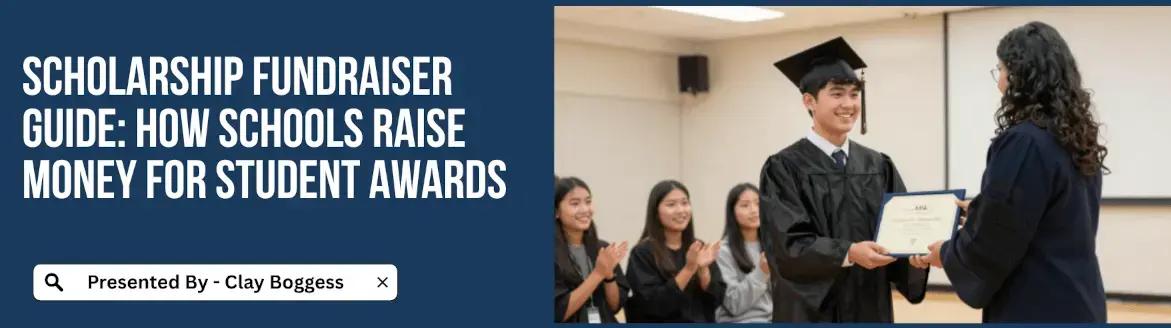
Scholarship fundraising is growing as a school fundraising format for a practical reason: colleges are expensive, community awareness of the cost is high, and donors who might feel indifferent to a new gymnasium floor or updated technology lab feel personally connected to helping a student access education. The mission converts donors that product fundraisers cannot reach.
Big Fundraising Ideas has supported school fundraising programs since 1999. This guide covers how to structure a scholarship fundraiser, how to name and position the award, which product programs generate the most net revenue for scholarship funds, and what to do after the campaign closes to build a sustainable long-term donor base.
What Makes a Scholarship Fundraiser Different
This emotional power is the scholarship fundraiser's greatest asset and its most common point of failure. Organizations that lead with the product format ('we are selling scratch cards to fund a scholarship') convert a fraction of the donors that organizations achieve by leading with the student story ('last year's scholarship helped Maria be the first person in her family to attend college -- this year we want to do it again'). The product is the vehicle. The student is the reason.
How to Name and Define Your Scholarship
- Named after a person: a founding teacher, a coach who served for decades, an alumnus who achieved something meaningful, a student who overcame adversity -- personal names carry emotional weight that fund titles cannot
- Tied to a value: the STEM Leadership Scholarship, the Community Service Award, the First-Generation College Student Grant -- value-based names help donors self-select based on their own priorities
- With clear recipient criteria: academic achievement, financial need, specific field of study, community involvement -- criteria that are clearly stated give donors confidence that the award reaches the students who most need it
- With a specific dollar amount, 'we award one $1,500 scholarship annually' is a fundable commitment; 'we support students' is not—the specific amount creates a tangible fundraising target that donors can imagine funding.
Highest-Margin Fundraising Programs for Scholarship Funds
All profit figures are verified on the bigfundraisingideas.com product pages. Scratch card calculation: $1,500 / $85 net = 17.6 cards (18 rounded). Discount card: $1,500 / $6.50 net = 231cards—free shipping on all orders.
Scratch Cards for Scholarship Fundraising
The scratch card fundraiser is personalized with the school's name and photo. Organizations can customize the messaging on the card to reference the scholarship fund specifically -- connecting each scratch card transaction directly to the award in the donor's mind. A school with 100 participating students or alumni each distributing one card generates $8,500 net from a one-week campaign: $100 gross per completed card, $15 cost at the 25-99 card tier, $85 net at 85 percent profit.
How to Communicate the Scholarship Campaign
- The founding story: why this scholarship exists -- the person it honors, the students it serves, the community it reflects. Two to three sentences maximum. Specific and personal.
- The current goal: the dollar amount being raised this year, the number of awards being made, and the type of student who qualifies. Make it concrete: 'We are raising $2,000 to award two $1,000 scholarships to graduating seniors who are the first in their family to attend college.'
- The action: how to participate, what it costs (nothing -- the scratch card costs the buyer whatever dot they scratch), and when the campaign closes. One clear call to action—no competing instructions.
- The follow-through: after the campaign closes, share who won the award and what it meant to them. This communication converts one-time donors into repeat annual supporters faster than any other single action.
Building a Sustainable Annual Scholarship Fund
Four practices build a sustainable annual scholarship fund: run the campaign on a predictable schedule (same month each year), award publicly at the highest-visibility event available (graduation or an awards assembly), send an annual impact report to all past donors within 30 days of the award, and cultivate alumni as long-term donors by keeping them connected to the school's fundraising outcomes. Alumni who gave once and received a specific, personal report on what their contribution accomplished give again at dramatically higher rates than those who give into a communication void.
Frequently Asked Questions About Scholarship Fundraisers
How do you raise money for a scholarship fund?
Scratch cards (85% profit, $85 net/card -- highest margin), discount cards (up to 75%), and brochure programs (40%). Lead communication with the student impact story before the product or format. All verified at bigfundraisingideas.com.
What fundraiser generates the most money for a scholarship?
Scratch cards at 85% profit (25-99 cards, $15/card, $85 net). 100 participants x 1 card = $8,500 net. The donation format aligns naturally with the scholarship mission. Verified at bigfundraisingideas.com/scratch-card-fundraiser.
How do you name a scholarship fundraiser?
Named after a person the community knows, tied to a specific academic or community value, with clear recipient criteria and a stated dollar amount. Specifically named scholarships outperform anonymous funds in donor conversion and annual renewal rates.
What is the best way to communicate a scholarship fundraiser?
Lead with the founding story (why this scholarship exists), then the specific dollar goal and recipient criteria, then the action. Never lead with the product format. Specific student impact stories convert more donors than any selling script.
Can a PTA or PTO run a scholarship fundraiser?
Yes. All BFI programs -- Scratch cards (85%), discount cards (75%), brochure programs (40%) -- are available to PTA/PTO organizations with no upfront cost. Run a spring product campaign designated for the senior scholarship fund, announce at graduation.
How do you build a sustainable scholarship fund?
Run the same campaign annually on a predictable schedule. Award publicly at graduation or an awards assembly. Send an annual impact report to all past donors within 30 days of the award. Cultivate alumni as long-term donors. A named, public, consistently awarded scholarship becomes part of the school's identity.
How large should the scholarship goal be?
Set the award amount first. At 85% profit from scratch cards, a $1,500 award needs 18 completed cards. A $2,500 award needs 30. Choose an award amount meaningful enough to change a student's situation and achievable with your current seller base.
How do you announce a scholarship fundraiser?
Parent email leading with the scholarship story (200 words max). Morning assembly with the specific dollar goal and recipient criteria. School newsletter and social media posts featuring the mission. Award recognition at the highest-visibility event of the year. Never lead with the product.
Can alumni be involved in scholarship fundraising?
Yes -- alumni are among the highest-converting donors for named scholarship funds because the school represents a meaningful chapter of their own story. Annual impact reports showing who received the award convert alumni one-time donors into consistent annual supporters.
What should schools do after the campaign closes?
Announce the award publicly at graduation or an awards assembly. Send a personal thank-you from the recipient to major donors. Publish an impact report showing who received the award and what it meant to them within 30 days of close. Donors who see outcomes give again at dramatically higher rates.
Author Bio
Clay Boggess has been designing fundraising programs for schools and various nonprofit organizations throughout the US since 1999. He’s helped administrators, teachers, and outside support entities such as PTAs and PTOs raise millions of dollars. Clay is an owner and partner at Big Fundraising Ideas.

Categories
Related Articles

Chocolate Bar Fundraiser for…
How are chocolate price swings affecting school fundraisers? See what changed in 2026, the profit per bar, and how to choose a price point.
World's Finest Chocolate…
Compare the World's Finest Chocolate fundraiser, including shipping, minimum order requirements, profit tiers, payment terms, and returns.

One-Week School Fundraiser: A…
Plan a one-week school fundraiser day by day, from product arrival and kickoff to the final push, collection, and the invoice due date.