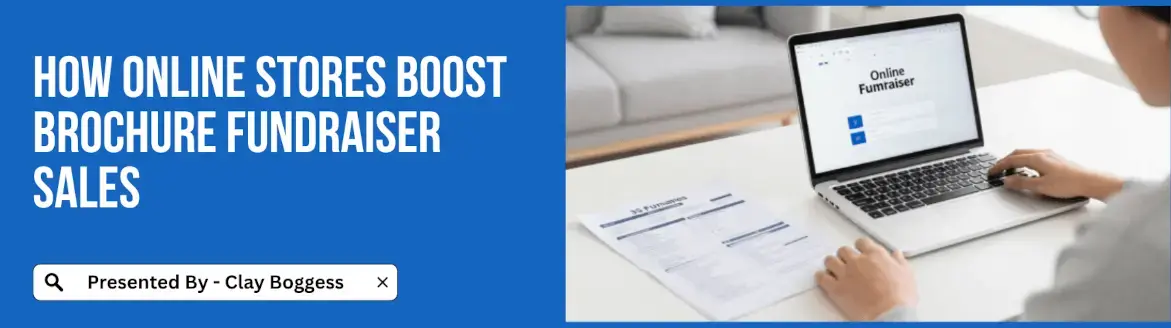
Brochure fundraisers have been the backbone of school fundraising for decades. They work on the relationship economy: a student takes a brochure home, asks family, walks the neighborhood, hands the brochure to parents who take it to work. The supporter network is whoever the student or parent can physically reach. That network is usually 10 to 30 people for a typical seller, capped by geography and existing relationships.
Big Fundraising Ideas has supported schools, sports teams, and community groups since 1999. The hybrid online-and-brochure approach has emerged as the dominant pattern over the past decade because the two channels capture distinct supporter behaviors, and their overlap is small. Brochure supporters tend to be older and order higher-ticket items. Online supporters span a wider range of ages and frequently order multiple items as gifts.
What Is a Hybrid Online and Brochure Fundraiser?
The model adds an online dimension to the standard brochure workflow without changing the brochure side at all. Students still take the brochure home. Parents still walk the neighborhood. The brochure captures local supporters as it always has. The online store runs alongside the brochure, captures supporters who would not have been reached by the brochure (out-of-state families, distant friends, alumni, social media followers), and adds incremental revenue at near-zero additional coordinator burden.
- Brochure channel: Student takes brochure home, asks local supporters, collects orders over 2 weeks, and products are delivered pre-sorted by seller after order submission. 800+ brochure items. 3-4 week delivery cycle.
- Online channel: Each student gets a personalized store URL. Parents share via social media, text, and email. Supporters order remotely. Products ship directly to buyers: no order forms, no cash collection, no group distribution.
- Aggregation: Most BFI programs aggregate brochure and online sales into a single per-student total for prize-credit and recognition purposes.
BFI Online Programs That Pair with Brochure Fundraisers
All twelve programs offer no upfront cost, direct-to-home shipping, and built-in sharing tools for Facebook, Instagram, WhatsApp, email, and SMS. Group profit on most online programs is paid within 15 business days of store close. Minimum 5 active participants per group on most online programs. No order minimums.
Why Combining Online and Brochure Outperforms Brochure-Only
Geography No Longer Limits Reach
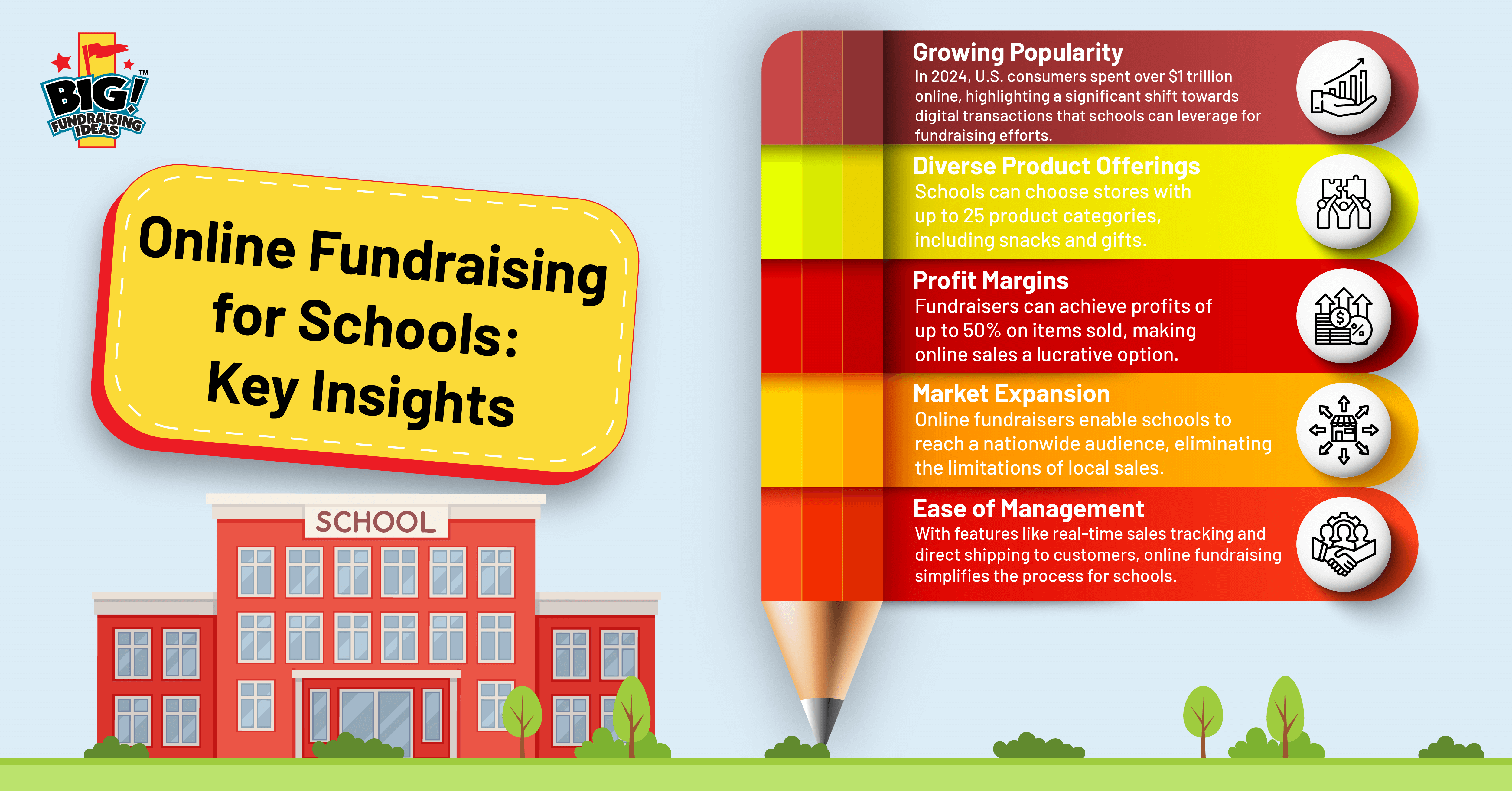
Brochure fundraisers work on the relationship economy. The supporter network is whoever the student or parent can physically reach. That network is usually 10 to 30 people for a typical seller, capped by geography and existing relationships. Online stores expand the network beyond geography. The same student who can physically reach 20 supporters can share an online store link with 200 contacts via social media, text, and email. Out-of-state families who would never see the brochure can browse the store, place an order, and have the product shipped directly to their door.
Different Channels Capture Different Buyer Behaviors
Brochure supporters tend to be older (grandparents, neighbors, parents' coworkers) and order higher-ticket items (cookie dough, frozen food, candles). Online supporters tend to span a wider age range (Facebook reaches everyone, Instagram reaches younger families, WhatsApp reaches international relatives) and frequently order multiple items as gifts. The two channels reinforce rather than compete.
Campaign Length Multiplies the Lift
A brochure fundraiser typically closes in 2 to 3 weeks. An online store can stay open for 10 days to 2 weeks alongside the brochure, capturing supporters who need time to think, see the social media share, or stumble across the campaign in their feed. The two channels capture different supporter behaviors over different time horizons, and the overlap is small.
The Three Camps of Fundraiser Sponsors
Camp 1: All-In on Online Selling
These sponsors understand how the online store works end-to-end. They learn how participants register, how prize credits are earned, how social shares drive sales, and how the dashboard tracks performance. Some run online-only campaigns or weight their fundraisers heavily toward online. These sponsors capture the most online revenue because they treat the channel with the same seriousness as the brochure.
Camp 2: Online as a Courtesy or Supplement
These sponsors mention the online store in passing during their kickoff, include the link in the parent letter, and otherwise let it run in the background. Some online sales happen, but most parents and students never engage with the online side. These sponsors typically capture 5 to 15% of total fundraiser revenue from online, well below the 25%+ that engaged campaigns achieve.
Camp 3: Person-to-Person Sales Only
These sponsors believe the brochure is the campaign, full stop. They don't promote the online store, don't help students register, and treat online sales as either unnecessary or too complicated to bother with. Roughly 23% of fundraiser groups still fall in this camp, often smaller high school programs or groups with sponsors who haven't kept up with the digital shift. These groups leave significant money on the table.
How Online Sales Extend Reach Beyond the Local Market
Most brochure-only campaigns saturate the local supporter network within the first 7 to 10 days of the sale, and the trailing days produce diminishing returns as sellers run out of new people to ask. An online store removes the geographic limit. Out-of-state families are among the strongest supporter segments because they have no other way to participate in a local brochure campaign. Many groups find that their highest online sales come from supporters who live thousands of miles from the school.
The biggest online sales wins come from out-of-state families and friends who would never have been part of the brochure campaign. Encourage sellers to share the store link with anyone whose number is in their phone, including people who live nowhere near the school. Those supporters often have higher discretionary income than local neighbors and frequently order multiple items as gifts.
Four Tactics That Drive Online Sales When Both Formats Run Together
1. Promote Online Selling to Parents from the Very Start
The parent letter that goes home in the student kickoff packet should feature the online store web address prominently, not as a footnote. The letter should explain what the online store does (enabling out-of-state family members to support the campaign), how to access it (via the store URL or QR code), and what the parent needs to do (register their student and share the link with their network). The strongest setup pairs the fundraiser kickoff with an existing parent-facing event. Back-to-school night, PTA meetings, and team parent meetings all draw parents who are already on-site and attentive.
2. Discuss Online Selling at Your Student Kickoff Meeting
Students take cues from how seriously the sponsor treats each channel. If the sponsor talks about the brochure for 10 minutes and mentions the online store only in the last 30 seconds, students will treat it as an afterthought. If the sponsor allocates real time to the online channel during the kickoff, students will take it seriously and ask their parents about it that same evening. The kickoff content should cover how a single online sale works, what the seller's online dashboard looks like, how prize credits accumulate across both brochure and online sales, and a specific commitment ask.
3. Share the Online Fundraising Store Link Strategically
Social sharing is where online stores either explode or stall. Parents should post the student's personalized store link on Facebook, Instagram, and WhatsApp, with the student's seller code clearly visible so the credit attributes correctly. Three elements make a social post convert: a clear reason for the ask (why the group is fundraising and what the money funds), a visible image (a photo of the student, the team, or the program, not a stock graphic), and the student's seller code or unique link. The reason creates motivation; the photo creates the personal connection; the link makes the action possible.
4. Promote the Simplicity of Online Selling
Many parents resist online selling because they assume it is complicated. The actual workflow is much simpler than the brochure side: register your student once (takes 5 minutes), share the store link with your network, and the rest is automated. Orders ship directly to the buyer's address. No cash to collect. No order forms to track. No in-person delivery of products. Sponsors should explicitly compare the two workflows in their parent communication: the brochure workflow involves the student taking the brochure to school, walking the neighborhood, asking family members, tracking orders on paper, collecting money, returning the order form, and distributing products on delivery day. The online workflow involves the parent sharing one link.
Profit Math: What the Online Channel Adds to a Brochure Campaign
Small Group, Brochure Only
20 sellers, average $200 per seller in brochure sales. Total: $4,000 gross, approximately $1,600 to $2,000 in group profit at 40-50% margin.
Small Group, Brochure Plus Engaged Online
Same 20 sellers, $200 each in brochure sales ($4,000 gross). Online adds approximately 25% on top: $1,000 in additional online gross. Total: $5,000 gross, approximately $2,000 to $2,500 in group profit. Online adds roughly $400 to $500 to the group's take.
Large School, Brochure Only
200 sellers, with an average of $250 per seller in brochure sales. Total: $50,000 gross, approximately $20,000 to $25,000 in group profit.
Large School, Brochure Plus Engaged Online
Same 200 sellers, $50,000 in brochure sales. Engaged online adds 25 to 35% on top: $12,500 to $17,500 in additional online gross. Total: $62,500 to $67,500 gross, approximately $25,000 to $33,750 in group profit. Online adds $5,000 to $8,750 to the group's take.
Frequently Asked Questions
How much extra revenue does adding an online store generate?
Can I run a brochure fundraiser and an online store at the same time?
Yes. Most BFI online programs can run alongside a brochure fundraiser. The only restriction is that a group cannot run two online stores simultaneously—one online format active at a time, paired with any brochure.
Do online sales count toward student prize credits?
Yes. Most BFI programs aggregate brochure and online sales into a single per-student total for prize-credit purposes. Students who sell heavily online still earn the same prize-level credits they would have earned from selling the same dollar amount through the brochure.
What is the minimum to run an online store at BFI?
5 active participants per group. No order minimums. The 5-participant threshold prevents stores from being set up for individual sellers who would not generate enough activity to justify the program.
How do supporters share the online store link?
Participants get a personalized store URL when they register. BFI provides built-in sharing tools for the major channels: an email generator, SMS features, and direct integrations with Facebook, Instagram, and WhatsApp. Parents can also copy the URL and post it anywhere they choose.
When does the group receive online profit?
Within 15 business days of the online store's closing date. Online profit is paid separately from brochure profit, which arrives after the brochure order forms are submitted and processed.
What happens to online orders during shipping?
Online orders ship directly from BFI's fulfillment center to the buyer's home address. Your group does not handle or distribute online orders. The buyer pays shipping at checkout.
Can out-of-state families really order from our online store?
Yes. Online stores ship to all 50 states. Out-of-state families are among the strongest supporter segments because they have no other way to participate in a local brochure campaign. Many groups find that their highest online sales come from supporters who live thousands of miles from the school.
Do we have to choose between online and a brochure?
No. Most groups run both. The online store extends the reach of the brochure campaign rather than replacing it. The two channels capture different supporter behaviors and reinforce each other.
How long does it take to set up an online store?
The store is built and activated by BFI before your kickoff. Sponsors receive an activation email with the store URL and registration instructions. Participants register themselves through a quick online process (typically 5 minutes per family).
Why do some groups still not use the online store?
Three reasons: the sponsor doesn't know how the online store works, the sponsor believes person-to-person sales are the only legitimate way to fundraise, or the sponsor doesn't want to take time to learn the digital channel. The cost of skipping the online channel is high: groups that don't promote it leave 20 to 30% of potential revenue on the table.
Author Bio
Clay Boggess has been designing fundraising programs for schools and various nonprofit organizations throughout the US since 1999. He’s helped administrators, teachers, and outside support entities such as PTAs and PTOs raise millions of dollars. Clay is an owner and partner at Big Fundraising Ideas.

Categories
Related Articles
Direct Donation Drive vs…
Direct donation drive vs. product fundraiser: which schools each format suits, why the ask reaches a different audience, and how to decide.

Grade-Level vs School-Wide:…
Grade-level vs school-wide fundraiser structures compared: coordinator workload, family fatigue, goal clarity, and how to decide which type works.
What Participation Rate…
Learn what participation rate a fundraiser should hit, how to calculate your real number, what drives it up, & why it matters more than the product.