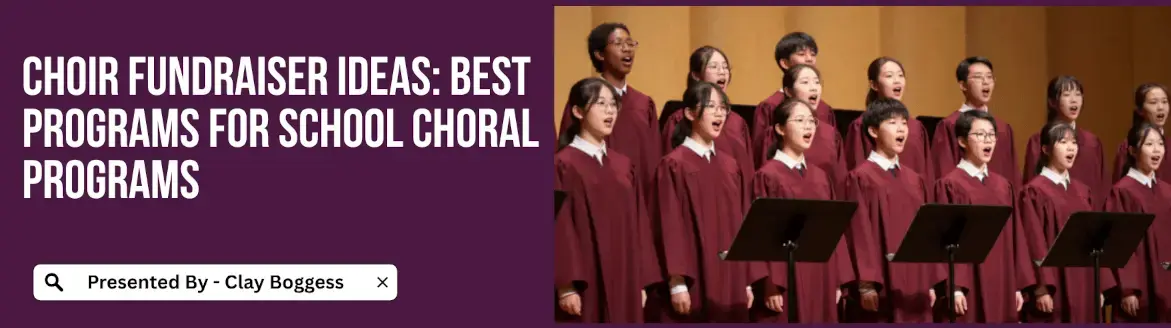
Choir programs are consistently among the most underfunded music programs in school budgets. Performance robes and uniforms are expensive and wear out over years of use. Sheet music licensing costs are mandatory for any ensemble performing published works. Competition entry fees, travel costs for regional and state events, and vocal clinician fees add up quickly for programs that take their performance quality seriously. Fundraising is not optional for most choral programs -- it is the mechanism that makes the program possible.
Big Fundraising Ideas has supported school music and performing arts fundraising programs since 1999. Every product described in this guide is available through bigfundraisingideas.com with no upfront cost to the program.
What School Choirs Fundraise For
- Performance robes and uniforms: the largest capital expense for most choral programs -- a full set of matching robes for 60 to 80 singers is a significant investment that school budgets rarely cover
- Sheet music and licensing: individual music folders and licensed arrangements for performance -- costs that recur with every new repertoire cycle
- Competition entry fees: regional, district, and state competition registration, adjudicator fees, and facility charges
- Travel and transportation: bus rental, hotel rooms, and meals for overnight competition travel -- often the second-largest annual expense for competitive choral programs
- Vocal clinicians: guest conductors and vocal coaches who work with the full ensemble or with individual sections to improve performance quality
- Recording and production: end-of-year concert recordings, studio time for audio production, and video documentation of performances for the program's archive and marketing
Scratch Card Fundraiser
The scratch card fundraiser from Big Fundraising Ideas is personalized with the choir's name and photo. Singers approach family members, neighbors, and community contacts they know—the same people who attend concerts and already support the program. There is no product to carry, no order forms to sort, and no delivery day to coordinate. The entire campaign runs in about one week. Parents who take the card to their workplace reach a concentrated adult professional network that student-only selling cannot access independently.
Smencils: The Arts Community's Preferred Product
The Smencils fundraiser is available in multiple themed varieties, including Original, Holiday, Halloween, Spring, and more—allowing the choir to choose a variety that matches the season of the campaign or the theme of the upcoming performance. Available in a one-case minimum with no upfront cost. The price point of $1 to $2 per unit makes the transaction fast and the buyer's decision easy.
- Non-food product: no Smart Snacks compliance concern -- can be sold during school hours
- Arts-aligned: eco-friendly, creative, recycled-newspaper product that resonates with performing arts communities
- Fast transaction: $1 to $2 per unit means buyers decide immediately—no consideration period.
- Versatile settings: in-school selling, rehearsal space display, lobby tables at concerts, community outreach
Concert Night as a Fundraising Opportunity
Before the Show: Lobby Table
Set up a table at the concert entrance with Smencils, candy bars, and discount cards staffed by two choir parents. Arriving audience members who are early and in a positive, supportive mindset purchase without active selling. A simple sign reading 'All proceeds support the [school] Choir Program' is the only pitch needed.
Intermission: The Director's Appeal
Two minutes from the director or an emcee during intermission -- naming what the choir needs, what the funds will accomplish, and where the audience can contribute -- is the highest-conversion fundraising moment available to a choral program. An audience that just finished listening to Act One of a choir performance is emotionally invested and primed to give. A specific ask converts at far higher rates than a general mention that the program needs support.
After the Show: Departing Audience
Audience members who are leaving after the final bow often stop at the lobby table on their way out -- especially family members who want to congratulate singers and linger in the lobby. The post-show emotional high of a successful performance creates a secondary purchasing window that many choir programs leave unexploited.
Candy Bars and Discount Cards
Candy bars work best as a lobby table product because the low price and the impulse-buy nature of the transaction are perfectly matched to the brief attention span of a concert audience member moving through the entrance. Peanut-free and 100 percent kosher options are available. Discount cards at $20 with local business savings for one year appeal to the adult concert audience who wants to give at a higher level than a candy bar purchase without making a cash donation with no tangible return.
Program Comparison for Choir Fundraisers
All products available through bigfundraisingideas.com. No upfront cost. Free shipping.
Frequently Asked Questions About Choir Fundraisers
What are the best fundraiser ideas for a school choir?
Scratch cards for community donation campaigns, Smencils for in-school and arts-aligned selling, candy bars for concert lobby sales, and discount cards for the adult concert audience.
What do school choirs use fundraising money for?
Performance robes and uniforms, sheet music and licensing fees, competition entry fees, travel and transportation, vocal clinician fees, accompanist costs, and recording studio time. Performance robes are typically the largest single capital expense.
Why is the concert hall a good fundraising environment?
The concert audience came specifically to support the singers they care about—they are already emotionally invested and primed to give. A lobby table before the show, an intermission appeal, and post-show table sales create three revenue moments from a single captive, motivated audience.
Can a choir sell products at concerts?
Yes. Smencils, candy bars, and discount cards at a lobby table staffed by two choir parents. A simple sign and brief intermission appeal from the director are the only tools needed.
What is the best fundraiser for a small choir?
Scratch cards scale to any group size. A choir of 15 members can run a meaningful campaign because each singer's personal network provides sufficient buyer reach for one card: minimum 10 cards, no upfront cost.
How do choir members sell during school hours?
Smencils (non-food) can be sold during school hours with no Smart Snacks compliance concerns. Candy bars must be sold before/after school or at events outside instructional time. Scratch cards are not a food product and can be distributed and collected at any time.
How can a choir raise money for competition travel?
Scratch card campaigns tied directly to the competition—naming the event, location, and travel cost—convert the community at high rates. Parent workplace distribution reaches the adult network most efficiently. A two-week campaign can cover most of the competition travel costs for a mid-sized choir.
When is the best time to run a choir fundraiser?
Two to three weeks before a major fall performance (October/November) and before spring concert or competition season (February/March). Connecting the campaign timeline to the performance creates urgency and connects buyers to the specific event the campaign funds.
How do choir directors motivate members to fundraise?
Connect the campaign to a specific named need—new robes, competition registration, travel costs. Members who know exactly what their selling funds participate at higher rates. Public recognition of top sellers at a rehearsal or concert reinforces continued participation.
Can a choir run fundraisers at multiple performances?
Yes—each performance is a separate fundraising opportunity with its own captive audience. Set up a lobby table at each concert and run a product campaign before each major performance. The fall and spring audiences may overlap partially, but each event reaches supporters who missed the previous one.
Author Bio
Clay Boggess has been designing fundraising programs for schools and various nonprofit organizations throughout the US since 1999. He’s helped administrators, teachers, and outside support entities such as PTAs and PTOs raise millions of dollars. Clay is an owner and partner at Big Fundraising Ideas.

Related Articles

Holiday Beef Stick Fundraiser…
How to run a holiday beef stick fundraiser: cover ordering and delivery timing, the 15-day invoice rule, and tips to avoid leftovers.

How Much Can a School Make…
Learn how much you can make from an Otis Spunkmeyer fundraiser; see the profit formula, a worked example, and what affects your total.
Mother's Day and Father…
Mother's Day and Father's Day fundraiser ideas for schools: what to sell, how to price gifts kids can afford, and when to start.