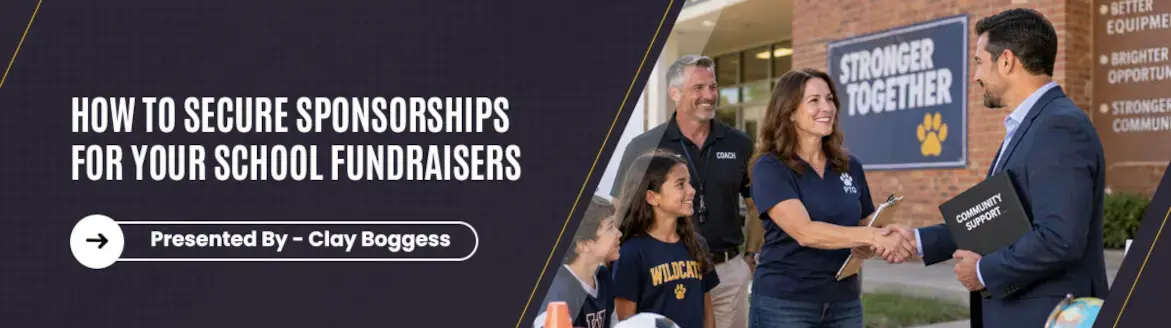
Whether the goal is new sports equipment, a class trip, or a library renovation, sponsorship dollars extend what a product fundraiser alone can raise. Partnering with local businesses, corporations, and community organizations expands your reach, draws in additional funds, and builds relationships that support students well beyond any single campaign.
This guide is written for PTO and PTA leaders, teachers, coaches, booster clubs, and anyone working to fund a school need through community partnership. Big Fundraising Ideas has supported school fundraising programs since 1999, and several of our own product formats build sponsorship directly into the campaign, which this guide covers alongside the general proposal and outreach process.
Why Sponsorships Matter for a School Fundraiser
- Extended Visibility: Businesses partnering with a school demonstrate their commitment to education and the community, strengthening their reputation while your fundraiser gains more public attention.
- Shared Resources: Sponsors often contribute more than money. Common in-kind contributions include materials, goods, professional services, and volunteers to staff an event.
- Lasting Relationships: A strong first sponsorship can become a recurring one, giving the school a stable, repeat partner rather than a one-time contributor.
- Mutual Promotion: Sponsorship isn't just about money changing hands. It gives the sponsor a chance to demonstrate community values and build goodwill among parents, students, and neighbors.
Preparing the Foundation for Your Sponsorship Campaign
Define Your Fundraising Goal
Be explicit about how much money you need, how you'll use it, and how it benefits students. A basketball team seeking $5,000 for new uniforms and travel expenses is a concrete, specific goal that helps a prospective sponsor visualize the outcome of their contribution far better than a general request for support.
Identify Your Target Audience
Knowing who attends or contributes to the fundraiser helps match the ask to the right sponsors. A campaign built around elementary families points toward different sponsors than a high school band program with broader community appeal. Outlining the audience's demographics and interests makes it easier to identify businesses that see a relevant market in the partnership.
Research Potential Sponsors
- List Local Businesses and Organizations: Start with those that have already shown interest in community or educational causes. Restaurants, retail stores, and family-oriented service providers are often strong candidates.
- Explore Corporate Giving Programs: Many larger companies run formal sponsorship or philanthropic programs that specifically look for educational causes, especially within their local consumer base.
- Leverage Community Connections: Ask teachers, parents, and staff whether they have direct contacts at businesses that might align with the fundraiser. A personal introduction converts far more often than a cold outreach.
Craft a Compelling Story
Sponsorship decisions often hinge on the emotional pull of the school's story as much as the clarity of the ask. Sharing what the fundraiser will actually change for students, such as how hands-on lab equipment can spark a love of science, helps a sponsor see the real impact of their support rather than a generic request for funds.
Creating a Sponsorship Proposal That Stands Out
The Project Overview
Open with the fundraiser's name, when and where it takes place, and the primary objective, such as raising $10,000 to replace sports equipment. A summary that grabs attention and paints a clear picture of the effort sets up everything that follows.
The Purpose and Anticipated Outcome
Explain how the funds will be used and the direct effect on students, such as repairing a playground so children have a safer place to play. Include the expected timeline and any milestones. Clarity here signals accountability to a sponsor who wants to know their money will be used as described.
Sponsorship Levels and Benefits
Structuring sponsorship into tiers gives businesses flexible entry points rather than a single all-or-nothing ask.
Define each tier's benefits carefully so they are attractive to the sponsor and practical for the school to deliver. Marketing perks such as signage or product sampling should align with what the sponsor is actually trying to achieve.
Data and Past Success Stories
Relevant data on prior fundraising success builds credibility. A specific figure paired with a brief anecdote, such as a past event's attendance and total raised alongside what it funded, demonstrates that the school follows through on what it promises.
Contact Information and Next Steps
Close the proposal with a direct path to yes: an email address and phone number for the organizer, a link or QR code where sponsors can commit, and a polite invitation to ask questions. The easier it is to say yes, the more sponsors will.
Sponsorship Formats Built Into a Product Fundraiser
A discount card fundraiser is, by design, a sponsorship vehicle. The card features the school's name and logo on the front, and local business offers on the back. A business that wants visibility with every family in the school can be approached with a specific, small ask: a listing on the card in exchange for the exposure every card carries for a full year. This converts the sponsorship pitch from a request for a check into an offer of advertising space families will use repeatedly.
A scratch card fundraiser can carry sponsor branding on the coupon sheet supporters receive after donating, giving a local business the same repeated visibility at a lower commitment level than a full discount card partnership. A brochure fundraiser or online store can include a sponsor acknowledgment page, giving a business placement in front of every family who receives or visits the catalog.
All products through bigfundraisingideas.com. No upfront cost. Free shipping.
Approaching Potential Sponsors
- Personalize Your Outreach: Address the recipient by name and reference the organization's known values or charitable interests. Showing you did your research before the ask lands differently than a form letter.
- Be Specific About What You Need: A vague request for help is easy to decline. A specific ask, such as a $500-level sponsorship or an in-kind donation of drinks for an event, gives the business a clear yes or no.
- Highlight the Return on Investment: Frame the partnership around what the sponsor gains: brand visibility, community goodwill, and a connection to the families and staff who make up their potential customer base. Speak to mutual benefit rather than one-sided need.
- Follow up Politely: A message can easily be missed among a business's other priorities. A short, courteous reminder after a week or two, thanking them for considering the request, keeps the door open without pressuring.
Leveraging Online Platforms and Social Media
Utilizing Social Media
- Create a Public Event Page: For an in-person or virtual event, a dedicated page helps gather RSVPs, share updates, and publicly highlight sponsors.
- Tag Sponsors in Posts: When you promote the fundraiser online, tag sponsors to give them public recognition and extend their visibility into the platform's network.
- Encourage Sharing: Ask parents, teachers, and volunteers to share posts within their own networks to widen the reach of both the fundraiser and the sponsor recognition.
Online Sponsorship Directories
Some platforms specifically connect schools with sponsors, though availability varies by location. Direct outreach remains the most effective approach in most cases, but these directories can surface businesses that were not otherwise on the school's radar.
Email Marketing and Newsletters
An existing parent newsletter or mailing list is a ready channel for sponsorship visibility: a short description of the fundraising goal, a link to the sponsorship proposal, and a quick sponsor spotlight keep the community informed and can surface new sponsors who read about the campaign secondhand.
Building and Nurturing Sponsor Relationships
- Show Genuine Gratitude: A handwritten thank-you note from students or a personal message from a teacher carries real weight. Public recognition, such as acknowledging sponsors on stage or displaying banners at the event, reinforces that they are a valued part of the school community.
- Offer Recognition Beyond the Event: A sponsor logo and short note on the school website, a mention in the newsletter, or a shout-out on social media extends visibility well past the single event date.
- Provide Updates on How Donations Were Used: Circling back with photos of the finished playground or a quote from a student who benefited builds trust in a way a thank-you alone does not, and it is the strongest reason a sponsor commits the following year again.
- Maintain Regular Communication: A quarterly update or occasional note keeps the school top of mind well before the next ask, making that future conversation much easier.
Creative Sponsorship Ideas to Boost Engagement
- Sponsor a Field Day Activity: Assign a business to a specific station, letting them provide equipment, run a game, or hand out branded giveaways.
- Digital Scoreboard Sponsorship: For schools with a sports program and a digital scoreboard, sponsor logos featured during games offer repeated visibility that many local businesses find compelling.
- Classroom or Lab Sponsorship: A business funds a specific classroom project in exchange for a plaque or poster in that space. This works particularly well for businesses with a natural connection to the subject, such as a tech company supporting a STEM lab.
- Virtual Concert or Talent Show: An online student performance gives sponsors prime placement on the digital platform and extends the school's reach beyond the immediate community.
- Themed Raffles or Auctions: Sponsors contribute gift baskets or experiences auctioned during a festival or online drive, gaining promotional exposure while the school keeps the proceeds.
Overcoming Sponsorship Objections
We Already Have a Charitable Commitment this Year
Offer a smaller-scale involvement, such as an in-kind contribution like water bottles for a fun run, and remind them that even a modest contribution matters. If they still decline, thank them and ask them to keep you in mind for the next cycle.
We Don't See How This Ties In With Our Business
Show the overlap between the business's target audience and the school community directly. If the connection genuinely feels weak, respect that and revisit the business when a future event aligns more closely with their brand.
We're Concerned About ROI
Outline expected attendance, social media reach, and engagement levels, and offer to share follow-up data after the event, such as booth visits or engagement with a sponsored activity. Concrete numbers address the concern better than reassurance alone.
We're Tight on Budget Right Now
Propose a payment timeline across several months instead of a lump sum, or offer an in-kind alternative to direct financial support. Flexibility on structure often converts a decline into a smaller yes.
Ethical Considerations and Community Responsibility
- Avoid Conflicts of Interest: A sponsor should align with the school community's values. If a company's products or practices could raise concerns, the sponsorship dollars aren't worth the trade-off.
- Stay Transparent with Parents: Families should understand who is sponsoring the event, why, and what the school receives in return.
- Keep Students' Well-being in Mind: Promotional activities should never disrupt learning or pressure students to consume a sponsor's products or services. Students' educational interests come first.
Measuring Success and Planning Ahead
Evaluate the Outcome
Gather attendance figures, the amount raised against the original goal, and any feedback from sponsors or attendees. This shows whether the sponsorship levels were appealing and whether the messaging resonated, helping you refine your approach next time.
Document and Store the Information
Keep organized records of sponsor contact details, amounts donated, in-kind contributions, communication logs, and any agreements. This documentation makes it faster to approach the same sponsor again and supports accurate reporting to school administration or the board.
Gather Testimonials
Feedback from sponsors and participants reassures future prospective sponsors. A quote about a positive experience partnering with the school, featured on the website or in a future proposal, adds credibility that a school's own description of the event cannot provide on its own.
Plan Next Steps
Review the fundraising calendar for the coming semester or year and identify which events could benefit from sponsorship. Starting outreach well in advance, using what was learned from the most recent campaign, leaves enough time to refine sponsorship packages and follow up thoroughly.
Practical Steps to Kickstart Your Sponsorship Journey
- Clarify Your Fundraising Goal: Set your monetary target, event dates, and how you'll allocate funds.
- Create a Sponsor Wish List: Research local businesses, corporations, and individuals known for supporting educational or community causes.
- Draft a Sponsorship Proposal: Include an event overview, fundraising goal, sponsorship tiers, and contact information.
- Personalize Your Outreach: Customize each email or call to reference the specific business's past community involvement or offerings.
- Offer Recognition: Plan how you will acknowledge sponsors during and after the event, online, and through school communication channels.
- Follow Up: Send reminders to those who have not responded, and thank sponsors promptly when they commit.
- Execute and Recognize: Run the event, deliver the promised visibility, and make sure the community knows who helped make it possible.
- Evaluate: Collect feedback, track event metrics, and keep records for next time.
- Sustain the Relationship: Follow up with photos and specifics on how the contribution made a difference.
Frequently Asked Questions About School Fundraiser Sponsorships
How do I ask a local business to sponsor my school fundraiser?
Lead with a specific, concrete benefit the business receives, not the school's need. Name a dollar amount or in-kind ask directly, reference the business's known community involvement, and make it easy to say yes with clear next steps and contact information.
What should be included in a sponsorship proposal?
A project overview that names the event and its goal, explains the purpose and anticipated outcomes for students, outlines sponsorship tiers with specific benefits at each level, includes any relevant data or past successes, and provides clear contact information with a direct way to commit.
What are typical sponsorship levels for a school fundraiser?
A common structure runs Bronze at $100 to $300 with flyer and newsletter recognition, Silver at $300 to $1,000 with T-shirt placement and a social media shout-out, and Gold at $1,000 and up with banner placement, event recognition, and a press release feature. Adjust tiers to fit the specific event and community.
Can you build a sponsorship into a product fundraiser instead of running it separately?
Yes. A discount card fundraiser is essentially a sponsorship vehicle, since local businesses appear directly on the card every family carries for a year. Scratch cards can carry sponsor branding on the coupon sheet, and a brochure or online store can include a dedicated sponsor page.
What if a business says they already have a charitable commitment for the year?
Offer a smaller-scale option, such as an in-kind contribution; thank them regardless of the answer; and ask to be considered for the next cycle. Many sponsors that decline one year become sponsors the following year once budgets reset.
How do I keep a sponsor for more than one year?
Follow up after the event with specifics on how the contribution was used, ideally with a photo, rather than a generic thank-you. Maintain occasional contact between campaigns, rather than only reaching out when you need a new ask.
How many sponsorship tiers should we offer?
Three tiers are a common, workable structure because they give businesses a range of entry points without overcomplicating the proposal. Fewer than three can leave a mid-sized business with no good fit, and more than three or four can dilute clarity.
What ethical considerations apply to school sponsorships?
Confirm that a prospective sponsor's products and practices align with the school's values, keep parents informed about who is sponsoring the event and why, and make sure promotional activity never pressures students or disrupts instructional time.
How do we measure whether a sponsorship campaign succeeded?
Track attendance against expectations, funds raised against the original goal, and direct feedback from sponsors and attendees. Documenting sponsor contact details and communication history also makes next year's outreach much faster.
Should we approach the same sponsors every year?
Sponsors who had a positive experience and received the visibility they were promised are often the easiest group to re-approach, since the relationship and the case for the partnership are already established. Keeping organized records from the previous campaign makes this outreach faster than starting from scratch with a new prospect.
Author Bio
Clay Boggess has been designing fundraising programs for schools and various nonprofit organizations throughout the US since 1999. He’s helped administrators, teachers, and outside support entities such as PTAs and PTOs raise millions of dollars. Clay is an owner and partner at Big Fundraising Ideas.

Related Articles

Is It Time to Switch…
Signs it may be time to switch fundraising companies, what changes when you do, and the questions to ask before committing to a new one.

Direct Donation Drive vs…
Direct donation drive vs. product fundraiser: which schools each format suits, why the ask reaches a different audience, and how to decide.

Grade-Level vs School-Wide:…
Grade-level vs school-wide fundraiser structures compared: coordinator workload, family fatigue, goal clarity, and how to decide which type works.