Finding the right venue is often framed as a logistical problem. It is really a strategic one. The venue you choose shapes the atmosphere, attendance, overhead costs, and the type of fundraiser you can run. More importantly, the question of where to hold a fundraiser sometimes has the answer: nowhere, because the most profitable fundraising formats do not require a location at all.
Big Fundraising Ideas has supported school fundraising programs since 1999. This guide covers the most practical venue options for every type of school fundraiser, how to match your venue to your format, what to look for when evaluating a space, and when not choosing a venue is the smartest fundraising decision you can make.
Why the Right Venue Matters
Venue cost is the most commonly underestimated expense in fundraiser planning. A $1,500 event hall rental that requires 100 additional ticket sales just to break even on the room fundamentally changes the campaign's math. Schools and organizations that build fundraising programs around free or near-free venues (or no venue at all) consistently produce higher net revenue per event than those that prioritize aesthetic or status of the space over the bottom line.
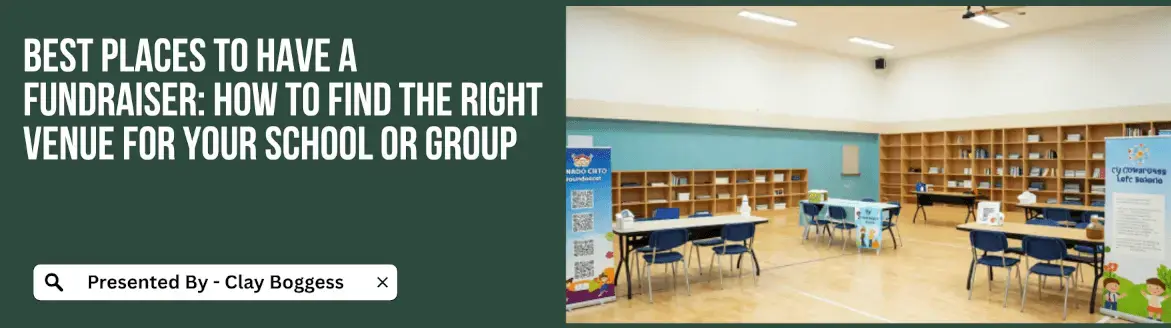
School Cafeterias and Gymnasiums
- Cost: Typically free or a nominal custodial fee (no venue rental reduces overhead to near zero)
- Equipment: Tables, chairs, and basic audiovisual setup already in place in most school gymnasiums
- Parking: School campuses have the highest parking-to-community-familiarity ratio of any venue option (families know where to go)
- Atmosphere: The school setting reinforces the purpose of the fundraiser and activates the community's connection to the cause
- Availability: Contact the school administration for facility access and confirm in writing with a named contact, including custodial coverage.
Church Fellowship Halls and Community Centers
Community centers offer more consistent availability than church halls because they are designed for event bookings. Rental fees range from $50 to $300 for a half-day reservation, which is manageable for most school and community fundraising budgets when weighed against the event revenue. For a spaghetti dinner with 200 guests generating $2,000 in ticket revenue, a $150 community center rental leaves $1,850 net before add-on revenue.
Best Uses for Fellowship Halls and Community Centers
- Spaghetti Dinners and Community Meals: Kitchen access and flexible seating make these venues ideal for sit-down event formats.
- Silent Auction Events: Open floor plans accommodate item display tables and bidding stations well
- PTA and Booster Club Gatherings: Community center meeting rooms work well for smaller-attendance fundraising events and kickoff presentations
Outdoor Spaces and Parks
- Fun Runs and Walk-a-thons: Parks with clear paths or tracks are ideal, as the wide routes prevent congestion and allow multiple activity areas
- Car Wash Fundraisers: School parking lots with water access are the most practical venue (familiar, free, and functional)
- Community Festivals: Large parks with shelter areas accommodate food, games, and product tables simultaneously
- Permit: Most municipal parks require advance permit registration for organized events, so check with your local parks department 30 to 60 days out
Matching the Venue to the Fundraiser Format
Online and No-Venue Formats
The online fundraiser through Big Fundraising Ideas sets up a custom store where buyers shop and have products shipped directly to their homes, with a 40 to 50 percent profit: no venue, no event, no delivery logistics for the school. The scratch card fundraiser runs entirely in the student's community at $15 per card (25-99 cards), $85 net, 85 percent profit (verified from bigfundraisingideas.com). Neither format requires booking a space, managing volunteers on-site, or handling the logistics of a physical event.
For groups that find venue coordination time-consuming, expensive, or inconsistent (booking conflicts, custodial fees, equipment setup), a no-venue school brochure fundraiser or product program often produces higher net revenue with a fraction of the planning effort. The comparison is not between a good event and a bad event. It is between a well-run event with venue overhead and a well-run product program with zero overhead.
Frequently Asked Questions About Fundraiser Venues
What are the best places to have a fundraiser?
School cafeterias and gymnasiums (free, familiar, fully equipped), church fellowship halls (often free, kitchen access), community centers (modest rental, flexible), outdoor parks for walk-a-thons and events with large audiences, and online platforms for no-venue programs. The right venue matches the format, attendance, and budget.
Can you run a fundraiser without a venue?
Brochure fundraisers, online fundraisers, scratch cards (85% profit at 25-99 cards), and discount cards (up to 75%) all run without a venue. Products ship to buyers, or students collect donations in the community, with zero overhead.
How do you find free fundraiser venues?
School facilities (cafeteria, gym, auditorium), church fellowship halls, fire station meeting rooms, community center spaces for nonprofit use, and public park shelters with free permit registration. An existing relationship with facility management speeds the booking process.
What venues work best for a school fundraiser?
School cafeterias or gymnasiums are best aligned with the fundraiser's purpose, as they are free, equipped, familiar to families, and have strong parking. Contact the school administration for availability and confirm in writing with a named contact.
What venue works best for a booster club fundraiser?
School gymnasium or auditorium for events. Church halls and community centers for dinners and auctions with kitchen needs. For product fundraisers (scratch cards, discount cards, candy bars), no venue is needed. Product programs run through the community with no event logistics.
How important is parking at a fundraiser venue?
Very important. Limited or difficult parking reduces attendance among families with young children and elderly attendees. Assess parking availability during evening and weekend hours, when most school events are held. School campuses typically have the best parking-to-community-familiarity ratio of any option.
Can you hold a fundraiser at a restaurant?
Yes. Restaurant fundraiser nights have a local restaurant donate a percentage of sales from a specific evening. No venue rental or setup is necessary, and the restaurant's existing space and staff handle the event. Works best with restaurants that already have a strong community name recognition.
What are the best virtual fundraiser options?
Online fundraisers through Big Fundraising Ideas set up a custom store, generating 40 to 50 percent profit with products shipped to buyers. Scratch card programs operate via individual seller links. Both break the geographical constraint of local fundraising and reach extended family and alumni nationwide.
How much does a fundraiser venue typically cost?
School facilities and church halls: free to $100. Community centers: $50 to $300 per half-day. Event halls and banquet rooms for galas: $500 to $2,500+. Outdoor park shelters: free with a permit. Every dollar on venue rental reduces net revenue.
What fundraiser formats need no venue?
Brochure fundraisers, online stores, scratch cards (85% profit), and discount cards (up to 75%). All operate without event logistics. For schools running multiple campaigns annually, a no-venue product program between events is the most efficient revenue supplement.
Author Bio
Clay Boggess has been designing fundraising programs for schools and various nonprofit organizations throughout the US since 1999. He’s helped administrators, teachers, and outside support entities such as PTAs and PTOs raise millions of dollars. Clay is an owner and partner at Big Fundraising Ideas.

Related Articles

How Does a School Get Paid…
How does a school get paid after a fundraiser? See how direct-sale, brochure, and online fundraisers settle invoices or send profit payments.

How Much Can a School Make…
Learn how much a school can make from a popcorn fundraiser using the profit table, worked examples by group size, and what affects your total.

Cupcake Decorating Fundraiser…
How to run a cupcake-decorating contest fundraiser: entry fees, fair judging, allergen labeling, and three ways to raise money at one event.